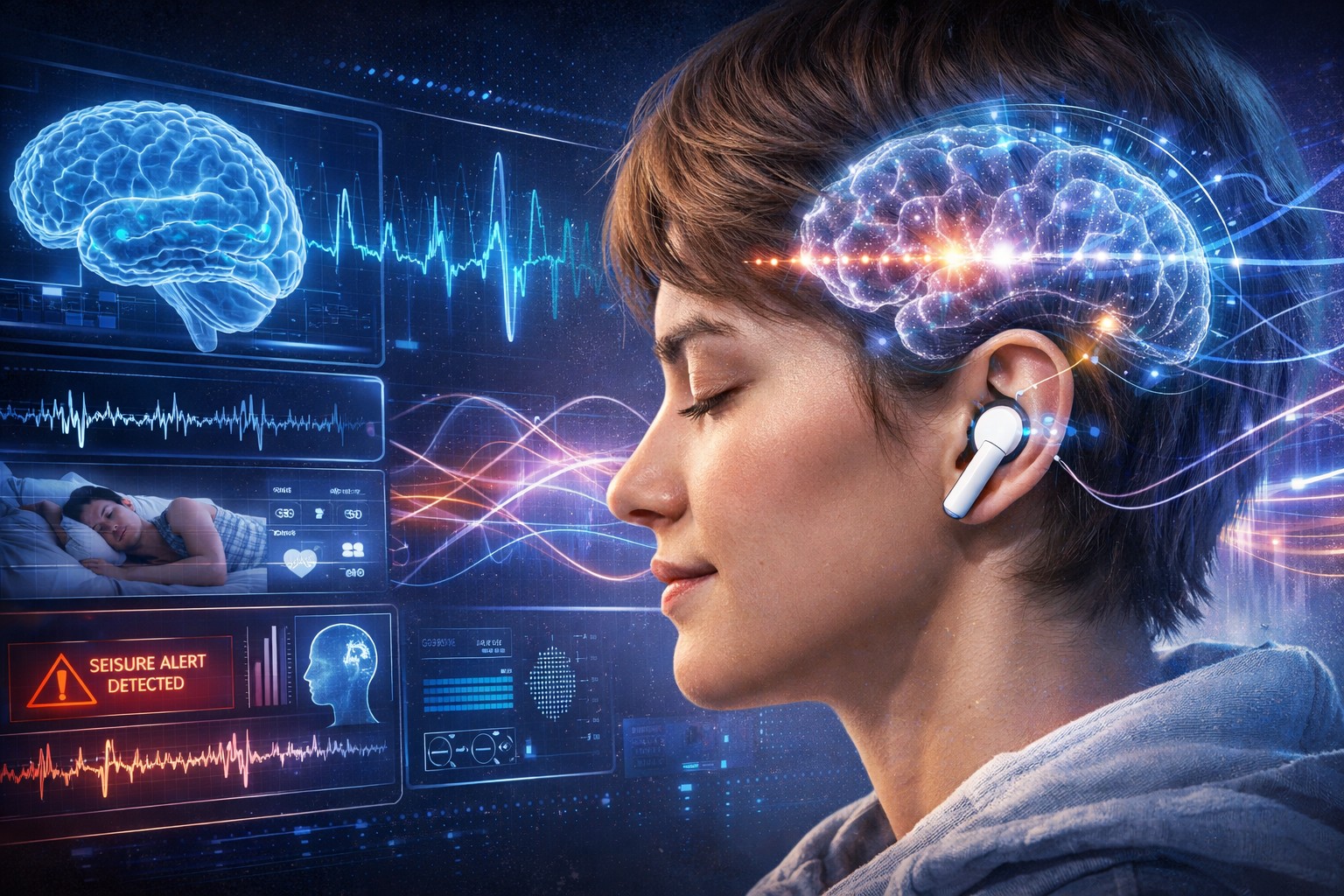
Brain surveillance just got a sleek consumer makeover. Apple filed a patent in January 2023 for earbuds equipped with electrodes capable of reading your brain waves—transforming everyday audio devices into neural monitoring stations. The technology promises to detect seizures, track sleep patterns, and monitor cognitive health through electroencephalography (EEG) sensors embedded in your ear tips.
AI-Powered Electrodes Adapt to Your Anatomy
Dynamic electrode selection uses machine learning to optimize brain signal quality for individual users.
The patent describes a sophisticated system where artificial intelligence selects optimal electrode combinations based on your unique ear anatomy. Like Spotify’s algorithm learning your music taste, these earbuds would adapt to your skull shape and brain signal patterns. Multiple electrodes positioned throughout the device measure not just brain activity, but muscle movement and eye tracking—creating a comprehensive neural profile that updates in real-time through machine learning.
Medical Applications Meet Consumer Convenience
Continuous EEG monitoring could revolutionize early detection of neurological conditions.
Traditional EEG requires expensive hospital visits with electrode caps that make you look like a sci-fi extra. Apple’s approach would democratize brain monitoring, enabling continuous detection of:
- Epileptic seizures
- Sleep disorders
- Cognitive decline
The ear-based placement offers clinical accuracy while maintaining the invisibility and comfort that made AirPods ubiquitous.
For millions living with neurological conditions, this represents potentially life-changing accessibility.
Your Brain Data Becomes Corporate Property
Neural information raises unprecedented privacy concerns that current regulations can’t address.
Here’s where the Black Mirror vibes kick in. Your brainwaves reveal more intimate information than your search history—they’re direct windows into cognitive states, emotional responses, and neurological health. Current privacy laws weren’t designed for neural data, creating regulatory blind spots that could allow corporations unprecedented access to your thoughts.
Unlike passwords or even fingerprints, you can’t change your brain patterns if they’re compromised.
Patent vs. Product Reality
This filing represents intellectual property protection, not a confirmed product launch.
Before you start shopping for neural-proof headwear, remember that patents don’t guarantee products. Apple files thousands of patents annually; most never see store shelves. This filing protects Apple’s investment in neurotechnology research while signaling their serious interest in brain-computer interfaces.
The timeline for any commercial release—if it happens—remains unknown.
The patent signals a broader shift toward neural-integrated consumer technology. Whether that’s revolutionary healthcare or dystopian surveillance depends entirely on how we regulate the space between our ears.