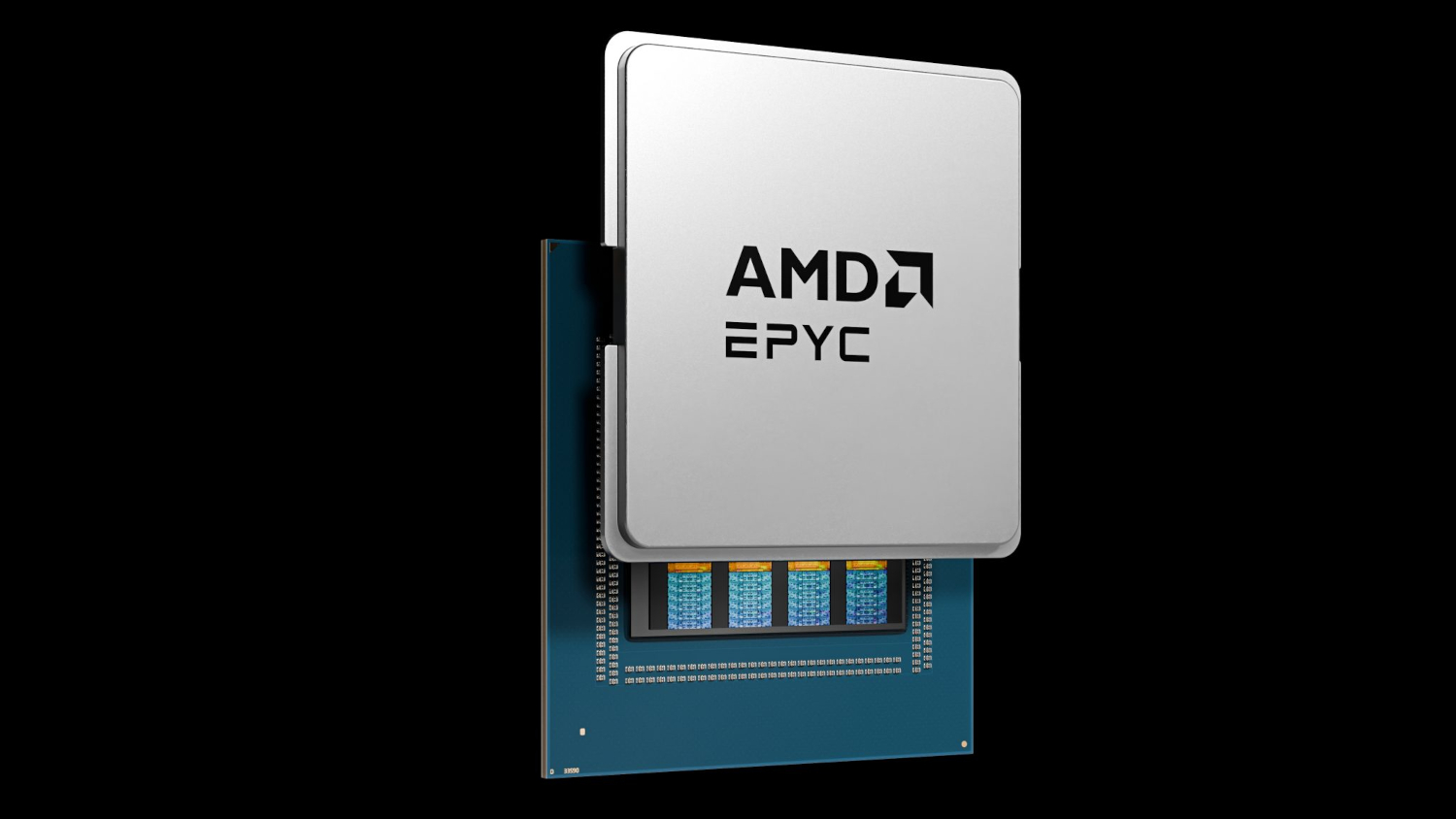
The 256-core figure and the 5.3 GHz boost clock describe different processors. AMD’s sixth-generation EPYC “Venice” platform splits into standard Zen 6 parts optimized for frequency and Zen 6c parts optimized for core density, and those headline numbers do not apply to the same chip.
Standard Zen 6 processors target clock-sensitive workloads and reach up to 5.3 GHz, according to reported EPYC specifications. Zen 6c-based EPYC processors scale to 256 cores and 512 threads in a single processor package, running at up to 4.1 GHz.
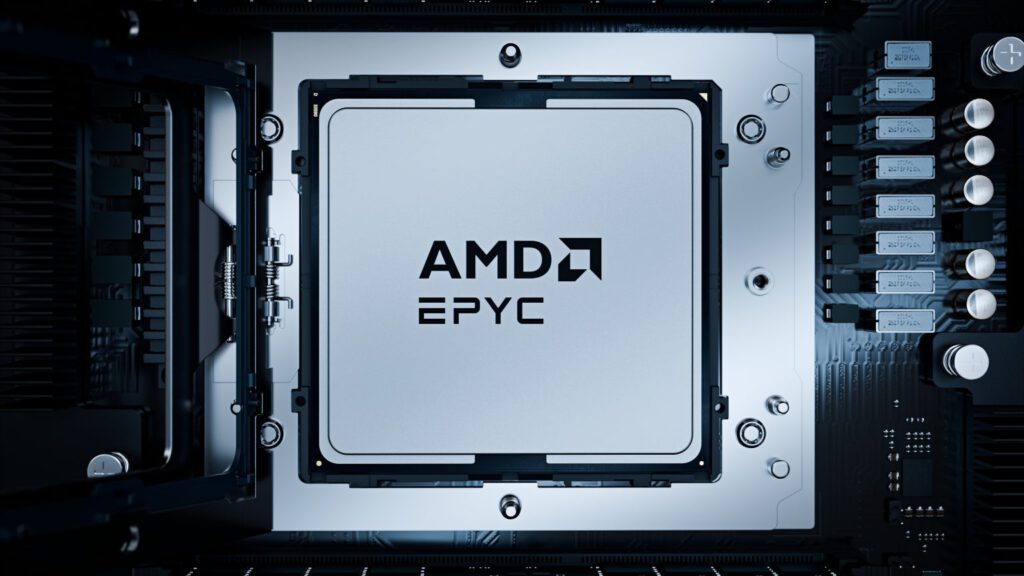
Chiplet Design Drives the Core Count Difference
The two variants achieve their respective ceilings through fundamentally different chiplet configurations.
Standard Zen 6 chiplets hold up to 12 cores each, while Zen 6c chiplets pack up to 32 cores. EPYC Venice also adds PCIe Gen 6 and CXL 3.1 connectivity, which AMD’s platform materials indicate increases platform I/O capabilities over the previous generation.
What AMD’s IPC Claim Actually Covers
AMD’s 27 percent figure is a workload-specific geomean, not a universal guarantee across all software.
AMD claims an average 27 percent IPC improvement over Zen 5, measured at fixed frequency across selected enterprise, cloud, and AI workloads. Gains across those tested workloads range from roughly 20 to 31 percent depending on the specific task. The average figure does not apply uniformly to all software.
The cited AMD materials do not include gaming or desktop measurements. Treating the server IPC figure as a predictor of consumer application performance would be a misreading of what AMD has published.
A Redesigned Front End and a Distributed Scheduler
Zen 6 reworks two foundational pipeline elements to separate the performance characteristics of its two variants.
AMD’s chief CPU architect Mike Clark identified the redesigned front end as one of Zen 6’s primary architectural improvements over Zen 5’s dual-front-end arrangement. AMD’s design rationale positions the new front end as better suited to wider and more demanding workloads.
The out-of-order pipeline now uses a distributed scheduler. Zen 6c receives deeper scheduler queues to compensate for lower clock speeds and higher-latency workloads. Standard Zen 6 uses shallower queues to support higher frequencies at lower power draw.
Vector and AI Throughput Improvements
Zen 6 adds meaningful capacity for AI and vector-intensive server workloads through several targeted pipeline changes.
Zen 6 supports four AVX2 loads or two AVX-512 loads per cycle, adds native FP16 handling, and doubles VNNI-INT8 pipelines from two to four, according to technical reporting. AMD positions these changes around AI inference and vector-heavy server workloads, and they are expected to benefit applications running on AVX2 instruction paths.
Cache Parity Narrows the Gap Between Variants
Reported designs give both Zen 6 and Zen 6c approximately 4 MB of L3 cache per core, reducing a historical tradeoff.
Reported designs provide approximately 4 MB of L3 cache per core for both variants. That figure may reduce the cache-per-core disadvantage historically associated with AMD’s compact “c” core designs.
One Shared ISA Helps Keep Software Compatibility Clean
A common instruction-set architecture across both variants simplifies software deployment for data-center operators.
AMD retained a common ISA across both variants. That decision helps preserve software compatibility across EPYC configurations. It contrasts with Intel’s hybrid approach, where performance and efficiency cores can differ in microarchitectural features and cache hierarchy.
That compatibility could simplify workload deployment for cloud providers evaluating high-density EPYC configurations for AI inference and enterprise consolidation.
Ryzen Implications Remain Unconfirmed
AMD has not released client-side performance data, leaving Ryzen projections forward-looking for now.
The cited AMD materials do not include client-side performance data for Zen 6. Future Ryzen processors may inherit the architectural changes described here. Final clock speeds, cache configurations, power limits, and independent benchmark results remain unconfirmed until AMD releases consumer products and independent testing is available.