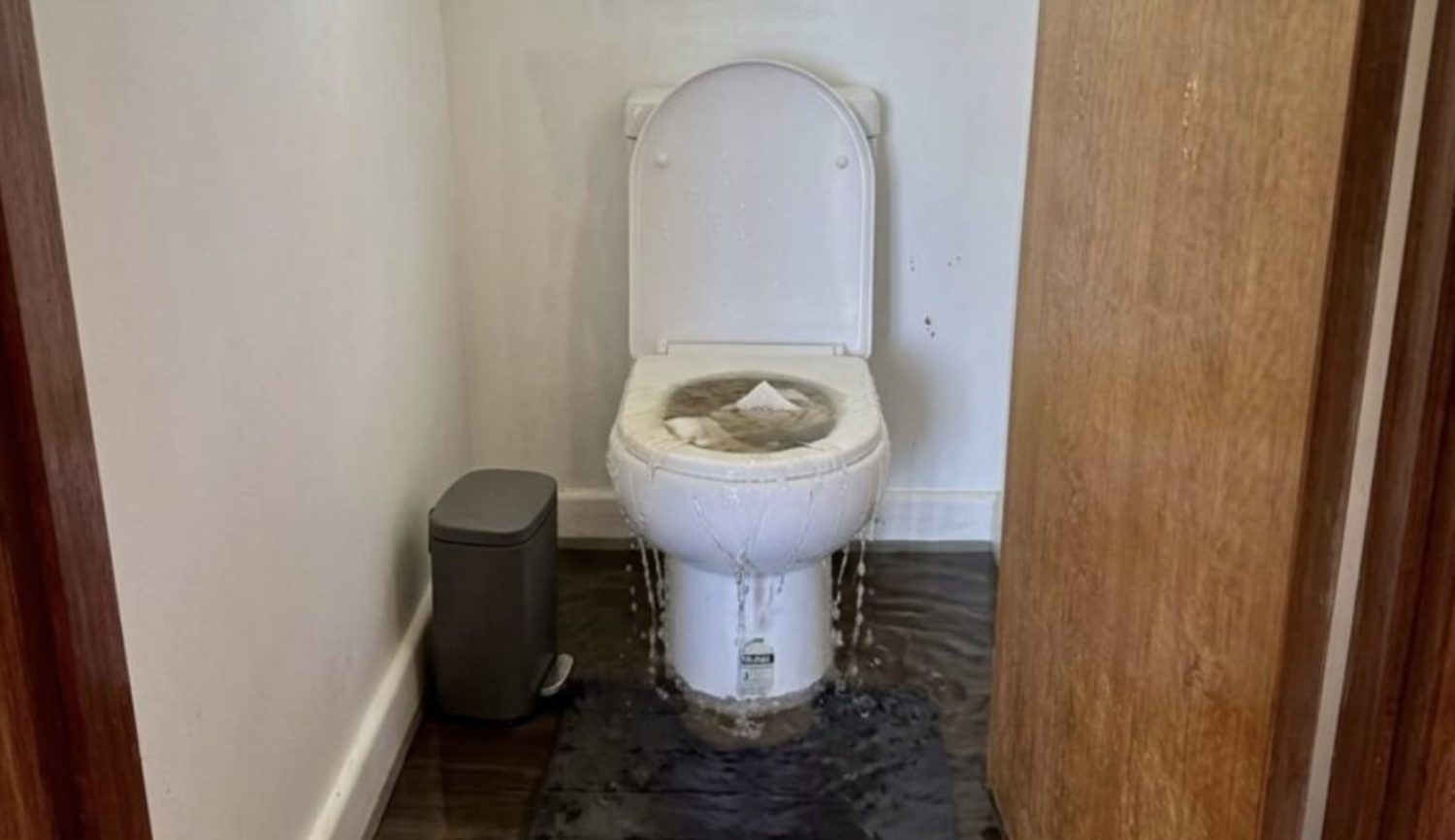
A guest posting under the Reddit username FurinaDeFontaine disputed a A$1,700 Airbnb damage claim from an Australian host. The host submitted an image purportedly showing an overflowing toilet and water spreading across a bathroom floor.
The guest pushed back, reportedly stating they had not even used toilet paper during the stay and questioning whether any real damage had occurred.
Other Reddit users examined the submitted image and found a SynthID watermark: Google’s invisible identifier embedded in content created or edited by its AI-Powered Websites tools, including Gemini and Imagen.
According to reporting by PC Gamer and Kotaku, Airbnb later ruled the reimbursement request ineligible. Airbnb has not independently confirmed that outcome.
The allegation that the host knowingly fabricated the image has not been established as legal fact.
What SynthID Detection Can and Cannot Prove
Google’s own documentation draws a careful line between what a watermark confirms and what it leaves open.
A positive SynthID result means all or part of an image was created or edited by a Google AI model. Google’s support documentation is specific about what the tool does not establish.
- It does not identify who generated the image or when it was made.
- It does not confirm or deny whether any real plumbing problem existed.
- The absence of a SynthID watermark does not prove an image is authentic; other AI systems may leave no such mark.
- Supporting evidence in a full dispute review can include original file metadata, repair invoices, and timestamped messages.
SynthID is a thread worth pulling. It is not a verdict on its own.
Why This Should Put You on Alert
The timeline Airbnb gives guests to respond to a damage claim is tighter than most people realize.
Airbnb’s Resolution Center gives guests just 24 hours to respond to a host’s reimbursement request. After that window, Airbnb’s Community Support team determines both responsibility and whether the requested amount is reasonable.
That is a short runway when the evidence against you is a single photograph.
Generative AI tools can now produce realistic images of water damage, broken fixtures, or ruined furniture without any of it ever existing. Platforms that rely on photographic documentation are more exposed than their current policies assume.
Social platforms faced a version of this problem when deepfake technology matured. Detection infrastructure had to be built in response to abuse that moved faster than the rules. Rental and marketplace platforms appear to be arriving at the same crossroads.
Google’s documentation on SynthID states that a detected watermark means the image was “created or edited by Google AI.” When a photograph is the primary evidence in a dispute, that finding raises serious questions about the image’s reliability as an unaltered record. It does not, however, resolve whether any underlying damage occurred or who would be responsible if it did.
Document Everything. Now.
If you check out of a short-term rental without documenting its condition, you may be handing the other side a significant advantage.
If you receive a damage claim supported only by a single photograph, that photo is not automatic proof of anything. Push back within the 24-hour window and flag inconsistencies directly to Airbnb’s support team.
Start protecting yourself before checkout. Shoot timestamped photos and video of every room when you arrive and again when you leave, because strong documentation on your side can matter significantly when a platform has to weigh competing accounts.