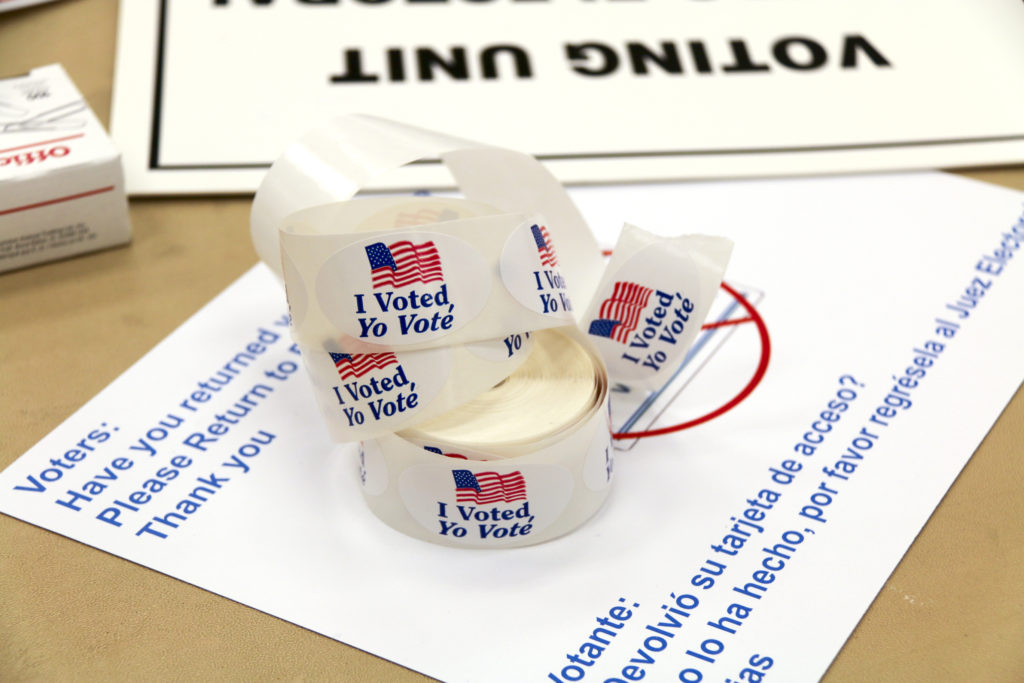
A state assemblyman in New York City’s 12th District co-sponsored a bill requiring AI companies to disclose safety incidents. For that, outside groups dropped over $15 million into his congressional primary — for and against.
Alex Bores probably didn’t expect a local race to become one of the most expensive proxy fights in American politics this cycle. That’s what happens when the industry being regulated gets to pick the regulators. According to the Washington Post, major AI players have steered more than $185 million into 2026 midterm campaigns nationwide — a trajectory that mirrors how OpenAI has quietly shaped policy in other arenas. This isn’t lobbying. This is venture capital applied to democracy.
A Corporate Rivalry With a Ballot Box
OpenAI and Anthropic are funding opposing super PAC networks that mirror their corporate rivalry — though both ultimately want AI deployed on their terms.
Two rival networks are running this show:
- Leading the Future, anchored in OpenAI’s orbit and bankrolled by Andreessen Horowitz and OpenAI co-founder Greg Brockman, has raised over $75 million pushing light-touch federal standards and has already spent more than $20 million across races in Texas, Georgia, Illinois, and Montana.
- Public First, on Anthropic’s side and backed by a $20 million pledge, supports candidates open to stricter guardrails.
It’s less an ideological split than corporate positioning — like Marvel and DC arguing over which superhero universe should govern the multiverse. Both sides want AI deployed. They just want it deployed under rules they helped write.
“The spending is less about any single candidate and more about sending a message to other politicians about the risks of opposing the industry’s preferred policies,” tech critic Molly White told the New York Times. FEC filings and OpenSecrets data show AI-sector entities gave $83 million to federal campaigns in 2025 alone, with AI-focused super PACs spending over $40 million on congressional contests and top firms — OpenAI, Meta, Alphabet, and Nvidia — logging $50.9 million in direct lobbying, per Issue One.
The Ads Don’t Mention AI — That’s the Point
Super PAC advertising saturates local media with messages about public safety and cost of living, never revealing who’s actually paying or why.
These PACs are outspending candidates on ads about immigration, public safety, and cost of living — topics that never mention algorithms or training data. Michael Beckel of Issue One told reporters this spending “helps shape who is at the table” when legislation gets crafted, effectively “rewriting the playbook” for industry influence. It’s a pattern familiar from tech scandals and oil lobbying cycles. This sequel just runs on GPUs.
Congress agrees AI needs rules. It just can’t agree on any — which is exactly how the industry likes it.
Meta and Alphabet are funding their own super PACs in Texas and California, targeting data-center siting and algorithmic transparency rules. Meanwhile, residents across multiple states are pushing back against data centers draining local water and power supplies — Maine has already enacted a moratorium on new data centers, with at least 11 other states considering similar measures. Any candidate who opposes that infrastructure now faces an industry war chest. That calculation isn’t lost on anyone watching.
The Campaign Legal Center has filed FEC complaints alleging these super PACs used complex structures to obscure their true funders. Reform advocates warn this cycle could lock in AI policy for a decade. If the industry concludes the spending worked, expect this to become the permanent cost of doing democratic business.