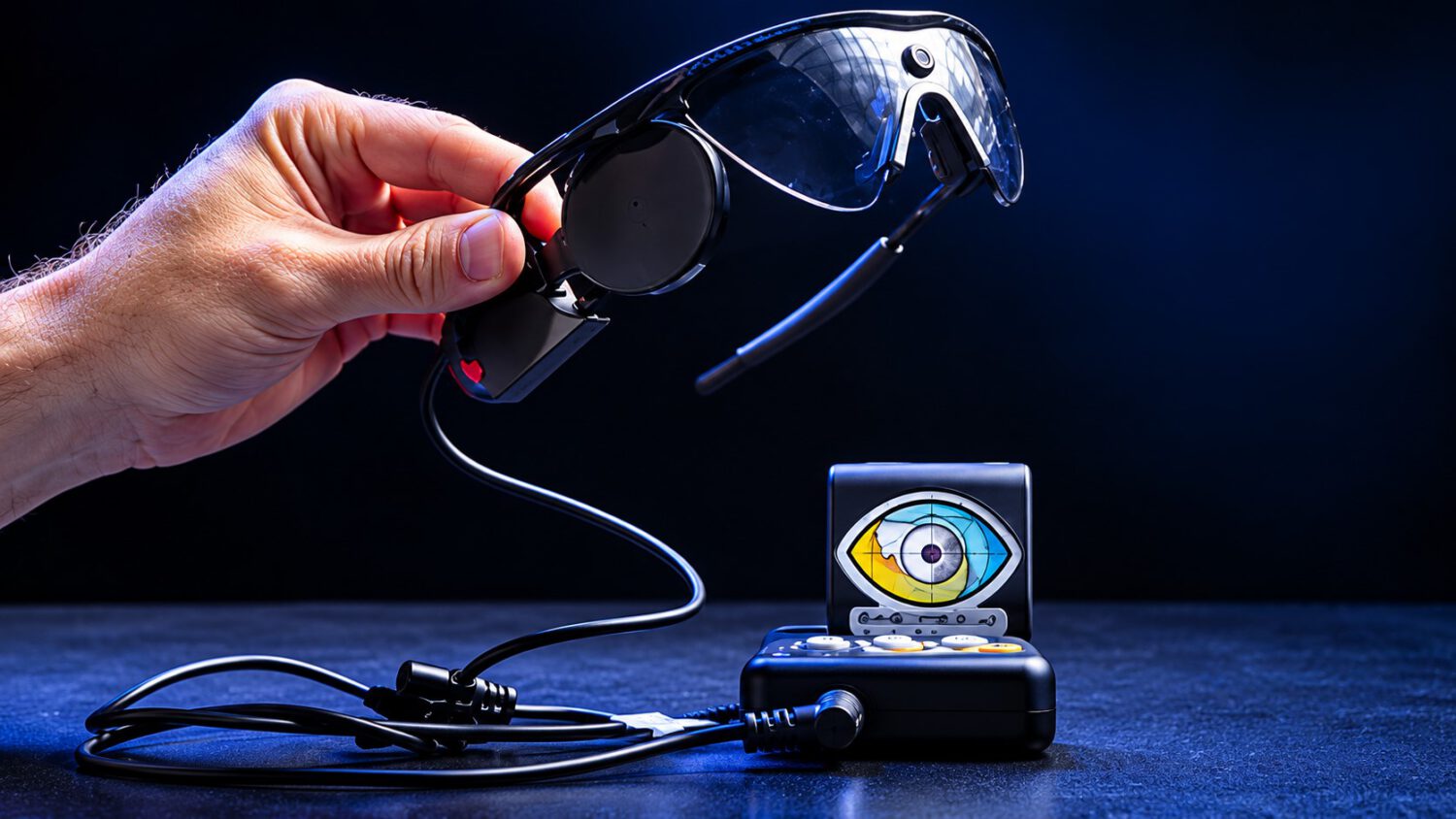
A deep-learning system guided electrical stimulation of a visual cortex implant with greater accuracy and efficiency than comparison methods, according to a proof-of-concept study published in Neuron by researchers from UC Santa Barbara, ETH Zurich, and Miguel Hernández University.
A 27-Year-Old, a Temporary Implant, and a Feasibility Trial in Spain
The participant was a 27-year-old man who lost his sight following a traumatic brain injury and received a temporary implant as part of a feasibility trial.
As part of a broader feasibility trial conducted in Spain, he received a temporary 96-channel electrode array capable of both stimulating his visual cortex and recording its responses. The implant was designed to remain in place for six months.
Learning the Brain’s Own Language
Standard approaches to cortical stimulation often rely primarily on predetermined stimulation settings, but the deep-learning model in this study moved beyond that simplified assumption.
Instead, it learned directly from the participant’s actual cortical responses, building a personalized map of how his brain tissue reacted to different stimulation patterns.
Reading the Brain Before Stimulating It
The system read the participant’s resting brain activity immediately before each stimulation, then worked backward to find the electrical settings most likely to produce a desired neural pattern.
Researchers specified a target pattern of cortical activity and used the model to identify stimulation settings most likely to achieve it. That closed-loop approach, stimulating, recording, and adjusting based on the brain’s responses, captures the study’s central methodological idea.
More Accurate, Less Current
AI-selected stimulation patterns matched target neural activity more accurately than comparison methods and required less electrical current.
Recorded brain responses predicted the participant’s reported visual experiences, including phosphene shape, size, brightness, and color, more reliably than stimulation parameters alone. That finding suggests a simple “pixel” model of artificial vision, where more electrodes straightforwardly produce a clearer image, may be an oversimplification. Electrodes may interact, neural responses fluctuate, and the brain’s interpretation of stimulation can vary in ways that fixed settings cannot reliably anticipate.
Phosphenes, Not Sight
Precision in this context means more accurate control of electrically induced brain activity, not natural vision.
The participant perceived phosphenes: flashes, spots, and limited shapes of light. The experiment did not demonstrate reading, navigation, face recognition, or any form of functional everyday sight.
Why Cortical Prostheses Matter for Some Forms of Blindness
Cortical prostheses bypass the eye and optic nerve entirely, making them potentially relevant for people whose blindness cannot be addressed by retinal implants.
Retinal prostheses depend on usable retinal and optic-pathway structures. When those structures are damaged or absent, cortical prostheses offer a potential alternative route by targeting the visual cortex directly. That distinction makes this line of research relevant to people who may not be served by retinal implants.
Personalization May Be Fundamental, Not Optional
Neural responses vary across individuals and can shift within the same person over time, suggesting that fixed stimulation settings may be inadequate for a durable device.
A fixed stimulation map may be insufficient for a device intended to remain useful over months or years. The study supports the case for implants that recalibrate based on ongoing brain feedback. That capability remains a research goal, not a demonstrated one.
What Still Needs to Happen
This study involved one participant and a temporary implant, leaving long-term safety, durability, and real-world applicability as open questions.
Larger studies across more participants and longer timeframes are needed before researchers can determine whether the approach delivers stable, useful visual information at scale.