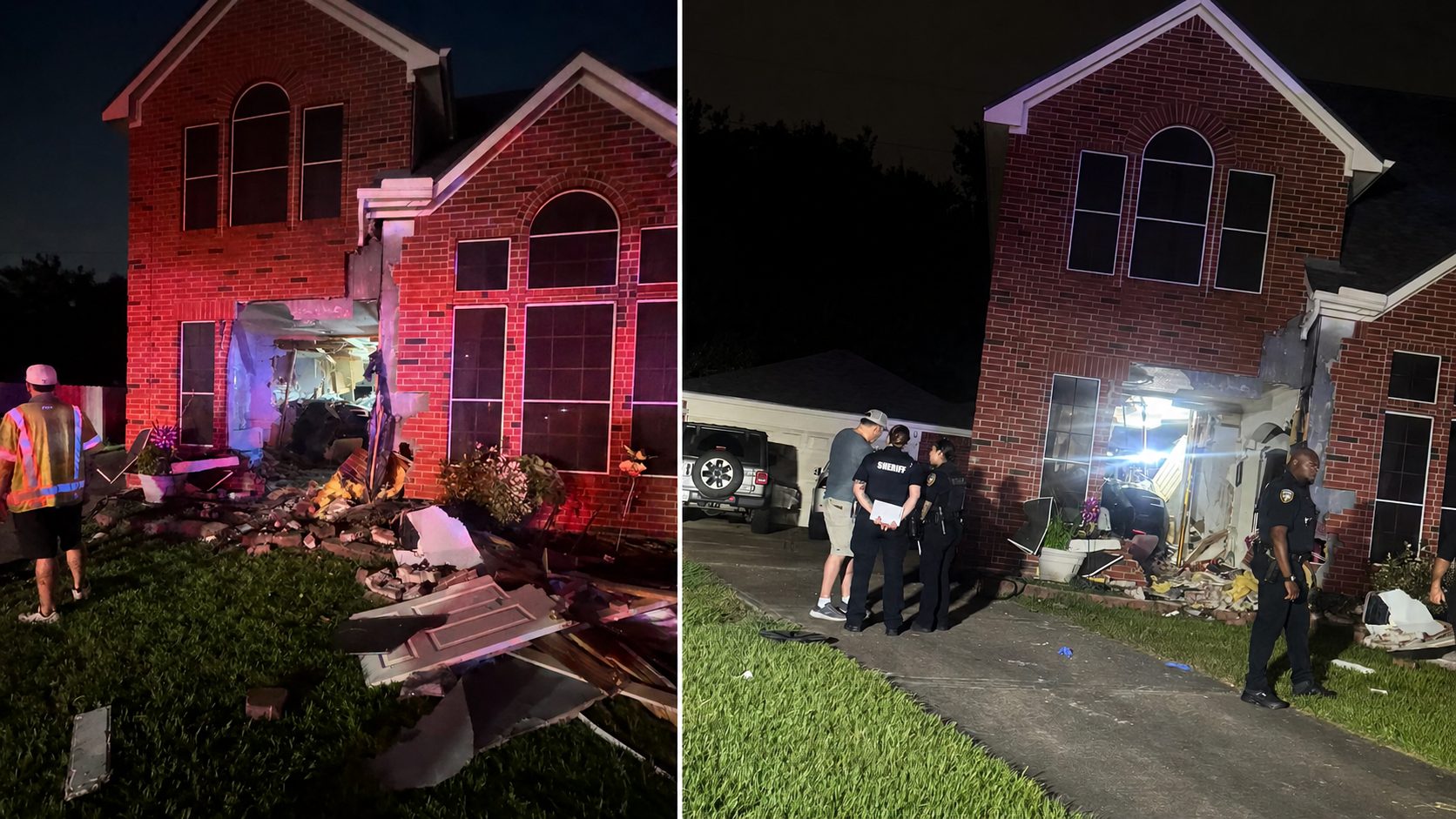
At 8:03 p.m. on a Friday in suburban Katy — the kind of street where kids chase each other until the porch lights flicker — a Tesla Model 3 traveling eastbound on Rose Hollow Lane failed to hold its lane. It left the road. It struck Martha Avila’s brick home at what investigators describe only as a “high rate of speed.” Avila, 76, was airlifted to a hospital and later pronounced dead. Driver Michael Butler, 44, told deputies his car’s automated driving assistance system was engaged at the time. That claim has not been independently verified by vehicle data.
What Deputies Say Happened
The known facts are few, and the critical question — was Autopilot actually active? — remains unanswered.
According to the Harris County Sheriff’s Office, Butler showed no signs of intoxication and cooperated with investigators. Avila was struck inside the home’s front room. Butler told law enforcement an automated driving assistance feature — commonly referred to as Autopilot — was active at the moment of impact. Per Electrek, that detail comes solely from his account; vehicle logs have not been publicly analyzed. The Harris County Sheriff’s Vehicular Crimes Division is leading the investigation, and no charges have been filed as of the latest reporting.
The Tesla ripped through the home’s brick façade and into what Avila’s daughter, Jennifer Barbour, identified as the children’s playroom. Three kids were at a neighbor’s house at the time. Barbour described her mother as healthy, on no medication, and “super generous and sweet.” The home is now uninhabitable. The family has moved into temporary housing, and a GoFundMe campaign covers funeral and emergency living costs.
Tesla’s own documentation classifies both Autopilot and Full Self-Driving (Supervised) as driver-assistance tools, not autonomous systems — requiring a fully attentive driver with hands ready to intervene at all times. The name “Autopilot” carries enormous cultural weight that the technology’s actual design does not support. The NTSB has previously cited driver over-reliance and inadequate monitoring safeguards as contributing factors in prior Tesla fatality cases.
A Familiar Pattern, Still Without Answers
This crash joins a growing federal record of alleged Autopilot incidents, though regulators have not publicly stepped into this specific case yet.
NHTSA opened a formal engineering analysis into Autopilot in 2022, covering approximately 830,000 Tesla vehicles and examining 16 crashes involving the system. Multiple prior fatalities linked to alleged Autopilot engagement with stationary obstacles preceded that probe. Competitors like GM’s Super Cruise and Ford’s BlueCruise geofence their hands-free features to mapped divided highways — a design constraint Tesla has not adopted for its driver-assistance systems. Waymo Robotaxis, by contrast, operate within a fully defined autonomous framework that regulators treat as a separate category entirely.
No NHTSA or NTSB involvement in this specific incident has been announced. Tesla had not responded to press requests at the time of reporting.
The event data recorder inside that Model 3 holds the real answer. Until investigators analyze it, “Autopilot” in this story remains one man’s claim to deputies — not a confirmed fact. For anyone currently driving with these systems engaged on a residential street, the uncomfortable reality is straightforward: the software was never designed to replace your attention. The branding just made it easy to forget.