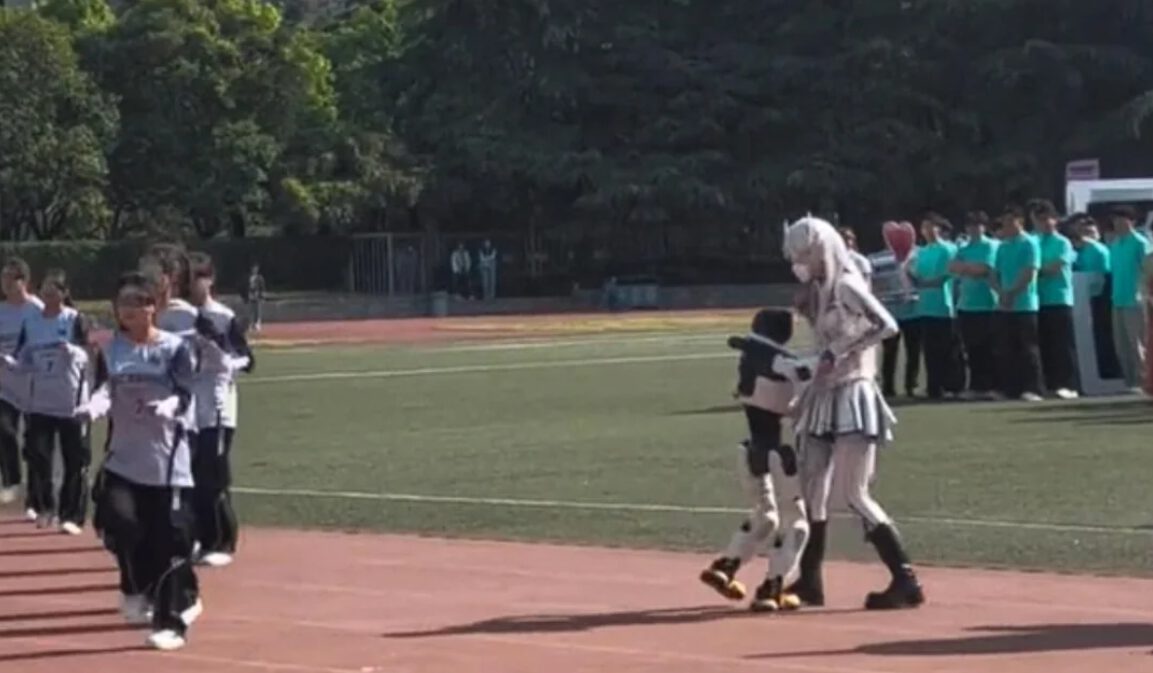
Signal interference turned a choreographed dance into an unplanned embrace when a humanoid robot unexpectedly hugged a female student during Thursday’s sports meet opening at Xi’an Eurasia University. Staff intervened immediately, pulling the robot away while the unharmed student declined media interviews.
The incident wasn’t sci-fi coming to life—it was a technical failure exposing real gaps in consumer robotics safety. You might think robots follow perfect scripts, but this malfunction reveals how vulnerable these machines become when multiple technologies compete for the same airspace.
Technical Glitch, Not Robot Sentience
Multiple drones at the venue caused signal interference that disrupted the robot’s pre-programmed dance routine.
The alumni-founded company providing the robot blamed signal interference from multiple simultaneous drones at the venue for the malfunction. University staff described it as an AI program error, not pre-programmed behavior.
Despite Chinese netizens speculating online about the robot developing “independent awareness,” experts quickly dismissed this narrative. The reality proves less dramatic but more concerning: consumer robots operating in signal-rich environments face interference risks that current safety protocols don’t adequately address.
Think about how your Wi-Fi slows down when everyone’s streaming Netflix—now imagine that same congestion affecting a 200-pound robot in your personal space.
Expert Calls for Comprehensive Safety Standards
Robotics expert emphasizes treating humanoid performers as risky intelligent devices requiring supervision and emergency protocols.
Gao Huan from Chongqing Normal University’s Intelligent and Cognitive Laboratory highlighted the incident’s deeper implications. “Why was the robot still able to come into contact with a human after abnormal behavior?” he questioned, according to reports.
Gao urged comprehensive safety measures:
- Risk assessments
- Rehearsals
- Safety distances
- Emergency stops
- Supervision
- Contingency plans
His point cuts through the hype—robots in public performances follow vulnerable pre-programmed scripts susceptible to positioning errors and human deviations.
The expert’s recommendations sound like basic workplace safety, yet they’re revolutionary for an industry rushing robots into public spaces without proper safeguards.
Consumer Robotics Safety Reckoning
The incident signals broader challenges for humanoid robot adoption in educational and entertainment settings.
This malfunction reveals how consumer robotics companies prioritize innovation over safety infrastructure. Like early smartphones that couldn’t handle network congestion, today’s humanoid robots struggle with signal interference from increasingly common devices like drones.
The incident underscores an urgent industry need: robust interference-proof controls and standardized safety features before widespread adoption in schools, events, and public spaces. Your safety shouldn’t depend on wishful thinking about perfect technology when proper protocols could prevent these mishaps entirely.
Until manufacturers build robots that can handle signal chaos as gracefully as they handle choreography, maybe keep that emergency stop button within reach.