TrueLayer and Papa John’s completed what they call the UK’s first agentic Pay by Bank payment to a named retailer, raising a question central to the next phase of AI commerce: when software spends your money, who actually controls the limits?
The Order That Made History
Nine mini margherita pizzas and a regulatory milestone arrived together.
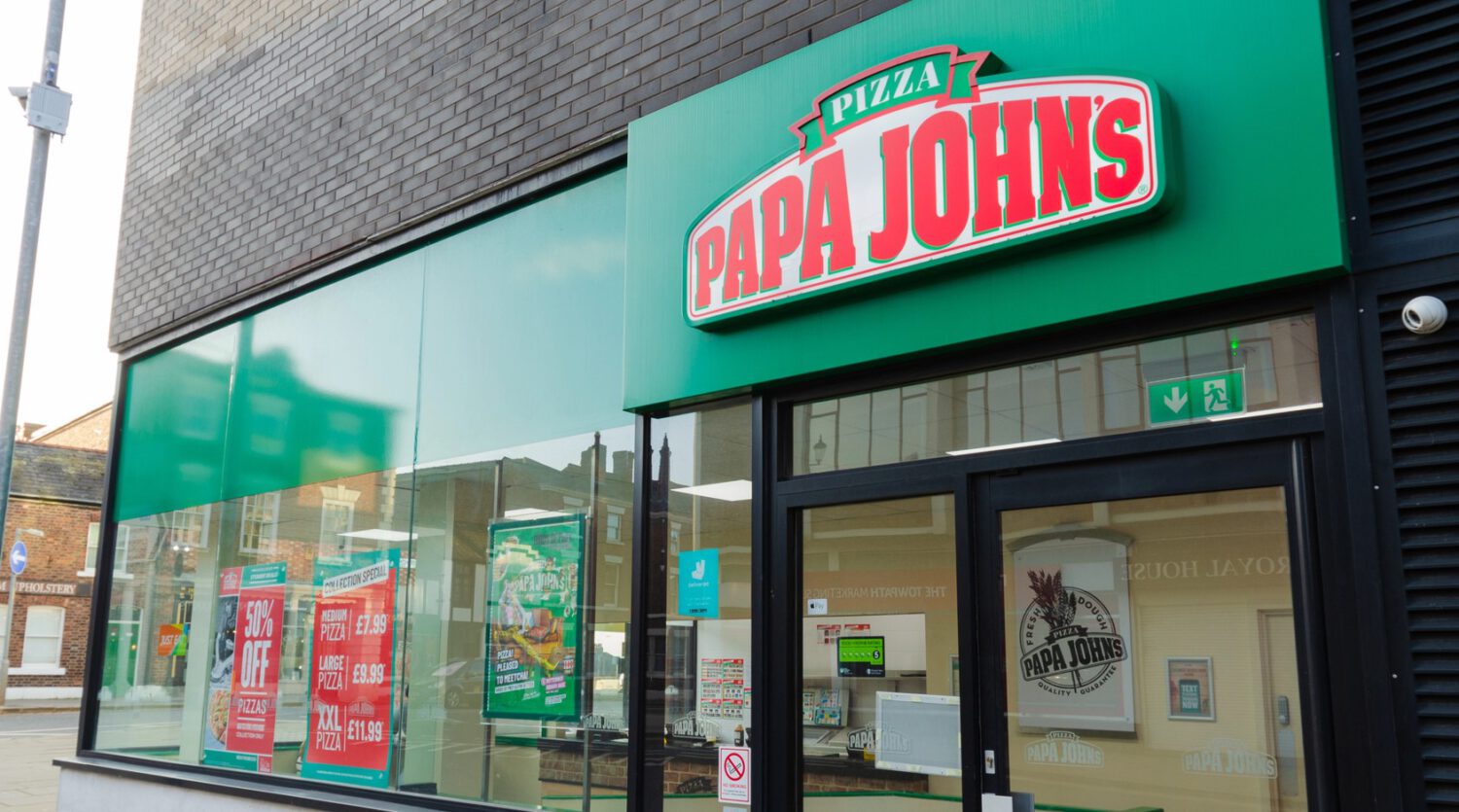
An AI agent placed a Papa John’s order for nine mini margherita pizzas and charged the customer’s bank account directly, with no debit or credit card involved. TrueLayer and Papa John’s described the transaction as the first agentic Pay by Bank payment completed with a named UK retailer.
Inside the FCA’s Controlled Environment
This was a supervised test, not a product launch, and that distinction matters.
The pilot ran inside the UK Financial Conduct Authority’s Supercharged Sandbox, a supervised environment for emerging financial technology. TrueLayer presented its findings at the FCA’s showcase on 26 November 2026, with Lloyds participating and NatWest identified in secondary reporting as also involved.
This was reported as the first use of Lloyds’ variable recurring payment (VRP) systems for an agentic transaction. VRPs allow repeated payments of differing amounts under a single authorization, making them suited to agents that may place multiple orders over time.
The Bank Held the Authority, Not the Agent
Spending limits were set and enforced by the customer’s bank, not by the AI.
The customer could cancel the payment arrangement through either the merchant or the banking app, a point worth establishing at the outset. The customer linked a bank account to their Papa John’s profile through open banking rather than providing card details to the agent.
Spending controls, tied to a specific merchant or a defined time period, were established directly with the bank. The bank checked each payment against those limits and could decline any transaction that exceeded them , a safeguard for anyone already paying too much without realizing it.
The customer approved the transaction inside their banking app. The reported setup did not share the customer’s banking credentials with the agent.
Why TrueLayer Argues This Model Differs From Cards
When an agent selects the payment rail, habit stops being the deciding factor.
TrueLayer CEO and co-founder Francesco Simoneschi framed the stakes in remarks reported by The Next Web: “Agents will choose the payment rail that is fastest, most secure and lowest cost, not the one people use out of habit.” He added, according to the same report: “Today it’s pizza. Tomorrow it’s everything else.”
The competitive contrast is already visible. Meta’s Muse agent launched in the UK using card-based payments through a Stripe-developed wallet arrangement, and Meta reportedly declined an invitation to test Muse inside the FCA sandbox. Two distinct models are now in view: bank-enforced spending limits on one side, card-based checkout already reaching consumers on the other. Readers curious about AI-Powered Websites and agent-driven automation may find this shift increasingly relevant to everyday tasks.
Capability Is Not the Same as Authorization
The FCA has signaled that moving money on a user’s behalf may require more than a successful test.
The FCA warned AI-agent developers that existing authorization rules continue to apply and that some payment activities may require authorization before commercial deployment. Sandbox participation should not be read as blanket FCA endorsement of a commercial product. TrueLayer said the pilot was intended to help establish the conditions and standards required to deploy agentic payments safely at scale. The service is not available to the public.