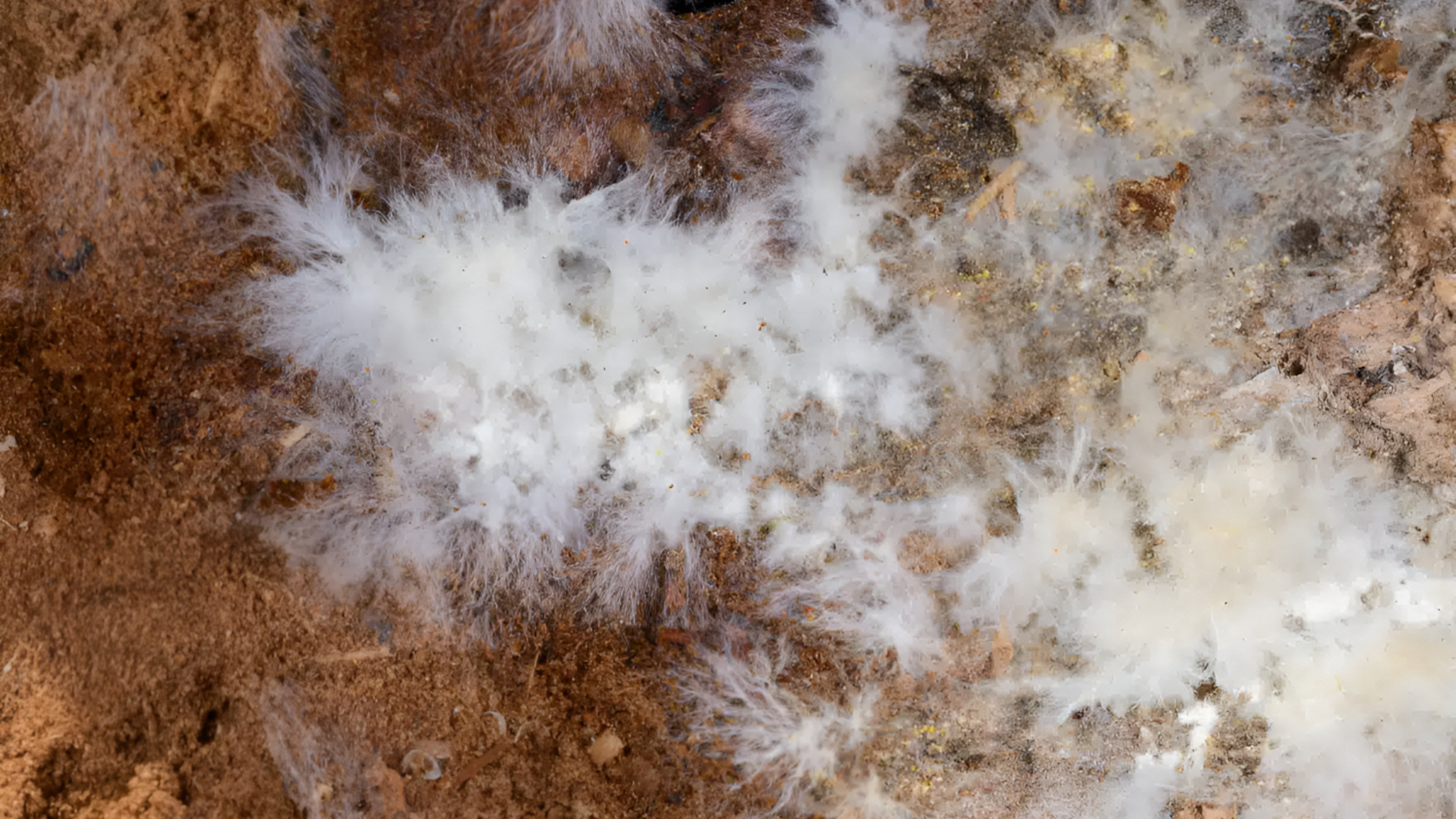
Many conventional mycelium-based materials are rendered nonliving during processing; this one is not. Researchers published a study in Science Advances (2026) describing flexible, freestanding sheets grown from metabolically active Cordyceps militaris mycelium that retain biological function after fabrication, authored by Ke Li, Bolin An, Chao Zhong, and colleagues.
From Spores to Sheets, Without Glue
The fabrication process skips conventional scaffolding and adhesives entirely, relying on the fungus to hold itself together.
Spores grown in liquid culture form dense pellets of intertwined hyphae. Researchers collect those pellets, place them into molds, and dry them into cohesive sheets.
Glycerol treatment reduces brittleness, making the resulting material flexible enough to fold, cut, and sew. A rope made from narrow strips supported a 1-kilogram weight in reported tests.
Color and UV Protection Built In, Not Painted On
Engineered microbial partners add function to the living fungal network without directly reengineering the main organism.
Engineered Saccharomyces cerevisiae yeast, integrated into the fungal structure, produces pigment from within the material rather than as a surface coating. Reported shades include pale blue, red, orange, and purple.
A separate layer of melanized Aspergillus niger absorbs ultraviolet radiation. The study does not report a consumer UV-protection rating for either function.
The researchers describe this as a “plug-and-play” approach: microbial partners add capabilities to an existing living framework without requiring genetic modification of C. militaris itself.
Self-Repair Under Controlled Conditions
Rehydration and fresh fungal paste can restore meaningful structural strength, but only with the right inputs.
Rehydrating the material after shallow damage allowed living fibers to reconnect, restoring roughly two-thirds of original stiffness in lab tests. Applying fresh fungal paste to larger wounds restored approximately 89% of stiffness, according to the study.
The demonstrated repair required controlled conditions and, for larger wounds, the addition of fresh fungal material. The textile does not repair itself autonomously during normal wear without moisture, nutrients, or human involvement.
Water Beads Off, Then the Material Degrades in Soil
A textured surface layer repels water while the material beneath is designed for short-life use rather than long-term durability.
Nutrient droplets placed on selected areas stimulate localized aerial hyphal growth, creating a textured surface that causes water to bead and roll away. The effect is similar in appearance to the lotus-leaf phenomenon.
A sample reached near-complete morphological degradation in soil within 41 days under laboratory conditions. The researchers present this as a possible pathway for short-life applications, not a verified result across all soil types or climates.
Where This Actually Goes Next
Durable everyday clothing is not the near-term target; temporary, biodegradable products are.
Potential near-term applications include biodegradable packaging, temporary displays, experimental fashion, and exhibition textiles where end-of-life decomposition matters more than long-term durability. The available study reports do not establish standard consumer durability tests covering repeated washing, sweat exposure, long-term abrasion, or storage stability.
The same biological activity that enables repair and color production creates sensitivity to humidity, temperature, and contamination. Any commercial version would need to manage those variables carefully before approaching broader use.