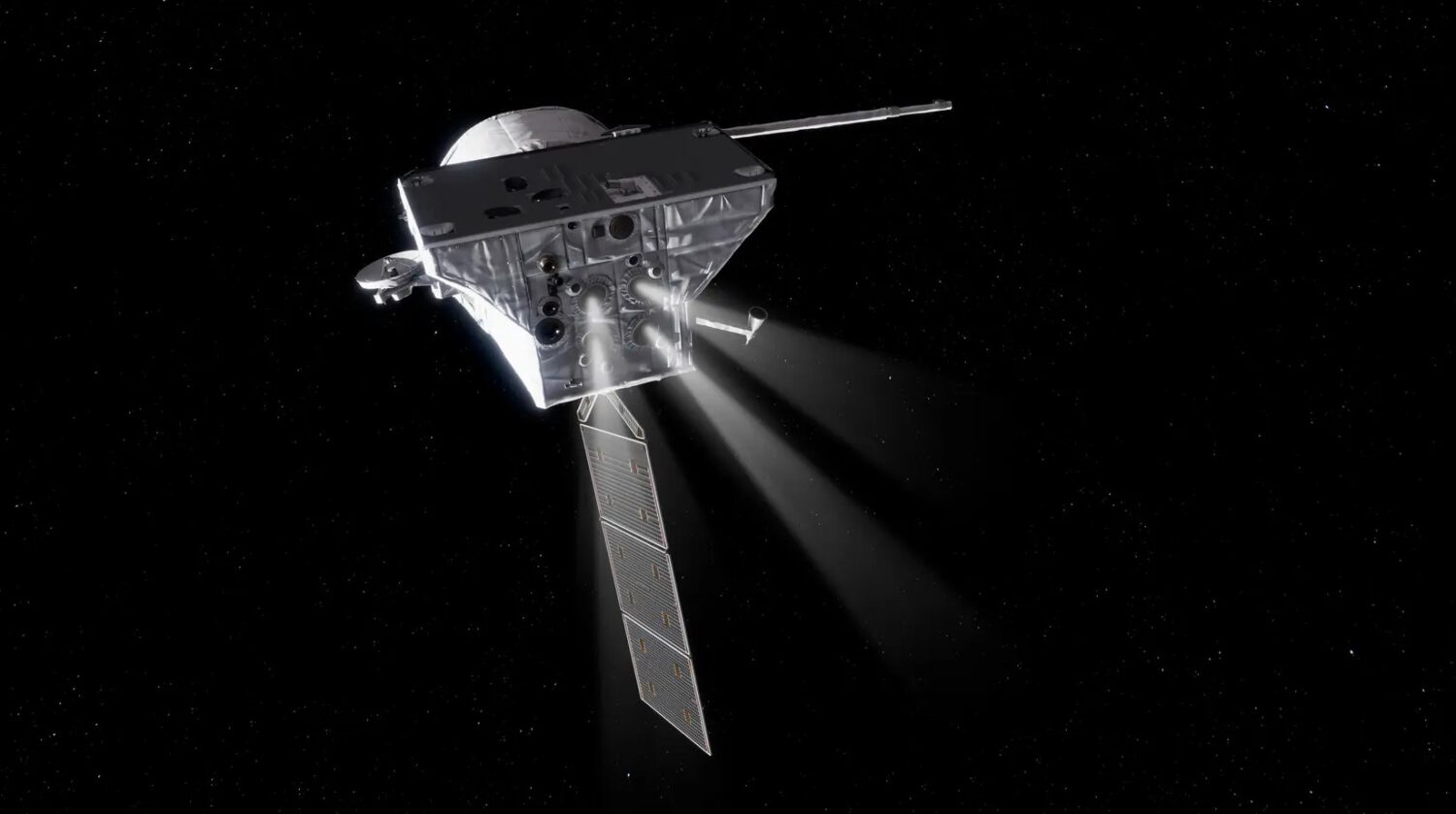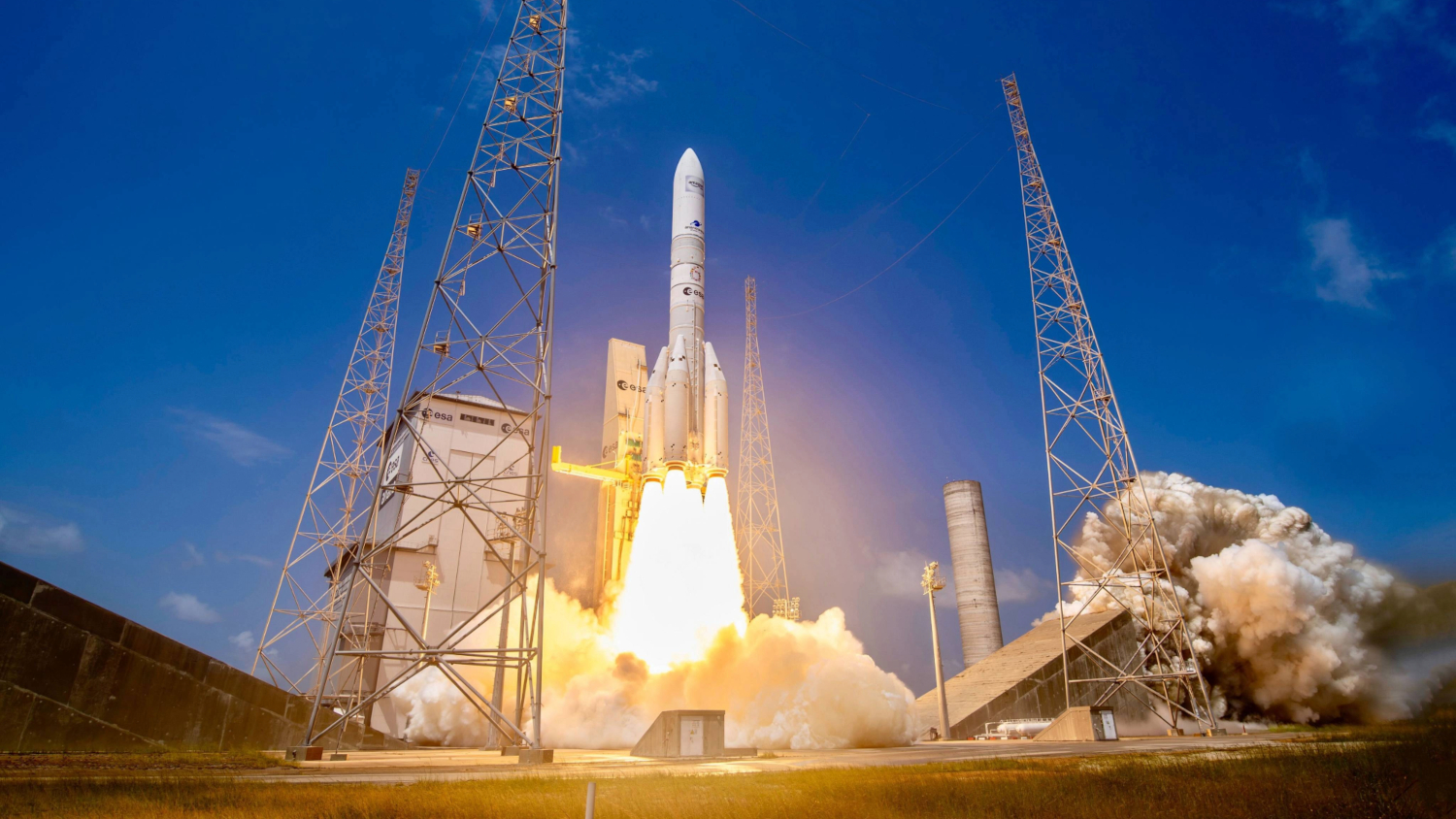
Nine days after a United Launch Alliance Vulcan rocket destroyed 40 Amazon Leo satellites, Arianespace launched 36 more into orbit without incident. The Ariane 64 lifted off from Europe’s Spaceport in Kourou, French Guiana, on November 24, 2026. Satellite deployment was completed roughly two hours after liftoff. The mission arrived at a moment when Amazon‘s launch program was under unusual pressure, making the clean result more consequential than a typical scheduled flight.
Ariane 6 Extends a Clean Record
This was the rocket’s 10th flight and fourth Amazon Leo mission, and it has yet to record a failure.
This was Ariane 6’s 10th flight and its fourth dedicated Amazon Leo mission, bringing the rocket’s record to 10 successful flights out of 10. According to Ars Technica, Amazon Leo’s total in-orbit count reached 432 satellites following the deployment. Satellite Today reported the constellation had surpassed 400 satellites in orbit.
The Failure That Made This Mission More Urgent
A Vulcan failure nine days earlier wiped out 40 satellites and grounded Amazon’s principal launch provider.
On November 15, the Vulcan rocket failed during an Amazon Leo mission. ULA reported low booster performance beginning shortly after liftoff, and the investigation into the root cause is ongoing. No final cause has been confirmed, though GeekWire reported that early data pointed to Vulcan’s first stage as a factor.
ULA remains Amazon Leo’s primary contracted provider. The rocket is grounded pending the investigation and any corrective action that follows.
Amazon Turns to a Competitor’s Rocket
Amazon is accelerating a Falcon 9 mission to December, a flight originally planned for next year, according to an Amazon official cited by Ars Technica. Additional Falcon 9 missions are expected to follow.
The arrangement places Amazon in an unusual position. SpaceX’s Falcon 9 is now helping deploy a broadband network designed to compete with Starlink, which already operates more than 11,000 satellites, according to Ars Technica.
Amazon Leo has 432 satellites in orbit against that figure. Blue Origin’s New Glenn, another provider in Amazon’s launch plan, has reportedly slipped its return to flight to early next year, according to Ars Technica. That delay increases Amazon’s near-term dependence on both Ariane 6 and Falcon 9.
Scale Remains the Central Problem
Hundreds of finished satellites sit in storage while Amazon waits for enough rockets to carry them.
Amazon has booked 108 launches to deploy a planned constellation of 3,232 satellites. Seventeen missions have flown, including the failed Vulcan flight, according to The Next Web.
The company built its 1,000th satellite in October, according to Ars Technica. Hundreds of completed units reportedly sit in storage awaiting launch capacity. Amazon has not yet started commercial broadband service, despite previously targeting a 2025 service start, according to The Next Web.
Ariane 6 Becomes a Steadying Force
Europe’s rocket has a growing role in Amazon’s manifest, though production capacity sets a ceiling on how much it can compensate.
Amazon expanded its total Arianespace commitment to 24 launches in September, adding six missions to its existing contract. Arianespace is targeting a cadence of 12 launches per year by around 2030. Current European production supports roughly nine to ten launches annually, according to The Next Web.
Another Ariane 6 mission is expected before the end of December. European ministers are reportedly weighing whether to authorize additional rocket construction, though no specific decision body or proposal document has been identified.
Three developments will determine whether Amazon Leo can recover its deployment schedule: the accelerated Falcon 9 flight, the Vulcan failure investigation, and New Glenn’s return to flight. All three follow the loss of 40 satellites in a single mission, and each carries direct consequences for when Amazon can begin offering commercial broadband service at meaningful scale.