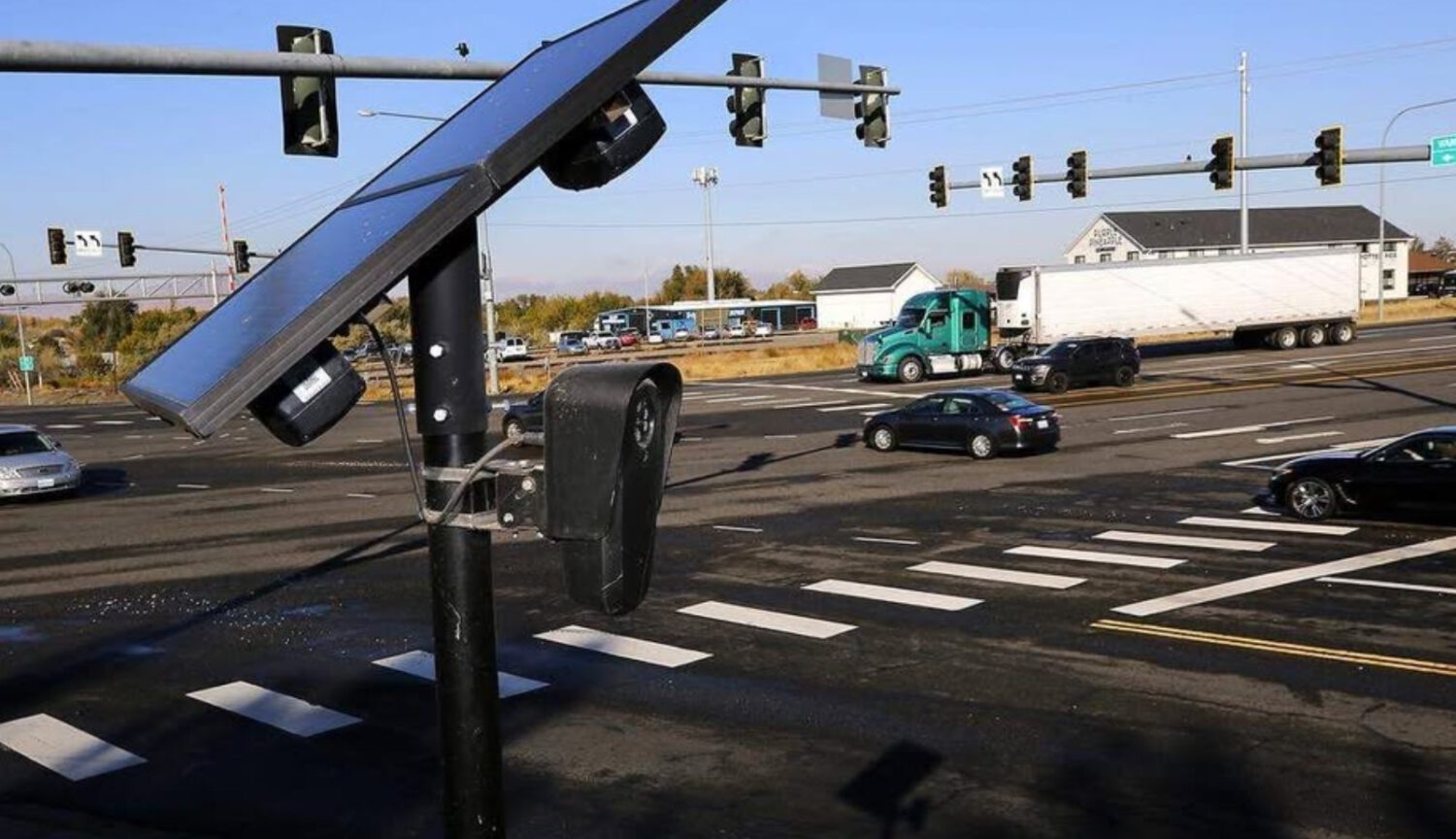
A unanimous vote Monday evening put San Diego’s Flock Safety license-plate-reader program on the path to shutdown. The council also rejected the use policy for the city’s smart streetlight camera network, operated by Ubicquia, in a separate 5-2 vote, with Councilmembers Marni von Wilpert and Jennifer Campbell absent from both. Both systems operated under a combined city agreement valued at roughly $2 million annually, meaning the city needed to address the full contract rather than selectively retain one component. San Diego isn’t alone in facing a Flock Problem with its surveillance contract.
Shutdown Is Coming, but Not Instantaneous
The administration will direct SDPD to begin removing cameras, with a December payment deadline adding urgency.
The vote did not terminate the contract on the spot. City officials said the administration would direct the San Diego Police Department to begin shutting down both systems and removing cameras, though the precise timeline had not been finalized. The next annual payment, approximately $2 million, was due in December, giving the city a concrete financial reason to act quickly.
The Reversal That Shifted the Vote
Councilmember Stephen Whitburn changed his position, citing community fear rather than any failure of the technology itself.
Whitburn had supported continued use of Flock during an earlier annual review but reversed course before Monday’s vote. He indicated that the technology’s effectiveness was not what changed; rather, the surrounding political and social context had shifted. Whitburn argued that residents must feel safe for surveillance tools to retain legitimacy as public-safety measures, and that standard had not been met.
Gloria Steps Back Without Blocking the Vote
The mayor supported the cameras but said he would respect the council’s direction.
Mayor Todd Gloria had backed the surveillance program but said he would not veto the council’s decision. His administration committed to carrying out the council’s direction while pursuing public-safety measures consistent with privacy and transparency requirements.
Safety Claims Versus Accountability Concerns
Flock warned the removal would slow investigations; privacy advocates pointed to a reported misuse case.
Flock spokesperson Andrew Smith said the company respected San Diego’s decision but warned of real consequences: longer investigations, fewer obstacles for organized retail-theft groups, and slower recovery for victims waiting on justice. Critics, including members of the TRUST SD Coalition, argued that the technology required stronger public accountability before it could earn legitimacy as a safety tool.
Opposition at the council meeting also drew on a reported case in which a San Diego police officer may have used camera data to track a domestic-violence victim. That case, reported by NBC 7 San Diego, was cited as a reason for concern , echoing broader worries about how a surveillance app can be turned against the very people it is meant to protect , though it has not been adjudicated as a proven violation.
Where San Diego Fits in a Broader Retreat
Resistance to Flock contracts is spreading across cities regardless of party affiliation.
San Diego is among the largest cities to end or move to end its relationship with Flock, a company whose nationwide expansion has made it a major provider of automated license-plate-reader systems. Secure Justice, a criminal-justice advocacy group, tallied at least 513 Flock contracts ending across cities in both Democratic- and Republican-governed states; that figure comes from an advocacy organization, not an official government dataset.
The pattern illustrates a recurring policy problem: surveillance systems can be legally authorized and promoted as crime-fighting tools, yet still lose political support when residents question data retention, access, or whether the cameras make their communities feel safer rather than watched , a dynamic reinforced by high-profile examples of governments secretly tracking users without meaningful oversight.