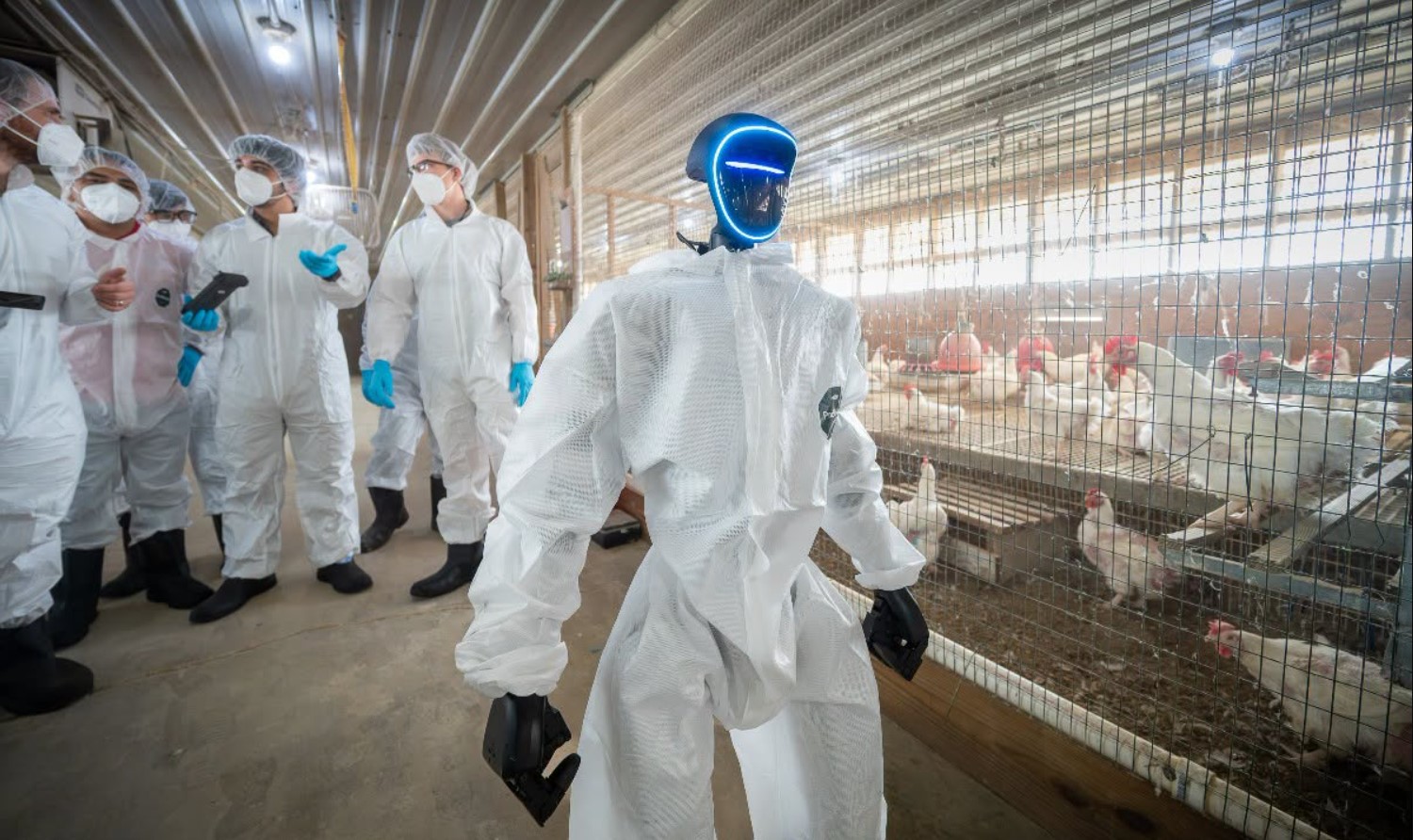
On a 100,000-bird cage-free farm, up to 15,000 eggs could end up on the floor every single day. NC State University’s Artificial Intelligence and Robotics Lab is developing a humanoid robot named Howl to find and collect them, addressing a labor-intensive problem that existing automated systems have not fully resolved.
Why Floor Eggs Are a Cage-Free Headache
The shift toward cage-free housing has made manual egg collection a persistent labor and quality challenge for producers.
Cage-free hens move freely through the barn, and a portion of them lay outside designated nesting boxes. According to Food Agribusiness World, floor eggs can represent anywhere from 2% to 15% of total production, a range that varies with housing design, flock behavior, nesting access, and farm management practices.
Manual collection covers the gap, but it is slow and labor-intensive. Delays between laying and collection can affect product quality, and consistent staffing for the task presents its own difficulty.
What Howl Actually Does
The robot uses computer vision and AI-based perception to locate, approach, and retrieve eggs without breaking them.
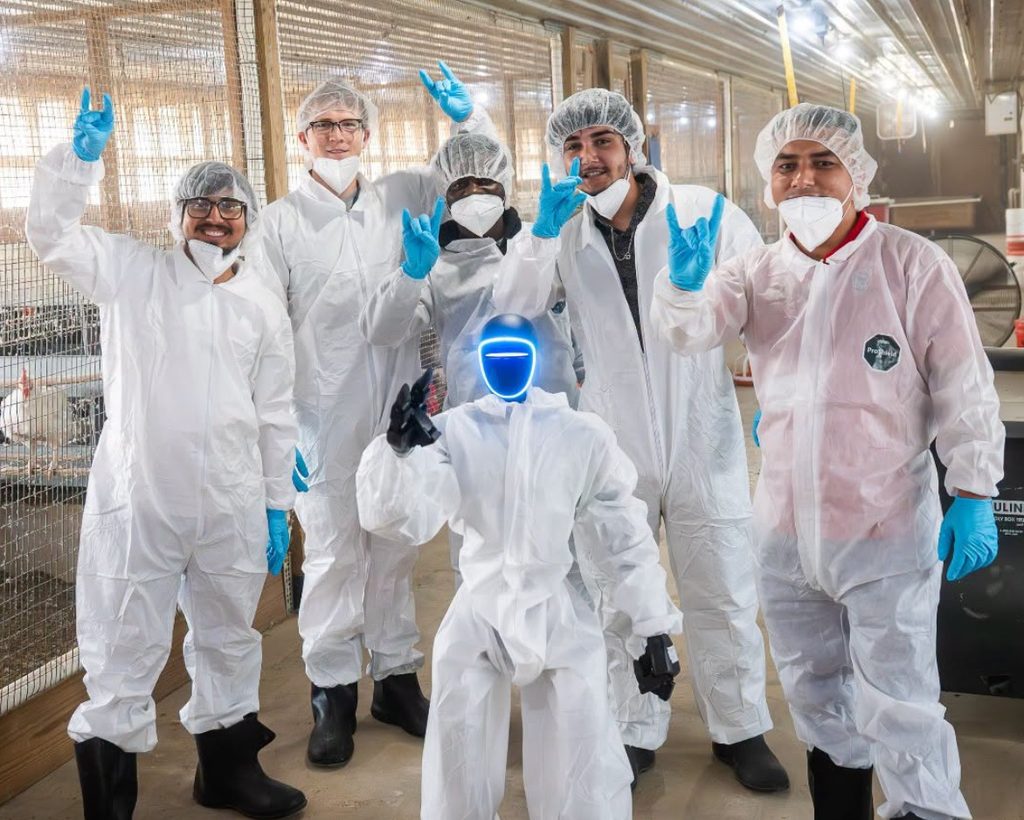
Built on the Unitree G1 humanoid platform and standing roughly four feet tall, Howl is designed to detect floor eggs, navigate toward them, and pick them up. NC State’s AIR Lab, where project researcher Ramesh Bahadur Bist leads related work, is developing the robot’s movement and manipulation capabilities using virtual-reality manipulation, imitation learning, and reinforcement learning. These techniques allow the system to learn handling tasks from demonstration and refine them through repeated practice.
Still a Prototype, Not a Product
Howl remains in the programming and simulation phase, with a reported target of early 2027 for performing the full task.
Researchers are currently working through egg-detection and retrieval simulations before moving toward practical barn demonstrations. The available NC State material does not report validated field-performance figures, and the early-2027 milestone comes from secondary reporting rather than a confirmed institutional deadline.
The anticipated engineering challenges are substantial. Detecting eggs reliably in cluttered barn environments, navigating uneven floors, handling fragile objects without cracking them, and operating safely around live birds are each difficult problems. Each must be solved before the robot can function effectively in a working poultry house.
A Wider Agricultural AI Program
Howl is one of several separate research projects through which NC State’s AIR Lab is applying robotics and AI to poultry production.
The lab is also developing Poultry Talk, a retrieval-augmented-generation system that answers producer questions by drawing on a curated library of poultry-science research and agricultural-extension publications. That knowledge base covers nutrition, disease prevention, housing, welfare, and production management. A third project uses fixed two-dimensional and three-dimensional cameras with computer-vision models to assess individual bird health, tracking indicators such as feather condition, plumage density, and body weight. The available sources present these as distinct research efforts, not components of a single deployed integrated system.
What Success Would Actually Look Like
Howl’s practical value will ultimately depend on operational performance figures that have not yet been established.
Meaningful evaluation will require concrete numbers: eggs recovered per hour, breakage rate, share of floor eggs actually retrieved, and cost per recovered egg compared with manual labor. Effects on bird stress and worker safety will also matter. Those figures are not reported in the available sources. What exists is a research prototype with a clearly defined problem to solve and a development timeline working toward an early-2027 target.