One resident reported counting 18 Amazon drone overflights in 21 minutes, according to WBRZ. That works out to roughly one every 70 seconds. For the customer receiving a delivery, it is a novelty; for everyone else on the block, it is noise.
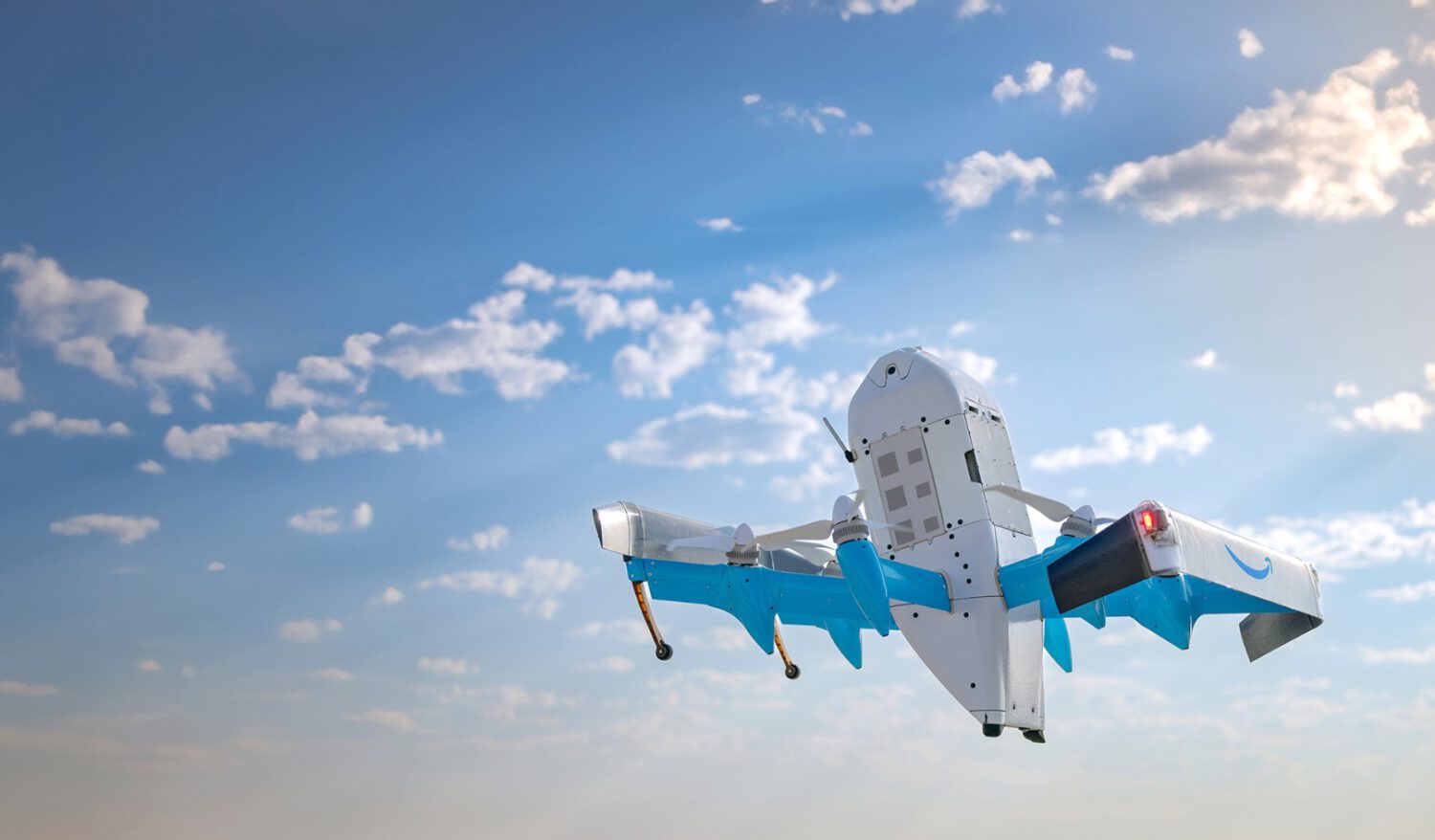
Amazon Prime Air’s MK30 drones serve customers within approximately a 7.5-mile radius of the company’s Baton Rouge fulfillment center. The drones operate under FAA authorization for autonomous, beyond-visual-line-of-sight flights.
According to Amazon representatives, outbound flights travel at roughly 200 to 250 feet before descending near the delivery address. Return flights use routes at approximately 300 to 350 feet, the same representatives said.
Residents reported seeing flights they believed were lower than those figures. The cited reporting did not identify any independent measurement confirming either account.
Amazon’s own noise sampling during one Baton Rouge delivery recorded approximately 68 decibels at a nearby backyard, the company told WBRZ. That figure is an Amazon measurement, not an independent finding; the methodology and conditions were not supplied. Residents described the sound as similar to a weed whacker or leaf blower, and said the noise was persistent enough to drive them indoors, according to IEEE Spectrum reporting.
Federal Rules, Local Consequences
Airspace above a set altitude is federal territory, and that jurisdictional boundary shapes every complaint Baton Rouge residents can make.
When residents pushed local officials to intervene, parish attorneys confirmed the city-parish lacked authority over drone altitude as long as Amazon operated within FAA parameters. That boundary is not unique to Louisiana.
The FAA completed an environmental review for an Amazon Prime Air operation in Florida and issued a Finding of No Significant Impact. That decision covered the Florida proposal specifically, not the Baton Rouge operation. A separate FAA decision found that the short duration of individual drone visibility and the broad distribution of flights would minimize significant visual effects. Those assessments measure defined environmental metrics; they were not designed to capture residents’ cumulative experience of repeated flights over months.
What Amazon Claims, What Residents Experience
Amazon’s privacy assurances are company representations; no independent technical audit of the claims was identified in the available reporting.
Amazon states its delivery drones carry cameras, but employees do not monitor live feeds and the systems do not use facial recognition. No audio is captured, and images are not sold or used for advertising, the company says. Amazon adds that footage is shared with government agencies only when legally required or needed to protect safety.
Residents attributed fewer bird sightings to the drone traffic, though the cited reporting does not establish a measurable decline in local wildlife populations. After sustained complaints, Amazon rerouted approximately 70% of flights away from one heavily affected Baton Rouge neighborhood, according to IEEE Spectrum. Residents and local observers said the change could shift the burden to other communities rather than eliminate it.
Baton Rouge Is Not an Outlier
Organized opposition is forming in other states, and additional drone operators are expanding alongside Amazon.
Residents in Richardson, Texas, formed a group called Quiet Skies Texas in response to Amazon drone expansion, according to DroneXL reporting. In Westborough, Massachusetts, community opposition preceded Amazon withdrawing a proposed program before launch; the company indicated it would return with a revised proposal after further discussions, the same reporting said.
Walmart and public-safety agencies, including police and fire departments, are also developing or deploying drone operations. Communities that address one operator’s impact may face overlapping programs from multiple sources.
The Redistribution Problem Has No Easy Answer
When one neighborhood pushes back hard enough, the flights move; the harder question is where they go next.
Route adjustments could quiet one block while increasing overflights on another. The distributional question is whether the burden falls on communities with the organization to push back, or on those without. No federal standard for equitable distribution of that burden currently exists. Local governments retain authority over zoning, facilities, and related land-use matters, but their control over aircraft altitude and routing is limited as long as operators remain within FAA guidelines.