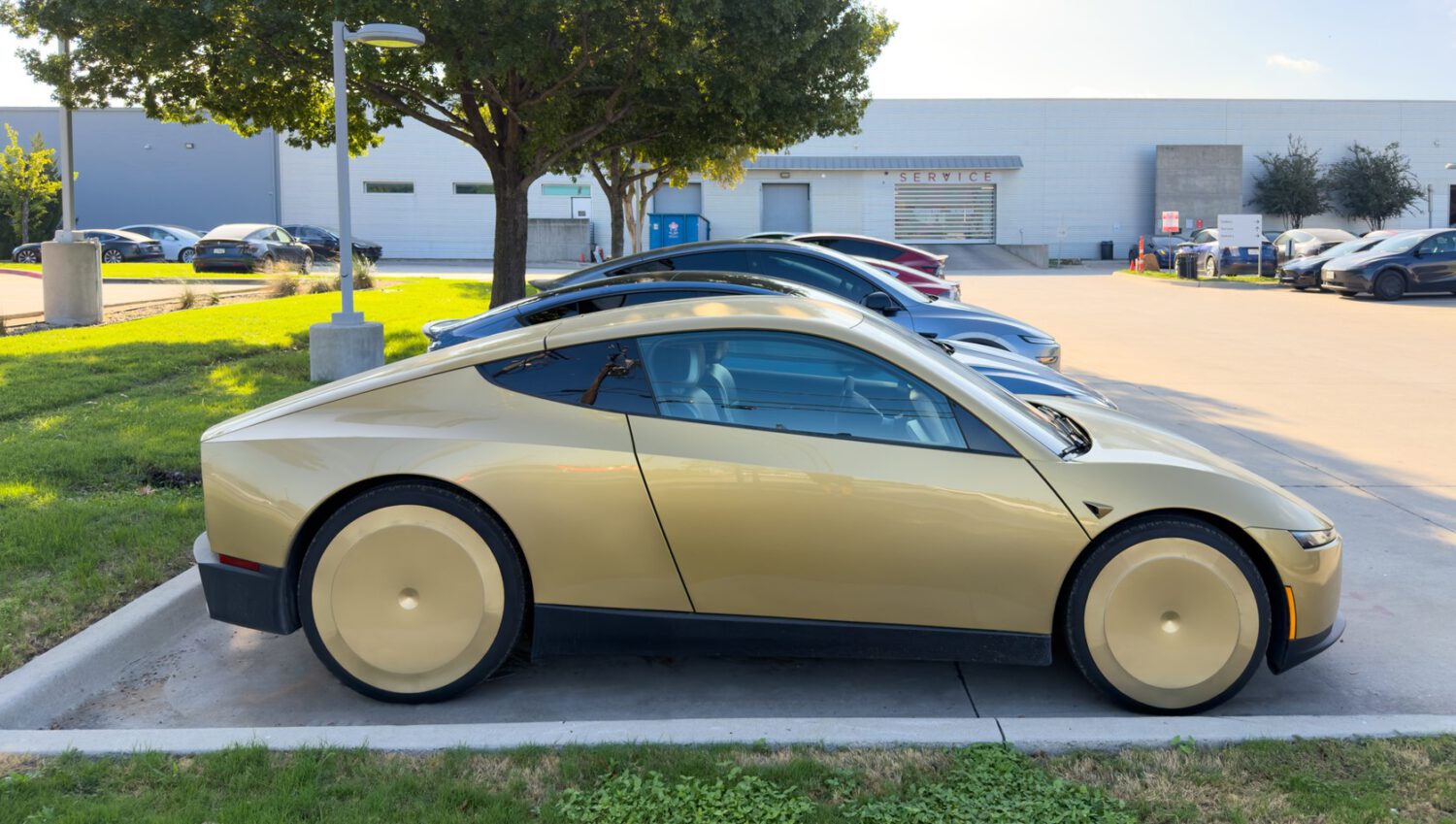
Pre-ordering a Cybercab for $29,990 does not deliver a vehicle you can operate anywhere. The reported order terms show an estimated December 2026 delivery in Austin, Texas, available only to select invited customers, and the car will initially operate only within supported service areas that mirror Tesla’s existing Robotaxi zones.
That distinction matters because the vehicle has no steering wheel and no conventional driver controls. Buyers are not purchasing open-road autonomy. They are purchasing access to infrastructure Tesla has already defined and approved for autonomous operation.
Where It Goes and Who Controls That
The Cybercab’s geographic limits are tied directly to Tesla’s existing Robotaxi service footprint.
Tesla executive Ashok Elluswamy explained, as reported by Yahoo Finance, that the Cybercab will operate unsupervised only in the same geographic zones as Tesla’s Robotaxi service, while also serving the individual owner’s personal transportation needs within those zones. The practical effect is that an owner’s ability to use the vehicle depends entirely on where Tesla’s supported service areas exist.
That coverage is currently limited to specific locations in Texas. Elluswamy’s statement confirms the geofencing is a structural feature of the product, not a temporary workaround, at least at launch.
The Monthly Fee Nobody Seems to Agree On
Tesla is listing a $299 monthly autonomy subscription, but Elon Musk has publicly said that number is too high.
Musk suggested the fee should be closer to $115, according to Yahoo Finance. That figure is roughly in line with what Tesla charges for Full Self-Driving and connectivity on its other electric models. No confirmed pricing change has been announced, and the current listed subscription remains $299 per month.
The gap between the posted subscription and the CEO’s stated preference is roughly $184 per month, or more than $2,200 per year. Early buyers are committing $29,990 today without a clear answer on what their ongoing operating costs will actually be.
Nationwide Availability Depends on Regulators
Musk said broader availability is possible, but it depends entirely on regulatory approval, with no confirmed timeline attached.
This is not a nationwide launch. Tesla describes the current offer as available to select customers only. Musk said the Cybercab would become available more broadly as Tesla receives regulatory approval, though no schedule for that approval has been confirmed. The launch, as structured, functions more like a controlled expansion of Tesla’s Robotaxi infrastructure than a conventional vehicle sale to the general public.
Why the Cybertruck Factory Is Being Repurposed
Tesla’s decision to wind down Cybertruck production at Gigafactory Texas around mid-2027 reflects both a production bet and a demand reality.
The company plans to redirect that factory capacity toward increased Cybercab production, according to CNBC. Cybertruck sales fell well short of Tesla’s earlier production ambitions, the San Francisco Chronicle reported, which makes the available factory capacity easier to reassign to the Cybercab program.
The Strategic Bet Behind the Launch
Tesla is moving manufacturing resources from a slow-selling truck toward the vehicle at the center of its autonomous-transportation strategy.
The company is effectively reallocating capacity from an underperforming electric pickup toward a product that Musk has described as central to Tesla’s autonomous-transportation ambitions, as reported by Reuters. Whether Cybercab demand and regulatory approval can justify that shift remains an open question.