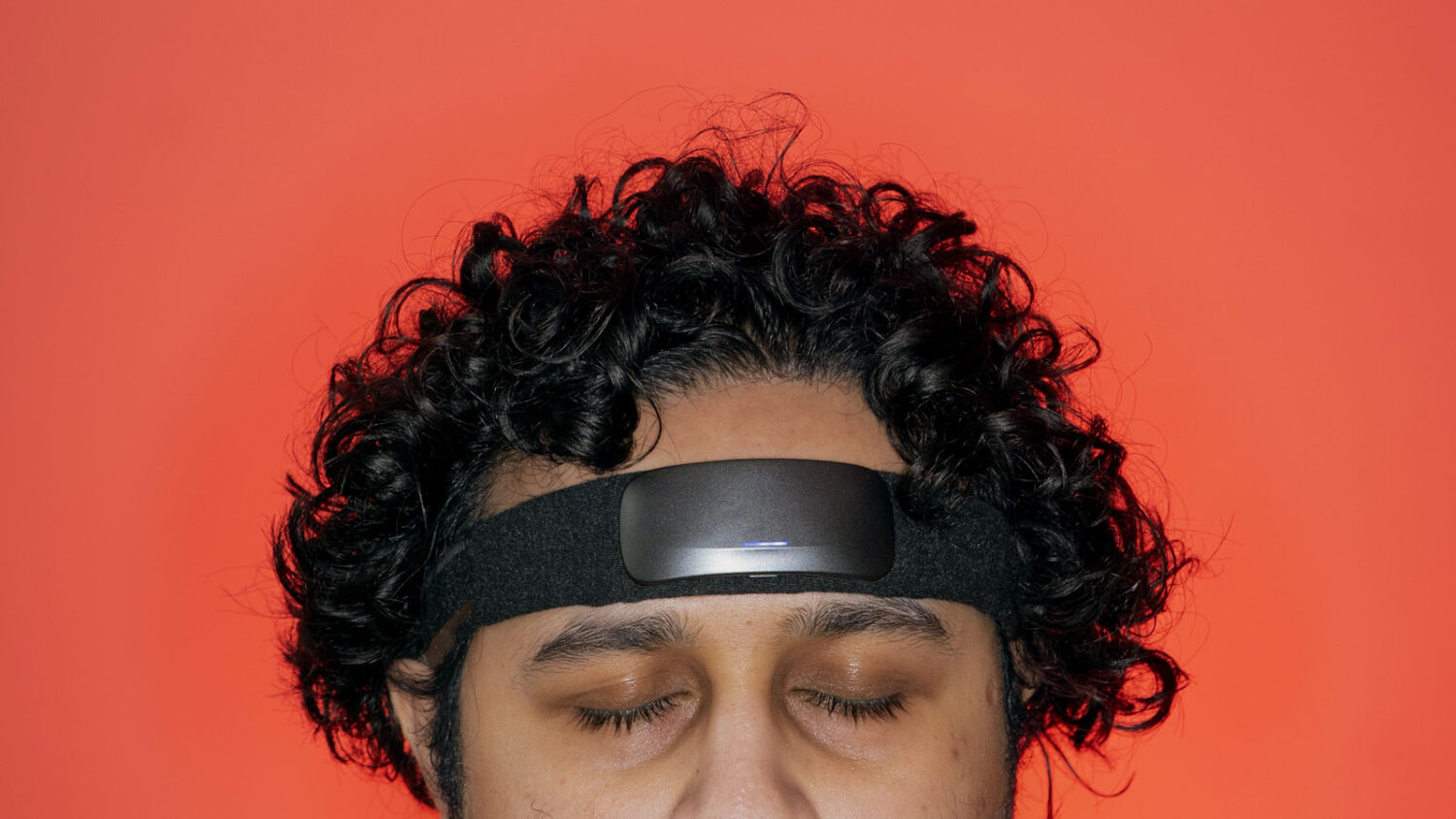
You strapped a headband to your head to get a sleep report. Several companies were secretly tracking users with those recordings.
A yearlong investigation by Science, conducted with the Pulitzer Center’s AI Accountability Network, found that consumer neurotechnology companies collected EEG data through sleep and meditation wearables, then used those recordings to train artificial intelligence foundation models. Their privacy policies did not clearly tell users that was happening.
Brain Data Is Not Step Count Data
EEG captures electrical signals generated by the brain itself, which places it in a different category than heart rate or daily step counts.
The distinction matters because the central question is not just whether companies shared data. It is whether they clearly disclosed a secondary, commercial use for a physiological signal generated by the brain.
What the Investigation Found
Science reviewed privacy practices across dozens of consumer companies and identified nine that had publicly stated they were building brain foundation models.
Those are AI systems trained on large volumes of neural signals to learn recurring patterns in brain activity, which can later be adapted for tasks such as distinguishing sleep stages.
Across the sector, those companies had collectively accumulated tens of millions of hours of EEG recordings. That figure describes total data collected and does not represent a verified count of recordings confirmed to have been used for AI model training.
Interaxon and the Muse Headband
Interaxon, the Canadian company behind the Muse sleep and meditation headband, provided the investigation’s most detailed confirmed figures.
Interaxon told Science it trained an AI model on approximately 50,000 hours of EEG recordings, most of them collected from users of its devices. That figure is self-reported and has not been independently audited.
The company said it removed direct identifiers, including names and email addresses, before using the recordings for model development. Before Science raised questions, Interaxon’s privacy policy did not explicitly disclose that brain recordings could be used to train foundation models.
The company subsequently updated the policy to state that de-identified session data may be used to improve algorithms and machine-learning models, including foundation models.
Emotiv Followed the Same Pattern
A second EEG-device maker updated its disclosures after the investigation surfaced its practices.
Emotiv had been training a model it calls “Large Brain” using recordings from customers of its devices. After Science’s inquiries, Emotiv updated its privacy policy to add disclosure of de-identified neural-data use for model training, subject to opt-in consent.
De-Identification Is Not Consent
Removing names and email addresses reduces direct identifiers, but it is a separate matter from obtaining informed consent.
A privacy policy that broadly permits “service improvement” is not the same as a clear disclosure that recordings will train a general-purpose AI model. The investigation found that none of the nine companies clearly communicated the latter before the reporting surfaced it.
Removing direct identifiers does not establish that users gave informed, specific consent for AI training. The research also does not confirm that de-identified EEG signals cannot be reidentified, a concern echoed in reports of a surveillance app built to covertly target individuals through their own devices.
What Remains Unresolved
Both companies updated their privacy disclosures after Science’s questions, and several questions about data handling remain open.
For the companies examined, the investigation found that privacy policies initially did not clearly disclose brain-foundation-model training. Emotiv’s official terms state that withdrawing consent halts future data ingestion but does not remove contributions already incorporated into trained model weights. The available sources do not provide equivalent confirmation for Interaxon.
No legal determination has been made regarding any company’s compliance with applicable privacy law. Any such assessment would require jurisdiction-specific analysis of disclosure language, consent mechanisms, and relevant health-data and consumer-protection rules.