A man walked into a Home Bargains store with his wife to buy vitamins. He left accused of shoplifting, told to get out, and rattled enough that, as TechRadar reported, he later said: “I was scared to go into a shop.”
That sentence deserves a moment. Not scared of being robbed. Scared of walking through a door.
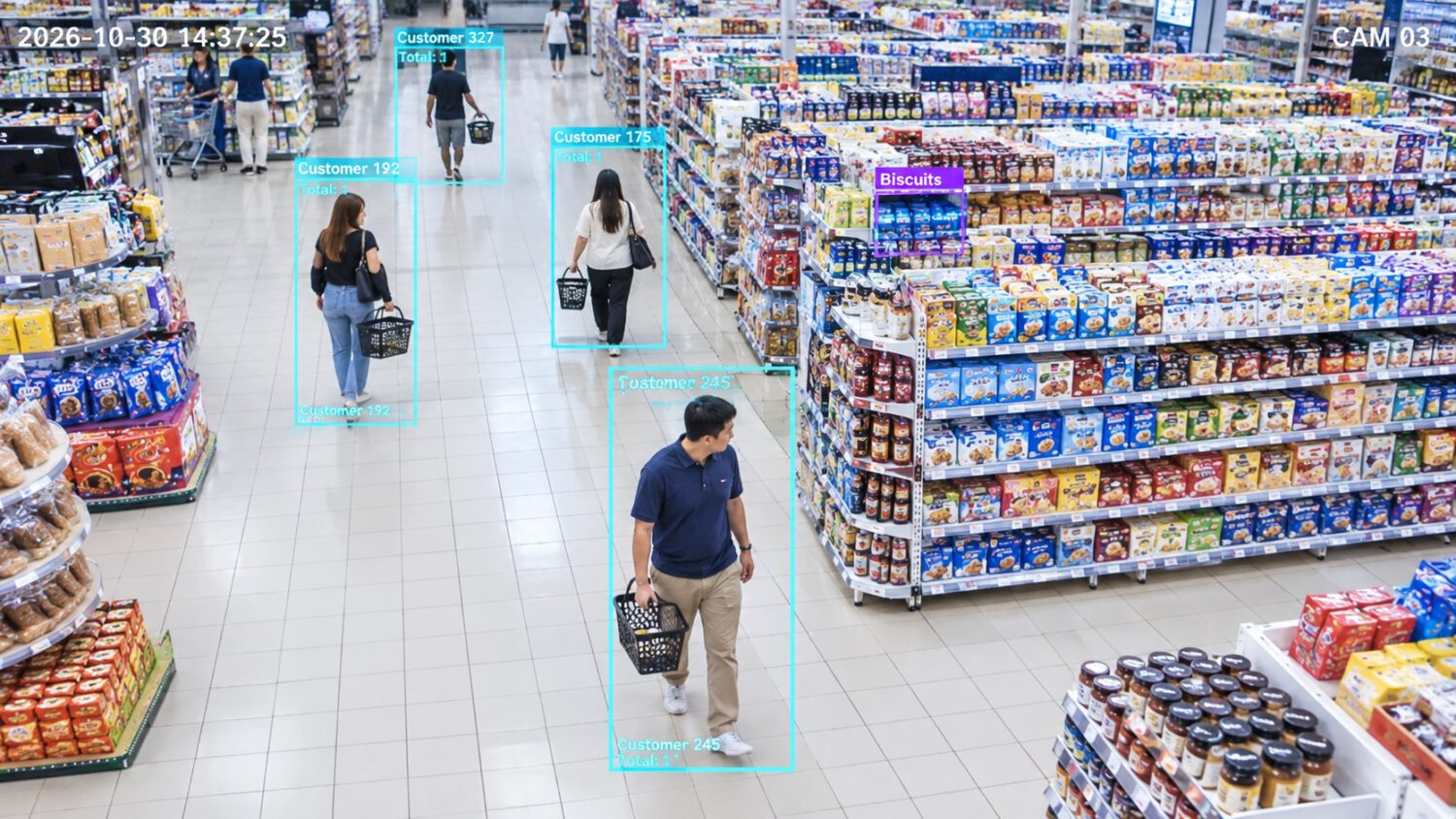
Facewatch operates by mapping shoppers’ facial geometry and comparing it against a watchlist of people reasonably suspected of involvement in crime. Participating retailers have included Home Bargains, B&M, Budgens, Costcutter and Sports Direct, according to Big Brother Watch’s research. This kind of surveillance app infrastructure raises serious questions about how biometric data is collected and used against civilians.
When the system finds a possible match, it alerts staff. A possible match is not proof of anything. In documented cases, however, alerts have been treated as sufficient to justify confrontation, bag searches, removal and store bans.
One Wrong Flag, Then Another, Then Your Biometric Data Shared Across Stores
Civil-liberties group Big Brother Watch has documented multiple cases in which innocent shoppers were flagged, accused and had their data shared between retailers.
Big Brother Watch reported the case of Danielle Horan, who was wrongly placed on Facewatch’s watchlist and labeled a thief. She was twice accused and removed from stores despite being innocent, and participating retailers shared her biometric data, a practice the ICO has confirmed is part of Facewatch’s shared national watchlist system.
Facewatch’s system also flagged a teenager the research identifies as Sara at Home Bargains. She was subjected to a bag search and told she was barred from other retailers using the software. Facewatch later acknowledged, according to Big Brother Watch, that both its technology and a human “super-recogniser” had mistaken her for someone else.
At a Budgens store, a woman was accused of stealing “loads of meat,” despite the couple saying they had not visited the store in months. Her husband, according to TechRadar’s reporting, was “shaking from head to toe.”
Facewatch Takes Responsibility for the Tech; Retailers Own What Happens Next
The division of accountability between technology provider and retailer leaves wrongly accused shoppers caught between two parties, each pointing at the other.
Facewatch told TechRadar that it “takes responsibility for its technology and processes, and retailers are responsible for how their staff interact with customers.” That division sounds orderly. In practice, when a retailer acts on a false alert and shares the resulting ban with partner stores, the harm spans both sides of that line.
TechRadar reported that Sainsbury’s paused facial-recognition alerts after an innocent shopper was removed, then later resumed live alerts. Sainsbury’s declined to comment and referred data-privacy questions to Facewatch.
The Remedy Exists on Paper
UK data-protection law gives wrongly flagged shoppers a formal route to challenge what happened, but civil-liberties advocates say the process places an unfair burden on the people it is meant to protect.
UK law gives affected people the right to a Subject Access Request, allowing them to ask an organization what personal data it holds on them. The Information Commissioner’s Office says organizations normally have one month to respond, though extensions may apply in complex cases and identity checks may be required.
Big Brother Watch describes the process, as quoted by TechRadar, as a bureaucratic ordeal. To learn why they were flagged, people may be asked to provide additional identifying information to the very organization that accused them. According to TechRadar’s reporting, the ICO called accounts from wrongly flagged shoppers “harrowing” , and cases like these echo broader concerns about secretly tracking users without meaningful consent or recourse. Notably, the ICO also concluded that regulatory action against Facewatch was not required, while recommending ongoing audits, privacy-policy reviews and risk monitoring.
Verifiable Numbers, Independent Audits, and Clearer Rules on Watchlist Sharing
Until retailers publish meaningful performance data and independent audits test accuracy across diverse conditions, the public has no way to assess how often the system gets it wrong.
Facewatch says its systems operate successfully across thousands of stores and warns against treating documented cases of misidentification as typical. That defense needs verifiable numbers behind it. How many alerts do participating retailers generate, and what share lead to confirmed matches?
The research reviewed for this article did not identify a publicly available independent audit measuring performance across age, race, sex, lighting and camera conditions. Retailers should publish alert volumes and false-match rates. Watchlist sharing between stores needs defined controls and limits. Public resistance to automated surveillance networks in civic spaces shows that communities increasingly demand accountability from these systems.
Most urgently, staff need clear guidance: an algorithmic alert is a prompt for cautious investigation, not an accusation. The technology may improve. The accountability structure needs to improve faster.