The Seoul Metropolitan Police Agency announced the referrals following an investigation into unauthorized FSD activation on Tesla vehicles not certified for the feature in South Korea. Police described the conduct as a violation of the Motor Vehicle Management Act, which treats software modifications affecting safe vehicle operation as a criminal matter.
How the Alleged Bypasses Worked
Drivers imported hardware from Europe and China, and at least one suspect assembled a device at home using publicly available technical instructions.
The CAN bus is the internal network that carries commands between vehicle systems. The imported and homemade devices connected to it and circumvented Tesla’s regional software restrictions. Investigators also allege that some suspects coordinated online to share methods for concealing activation logs, apparently to prevent detection by Tesla or authorities.
Why Certain Teslas Are Restricted in South Korea
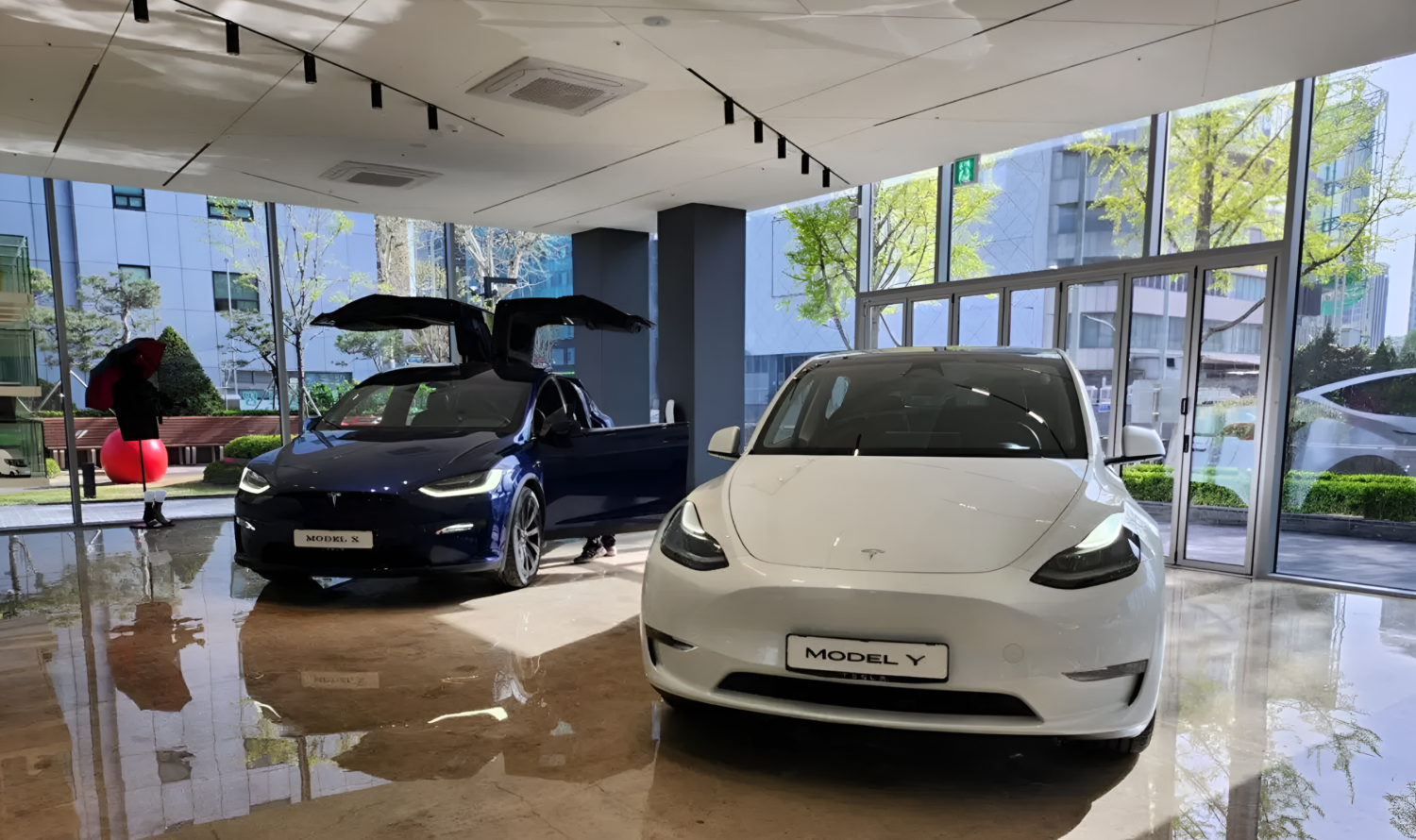
The restriction is not arbitrary: FSD has cleared South Korea’s safety certification only for U.S.-built Model S, Model X, and Cybertruck vehicles.
China-built Model 3 and Model Y vehicles have not received the equivalent local certification, leaving their owners in a restricted class. A partial exemption under the Korea-U.S. free trade agreement applies to certain U.S.-built vehicles. That exemption explains why the approved list skews toward those models, meaning two owners can drive functionally similar vehicles yet face different legal permissions for the same software feature , a dynamic that also shapes broader Gas vs Diesel vs Electric ownership trade-offs for EV buyers navigating regional regulations.
The Legal Stakes
South Korea’s Motor Vehicle Management Act sets a ceiling of two years in prison or a fine of approximately 20 million won, roughly $15,000, for unauthorized vehicle software modifications.
Those are statutory maximums, not sentences already handed down. Prosecutors have not yet resolved the cases, and it remains unclear how many of the 80 referrals will result in charges or convictions. What is established is that South Korean authorities are treating unauthorized software activation as a vehicle-safety alteration, not a consumer software dispute or a terms-of-service matter.
Tesla’s Parallel Response
According to secondary reporting, Tesla began remotely identifying unauthorized activation devices and cutting off FSD access on affected vehicles.
Reports indicate the company has also warned that unauthorized modifications could void warranty coverage and leave owners facing potential civil liability. That creates a second layer of exposure: criminal referral on one side, potential warranty loss and liability disputes on the other.
What This Case Signals for Software-Defined Vehicles
Paying for a feature, or owning hardware capable of running it, does not grant legal permission to activate it in every market.
Capability, authorization, and regulatory clearance are three separate things, and the distance between them now carries criminal weight in South Korea. Unlike straightforward DIY car fixes that remain fully legal, software bypasses of this kind cross into criminal territory under South Korean law. How governments assign liability in these cases, whether to the owner, the device supplier, or the manufacturer, remains an open question. This prosecution has not yet resolved it.