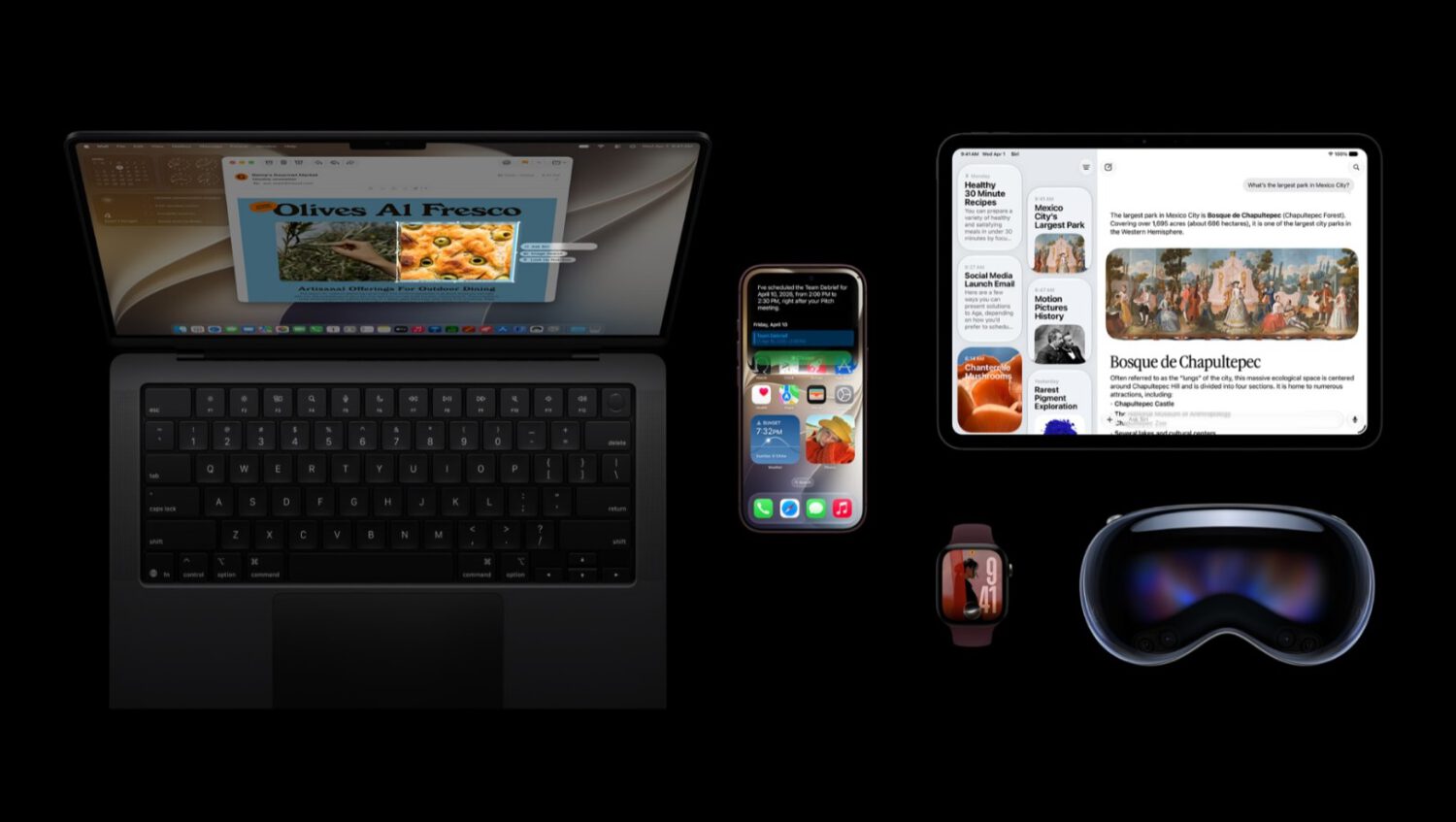
Any “25-plus products” figure requires context: the total is plausible only under a broad definition that counts product families, chip configurations, accessories, and software releases as separate items. Apple has not published an official product count for the cycle.
The September 9 event produced iPhone 18 Pro, iPhone 18 Pro Max, Apple Watch Series 12, Apple Watch Ultra 4, and AirPods 5. All five reached stores September 18, according to Apple’s newsroom.
Mac mini (M6 and M5 Pro) and Mac Studio (M5 Max and M5 Ultra) followed on September 22. iOS 27, iPadOS 27, macOS 27, and watchOS 27 began rolling out September 14. Expanded Apple Intelligence and Siri capabilities arrived with those updates.
The Foldable iPhone Arrives
iPhone Duo is Apple’s first foldable, built around a 7.6-inch internal display and the A20 Pro chip, and it warrants its own entry in any accounting of this cycle.
Pre-orders opened October 16. Availability was scheduled to begin October 23, according to Apple’s newsroom.
October Brought Four More Hardware Announcements
The late-October wave covered four distinct product lines in roughly 48 hours, with announcements running from October 26 through October 28.
Apple introduced the iPad mini on October 26, now featuring an 8.5-inch OLED display, the A20 Pro chip, a 12MP Center Stage camera, and water and dust resistance. The following day brought a 14-inch MacBook Pro with M6 and a new iMac with M6, the latter retaining its thin all-in-one design and available in seven colors. On October 28, Apple announced a MacBook Pro with PROLED XDR display and Touch, offered in 14- and 16-inch configurations.
Pre-orders for the M6 MacBook Pro, iMac, and PROLED MacBook Pro opened October 28, with availability scheduled for November 6, per Apple’s newsroom. The iPad mini, announced October 26, shares that November 6 availability date.
Announced Is Not the Same as Shipped
Buyers tracking this cycle should note a clear divide between products already in stores and those still moving through pre-order.
As of late October, eight products are in stores: iPhone 18 Pro, iPhone 18 Pro Max, Apple Watch Series 12, Apple Watch Ultra 4, AirPods 5, Mac mini, Mac Studio, and iPhone Duo, which was scheduled for availability October 23. The iPad mini, new iMac, M6 MacBook Pro, and PROLED MacBook Pro are in pre-order and have not yet shipped as of this writing.
Software Updates: Count Them Separately
Apple’s October 27 creative-software announcements are part of the broader release surge but belong in a different column from hardware.
Apple announced AI tools and workflow updates across Final Cut Pro, Logic Pro, Pixelmator Pro, Keynote, Pages, and Numbers on October 27. These are software releases and should not be counted in the hardware total.
What Makes This Cycle Different
The density of this release window is notable not just for its volume but for the category boundaries it crosses.
This cycle folded desktops, laptops, tablets, and a new device category into the same roughly eight-week window. The first foldable iPhone, an OLED upgrade for the iPad mini, and a new display technology in MacBook Pro represent meaningful category shifts, not routine spec bumps. The Apple Watch and AirPods refreshes are annual updates by comparison; separating the two tiers is worth the effort before deciding what to buy with the right iPhone accessories.