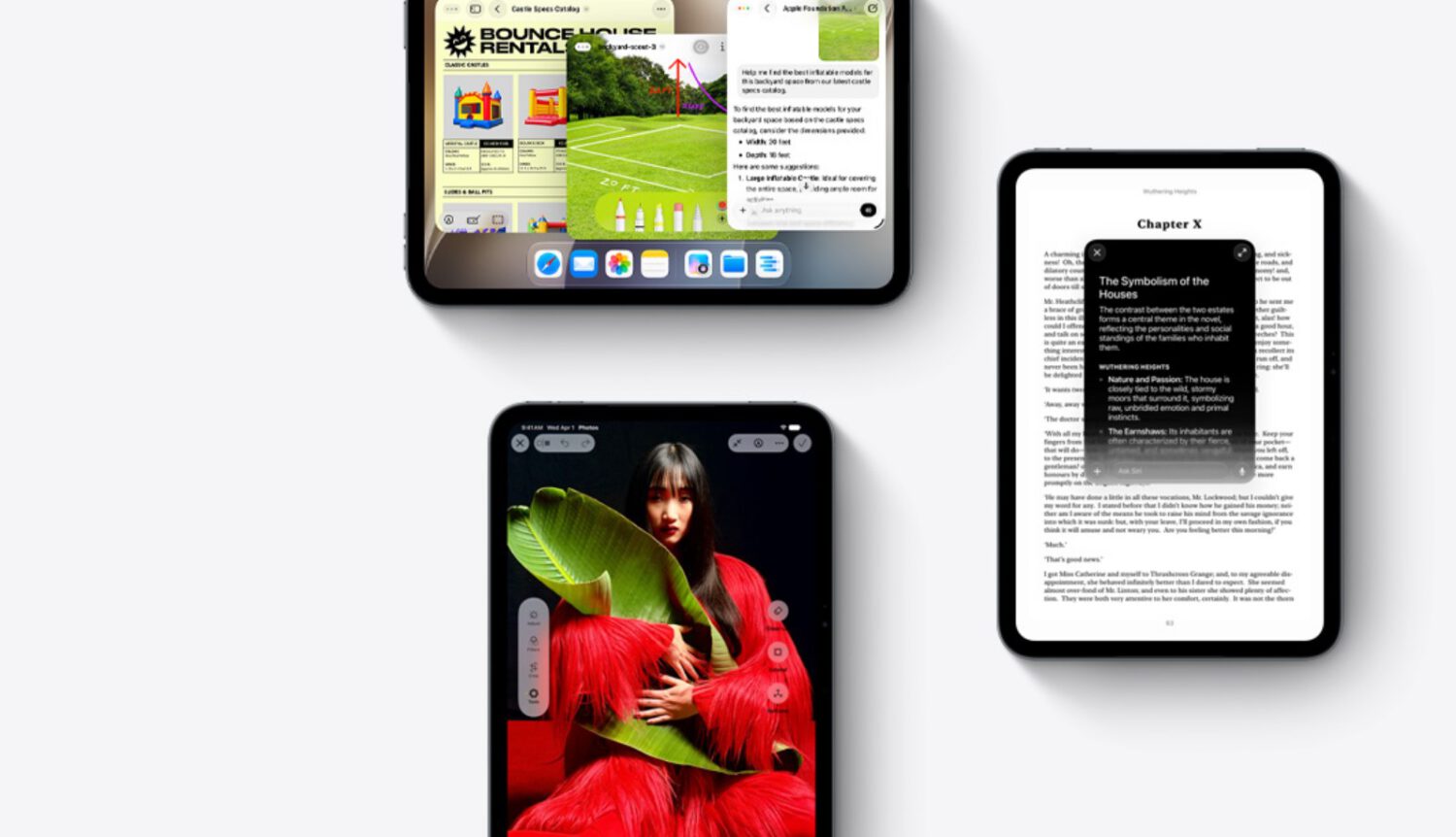
The new iPad mini arrives with Apple’s first OLED panel in the lineup and a refresh rate fixed at 60Hz. ProMotion, the adaptive 10Hz-to-120Hz technology currently reserved for iPad Pro models, is absent. The tablet starts at $699, with availability set for November 6.
David Pakula, Apple’s vice president of hardware design, addressed the omission in an interview with YouTuber and podcaster Christopher Lawley. “Display experience is about more than just a single spec,” Pakula said, according to MacRumors’ report on the interview.
What Apple Is Actually Arguing
Pakula’s defense focuses on pixel response time, which is a different measurement from refresh rate.
Pakula’s case centers on how quickly individual pixels transition. OLED pixels switch states more than an order of magnitude faster than LCD pixels, he said. That speed reduces motion blur, which can make moving content look smeared or soft.
Apple’s argument is that the new display can appear smoother than its LCD predecessor even without a higher refresh rate.
The Distinction Apple’s Answer Skips
Faster pixel transitions improve individual frames; they do not produce more frames per second.
A 60Hz display refreshes the image 60 times per second. A 120Hz ProMotion display refreshes 120 times per second. Faster pixel transitions reduce visible artifacts within each frame, but they do not generate additional frames.
Scrolling smoothness, interface animation cadence, and Apple Pencil tracking are all strongly constrained by how often the display updates. On that measure, 60Hz remains 60Hz regardless of pixel response speed.
What the OLED Panel Does Deliver
The confirmed display specifications represent a substantial improvement over the previous LCD panel on contrast, brightness, and color.
Apple lists a 2,000,000:1 contrast ratio, 600 nits standard brightness, and 1,200 nits HDR peak brightness. Resolution sits at 326 pixels per inch with P3 wide-color support, per the iPad mini specs page on Apple.com.
Because OLED pixels produce their own light and switch off individually, black areas of the screen go fully dark. Apple says the panel provides deeper blacks and higher contrast than the outgoing LCD display, which relied on a shared backlight.
A Pattern Worth Noting
ProMotion remains exclusive to the iPad Pro lineup, though Apple has not cited product segmentation as the reason for that boundary.
ProMotion currently appears only in Apple’s iPad Pro models. The OLED iPad mini sits below that tier. No supplied report quotes Apple stating that the refresh rate cap is a deliberate segmentation decision; that reading is an inference from the lineup structure, not a confirmed company position.
What Buyers Should Weigh
The OLED upgrade improves image quality in concrete ways, but it does not replicate the fluid experience of a 120Hz display.
Users upgrading from an iPad Pro or a recent 120Hz iPhone may notice less fluid scrolling and animation on the new mini. Apple says the panel improves color, contrast, and HDR brightness compared to the outgoing LCD display. It does not deliver ProMotion-equivalent fluidity. At $699, that distinction is worth understanding before purchase.