About one in five American water systems carry PFAS compounds the EPA doesn’t regulate at all, and the carbon filter you bought isn’t built for that kind. Don’t believe us? If your utility serves more than 3,300 people, it’s in the EPA’s UCMR 5 Data Finder, so go look it up.
Worse still, your water utility isn’t required to meet the federal limits on the compounds that are regulated until April 2029, and in May the EPA proposed a framework that would let eligible systems request another two years on top of that.
Fortunately, reverse osmosis reduces the compounds the EPA’s survey turned up most often, which makes Waterdrop’s under-sink systems a serious step up from the filter sitting in your fridge or on your counter.
Filter Water Before It’s A Problem
Back in August the EPA wrapped up three years of sampling for 29 of the forever chemicals, known collectively as PFAS, at 10,307 public water systems. Among large systems, which is where most American households get their water, 11.0% had at least one sampling location averaging above the federal limit for PFOA, and 12.2% did for PFOS.
The EPA is careful about what that does and doesn’t mean, since its own summary states that “UCMR 5 results for the NPDWR PFAS do not indicate compliance or noncompliance with the MCLs.” A detection doesn’t necessarily mean the concentration is anywhere near hazardous to your health, so why take the risk? Your local supply may not be hitting the danger zone today, though how long is that going to last?
Upgrading a treatment plant takes years of work, so do you really want to second guess your water until 2029, or until 2031 if your utility requests an exemption?
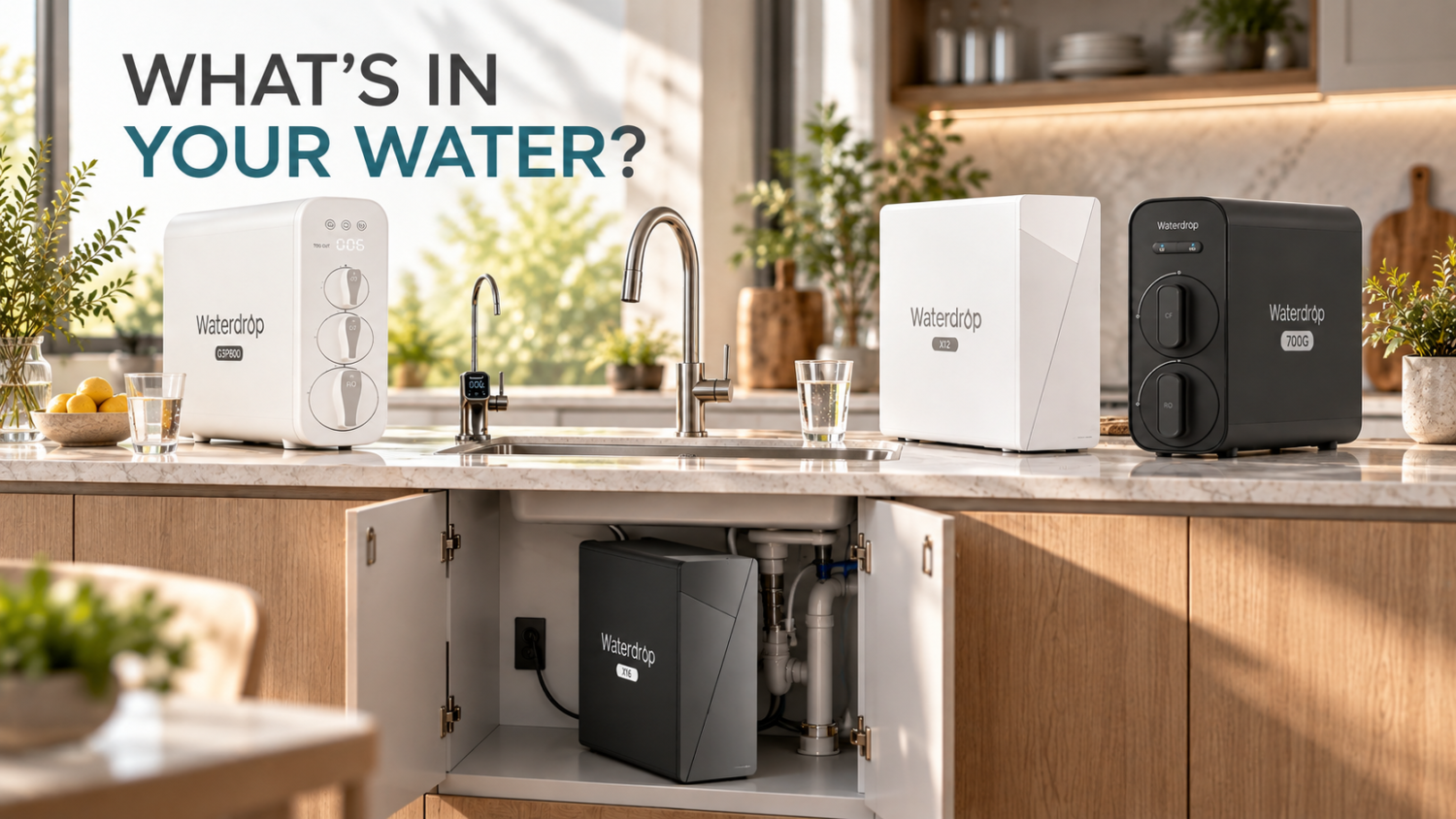
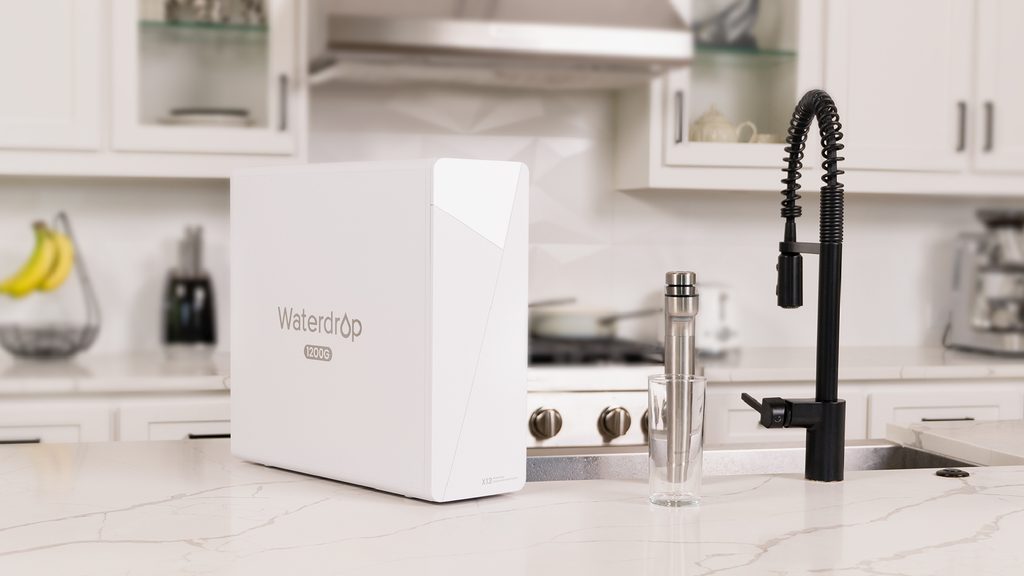
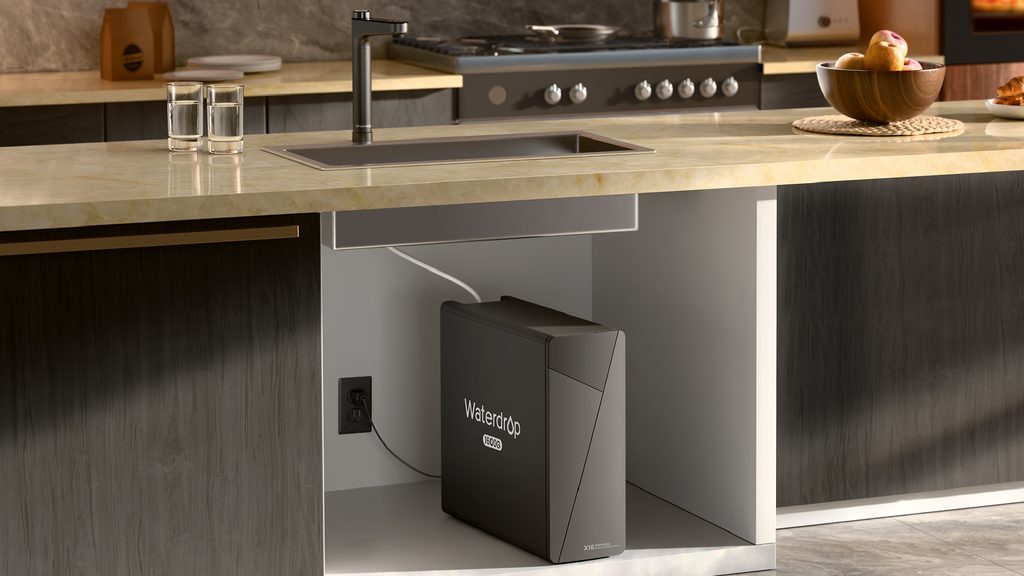
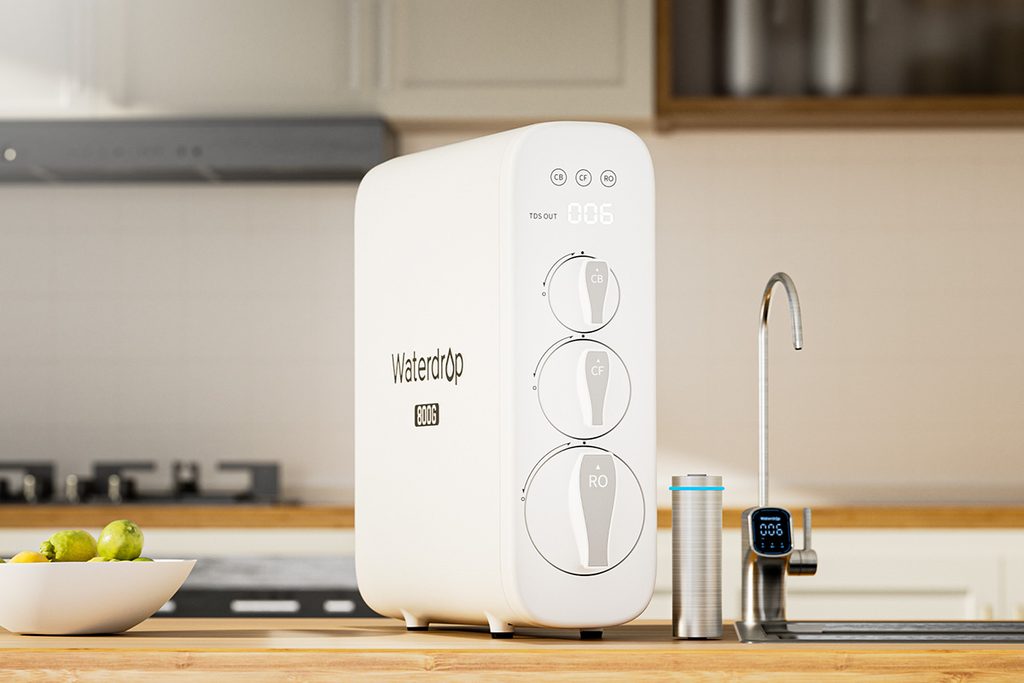
You can’t retrofit a treatment plant, but you can put a Waterdrop system under your sink in an afternoon. The X16 and the X12 both filter on demand instead of holding water in a tank, so what fills your glass went through the membrane seconds ago.
Both have 11 stages of filtration and the same 3:1 pure-to-drain ratio, though the X16 fills a 6-ounce cup in two seconds and the X12 takes three. You notice that when the pasta pot and somebody’s water bottle both want filling at once.
Short Chains Need a Different Kind of Filter
Activated carbon is one of four technologies the EPA names as a best available technology for its PFAS rule, alongside anion exchange, reverse osmosis and nanofiltration, and it does well on PFOA and PFOS, since those two are long-chain compounds.
Short chains behave differently, and the EPA has said so since 2019. Its treatment technology fact sheet notes that carbon performs poorly on shorter-chain PFAS and names PFBA specifically, because a shorter fluorinated tail stays dissolved in water instead of binding to the carbon.
PFBA is one of three unregulated compounds, alongside PFHxA and PFPeA, that the survey found at or above the reporting level in roughly one in five of the systems it tested.
Reverse osmosis works on a different principle. The same EPA fact sheet says RO membranes are “typically more than 90 percent effective at removing a wide range of PFAS, including shorter chain PFAS.” Rather than waiting for a compound to bind to anything, RO pushes water through pores around 0.0001 microns, so chain length stops being the deciding factor.
That membrane is in every Waterdrop RO system, from the G5P500A up to the X16, which is why the G3P800 is the one families reach for when there’s a baby on formula or a grandparent in the house.
Waterdrop ran its own lab tests on the two long-chain compounds the EPA regulates, and the X16 came back at 98.88% reduction on PFOA and 98.97% on PFOS, with the G3P800 at 98% and 99%. Those are straight from a third-party certification, too, so they’re backed by actual testing.
Which One Belongs Under Your Sink
Waterdrop’s systems come in three tiers, and which one fits depends on how many people in your house are drinking the water:
- The X16 and the X12 are the tankless flagships, and they’re the pick for really, really big families, since the tap never waits on a tank to refill.
- The G3P800 and the G3P600 are where most families land, since they cover the drinking and cooking water for a typical household without paying for capacity nobody in the house is using.
- The G5P500A and the G5P700A add alkaline minerals, and they’re the pick if you’ve been hauling cases of bottled water in from the car every week. Plus, they’re the best balance of price and performance, in our opinion.