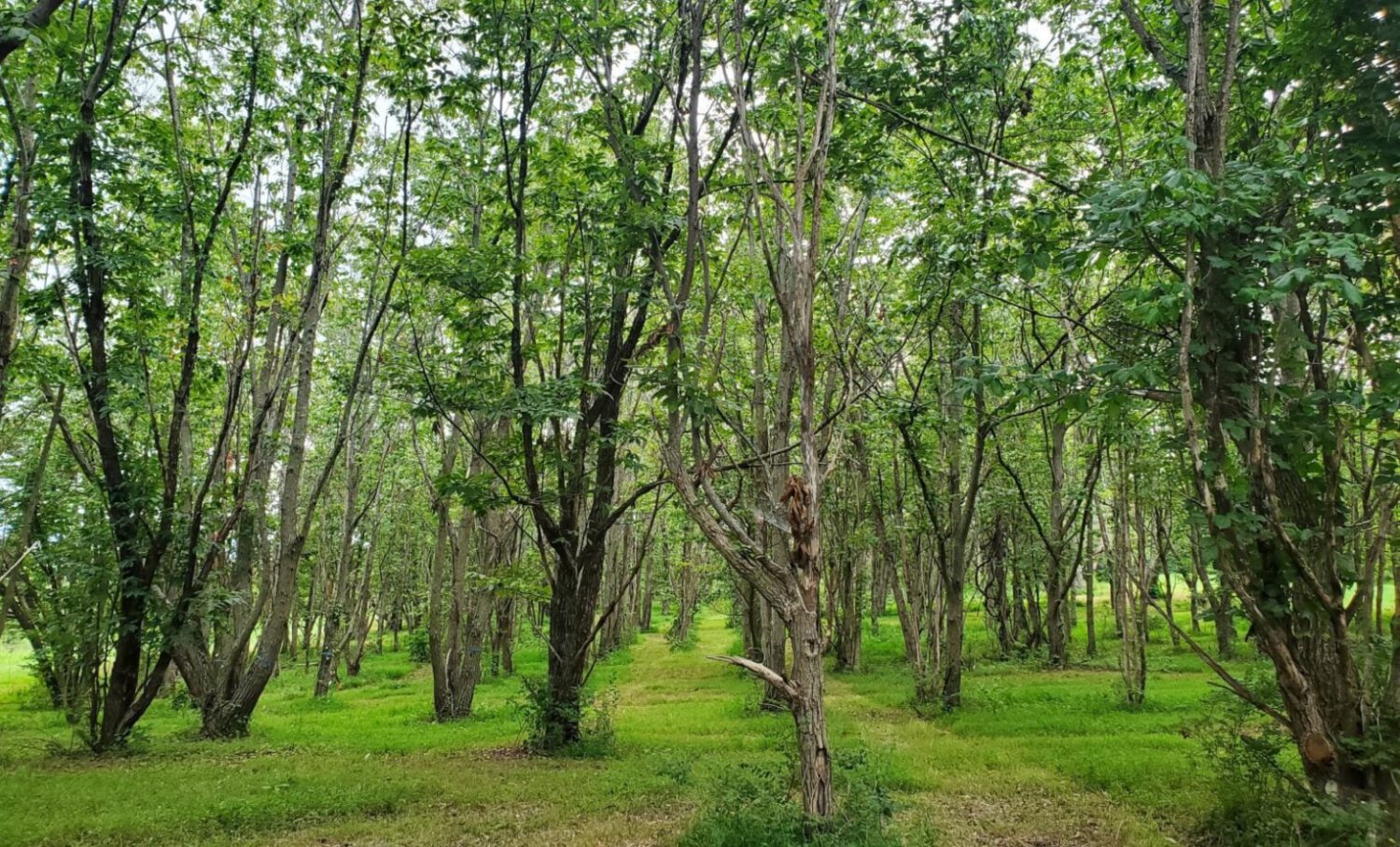
Somewhere in Mason County, West Virginia, there is a grove of trees that should not exist. According to advocacy materials, roughly 200 American chestnuts, reportedly planted in the 1970s from wild survivors, may be cleared as early as November 1, 2026, to make way for data-center development. The project’s official website says the grove is not even on its land. That contradiction is the whole problem, and it has no public answer yet.
A Genetic Archive, Not Just a Stand of Trees
What the Clements grove reportedly represents took decades to build and cannot be rebuilt quickly.
The American chestnut blight, caused by a fungus accidentally introduced from Asia in the early 1900s, effectively erased the species from eastern forests. An estimated 3 to 4 billion trees died. The chestnut had been a keystone of Appalachian ecosystems: food source, timber, and shelter.
The grove at the former Clements State Tree Nursery in West Columbia is described by conservation advocates and American Chestnut Foundation materials as having been planted from wild surviving specimens. Think of it as the ecological equivalent of a seed vault that nobody put a sign on. Advocacy sources say the trees carry genetic material that restoration programs across West Virginia depend on, though that role needs independent verification from the Foundation, the West Virginia Division of Forestry, or a qualified botanist.
The American Chestnut Foundation has circulated appeals to state officials about the grove’s potential destruction. The approximately 200-tree count, the 1970s planting date, and the trees’ wild provenance all come from advocacy materials rather than a verified nursery record or agency report. What advocates describe, if accurate, is not scenery. It is what they characterize as irreplaceable restoration infrastructure.
What Is Claimed, and What Is Not Confirmed
Advocacy materials name specific companies and a specific date, but none of it has been independently verified.
According to advocacy sources, the development near the Clements grove is connected to the Monarch Compute Campus, developer Nscale, and Anthropic as a prospective data-center tenant. The reported clearing date is November 1, 2026. None of these claims have been confirmed by the named companies or relevant state agencies, and no mainstream news report or publicly available permit was identified in the materials reviewed to corroborate the timeline.
Here is the central factual dispute. Project Tamarack identifies itself as a planned data center in West Columbia and explicitly states on its official website that the former Clements State Tree Nursery is not part of its site. That statement must be taken seriously. It confirms the project’s position; it does not independently establish the legally correct parcel boundary.
The relationship among Project Tamarack, Monarch Compute Campus, Nscale, and Anthropic remains unclear. Neither Nscale nor Anthropic has publicly confirmed any role in the reported development. Parcel maps, ownership records, site plans, and environmental review documents that could resolve the boundary dispute were not identified in the materials reviewed. Until they are, the advocacy claim and the project denial sit unreconciled.
What the Industry Owes the Public
The AI infrastructure buildout is accelerating. The process for evaluating what it displaces is not keeping pace.
Data-center demand tied to AI compute is real and growing fast. West Virginia’s High-Impact Data Center certification program is designed to attract this kind of investment, and the project website references existing American Electric Power generation and transmission infrastructure as a key site advantage. The industry’s appetite for sites like this one is not going away.
What appears to be missing, based on the available record, is any public process for evaluating ecological impact before advocacy groups raise the alarm. No environmental review was identified in the materials reviewed. No evidence emerged that relocation or preservation alternatives for the grove were considered. The public reportedly learned about the potential clearing through a conservation organization’s newsletter, not through a permit notice or project disclosure.
That is a systemic gap, not a one-company problem. If a data-center campus certified under a state program would clear land near historically significant natural resources, the affected public deserves transparency about site boundaries from the start. The industry has spent enormous energy convincing regulators and communities that AI infrastructure is essential. Honest, early disclosure of land-use impacts is not an unreasonable ask in return.
The Answer Is a Map and a Statement
The grove’s fate is still unresolved, which means the right questions can still be asked and answered publicly.
West Virginia officials, Project Tamarack, and any entities with ownership or development rights to adjacent parcels should release the relevant site plans and parcel documentation. The American Chestnut Foundation and the West Virginia Division of Forestry should be consulted on the grove’s conservation value before any clearing begins. These are not complicated demands. They are the minimum a functional review process should have produced already. A grove that reportedly took roughly fifty years to grow deserves at least that much.