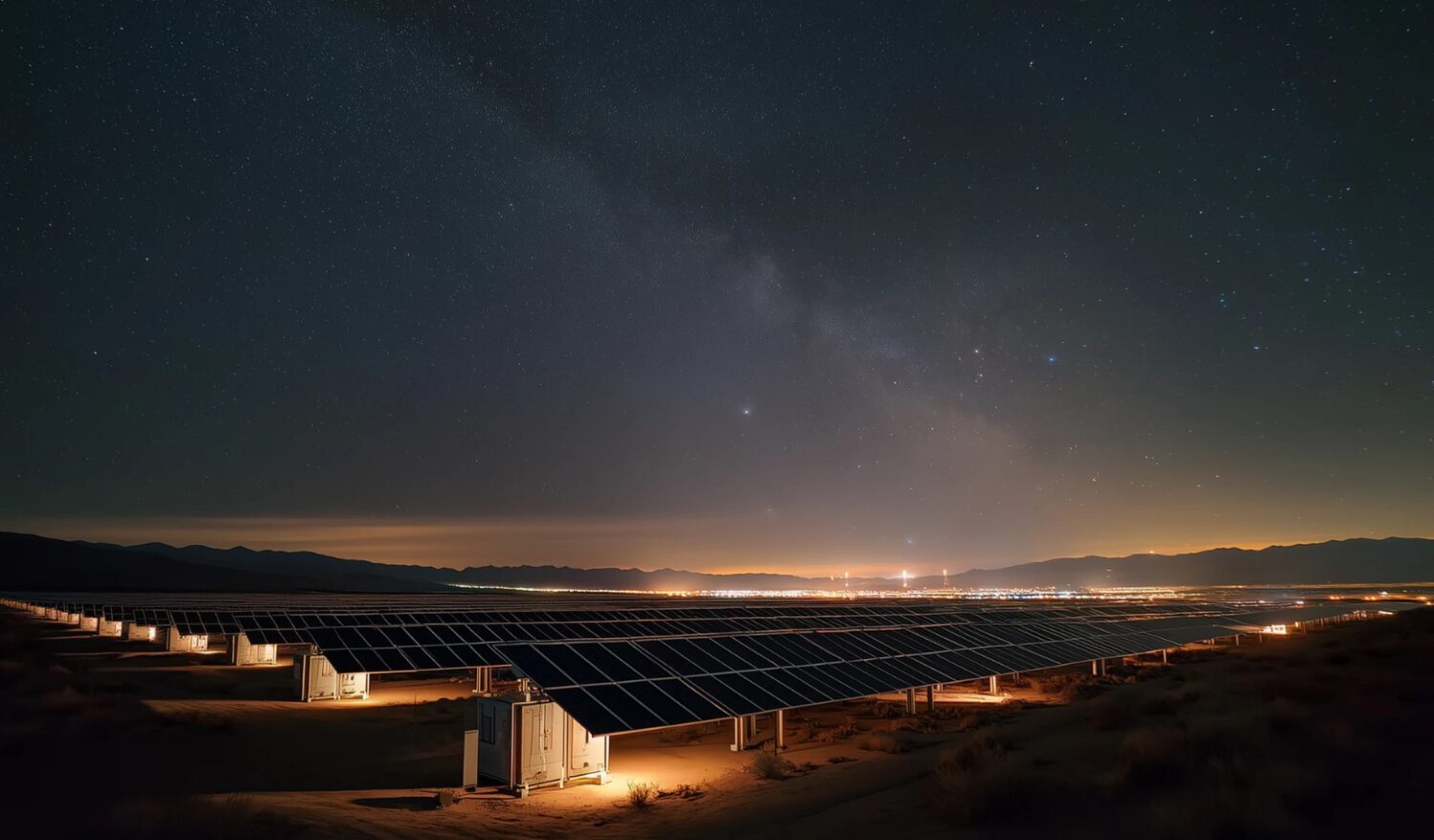
The hardest part of beaming solar power from orbit is not collecting the sunlight. It is making sure the beam hits the right spot on the ground, and the Pentagon just funded the component designed to solve exactly that. The U.S. Department of Defense has awarded Virginia-based startup Overview Energy a contract through its Operational Energy Capability Improvement Fund to design, build, and test a ground-based homing beacon for its proposed space-based solar-power system. Overview Energy announced the award on September 30, 2026; the contract value was not disclosed.
How the Beacon Actually Works
The beacon functions more like a secure lock-on signal than anything resembling a solar panel.
Ground crews install the beacon at a solar receiving site, and an Overview satellite uses it to locate, authenticate, and precisely target that location before directing energy toward it. According to Overview Energy’s announcement, which was also reported by Breaking Defense, the system uses near-infrared light, not microwave transmission, to carry energy from geosynchronous orbit to the ground.
The beacon’s authentication function matters as much as its targeting role. Think of it as two-factor authentication for a beam of light traveling roughly 22,000 miles: the satellite must confirm it is directing energy toward an authorized receiver before transmission begins. That verification step is what distinguishes the system from a simple laser pointer aimed at a panel.
Why the Pentagon Wants This
Fuel convoys to remote bases are expensive and exposed to attack, and a space-based power source could reduce that dependency.
The Department of Defense is examining space-based solar power as a way to deliver electricity in contested or constrained environments. Those are places where running a fuel convoy is either impractical or dangerous. The available sources describe this as a proposed use case, not an operational capability the military currently has.
A prior Air Force study contract, worth less than $1 million, examined how the concept could support resilient energy for Defense Department operations before this larger OECIF award followed. Meta has also partnered with Overview Energy for the planned 2028 on-orbit demonstration, adding a commercial thread to what is otherwise a defense-focused development program. The terms of that agreement were not reported.
What Comes Next, and What Is Still Unproven
The 2028 demonstration is the first real test, and everything after it depends on the result.
Overview Energy plans to integrate the homing beacon into its first satellite for a space-based solar-energy demonstration in 2028. If that test succeeds, the company targets deployment of a geosynchronous-orbit constellation beginning in 2030, with commercial power delivery starting that same year. Those are company milestones, not confirmed service dates.
The full space-to-ground transmission system has not yet been demonstrated from orbit. Open questions include launch costs, beam safety validation, and conversion efficiency. Regulatory approvals would also be required before a satellite directs energy at ground infrastructure at any meaningful scale.
A successful 2028 result makes the economics of continuous orbital solar power worth calculating seriously. A setback pushes every date on the timeline. Either way, the beacon is the component that has to work first, and now it has Pentagon funding to try.