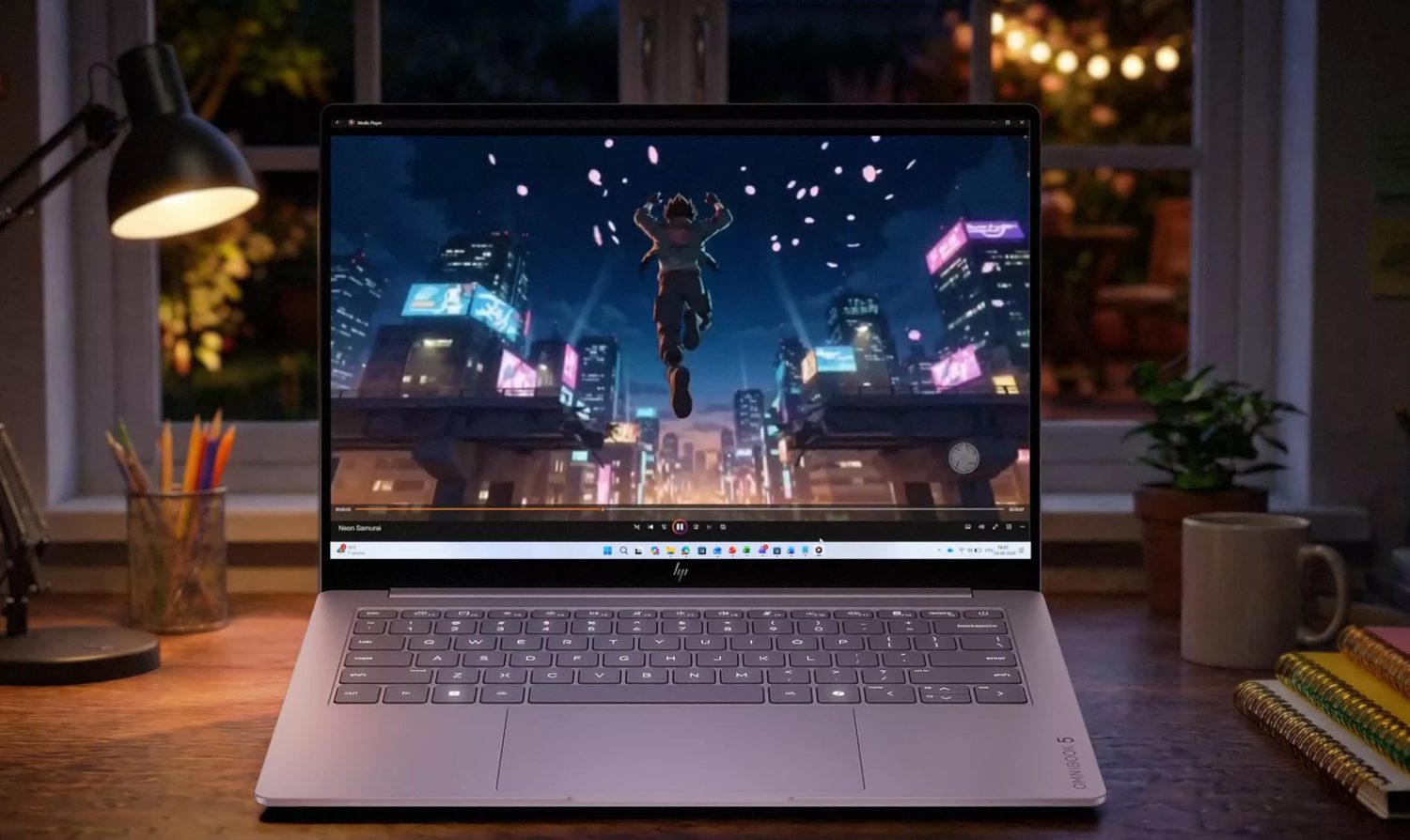
HP is bringing a 14-inch OLED Windows laptop to HP.com and Best Buy in October 2026, priced at $699.99, and its most direct competition is Apple’s MacBook Neo, which currently lists at $699. The central question for shoppers is whether the two machines, separated by specs and ecosystems rather than price, offer meaningfully different value.
What HP Is Offering
A larger, more colorful Windows machine with a screen that punches above its price.
The OmniBook 5’s headline feature is its 14-inch OLED touchscreen, which HP rates at 1,920-by-1,200 resolution with 100% DCI-P3 coverage (a professional color standard), 300-nit brightness, and a 0.2-millisecond response time. Those figures come from HP’s own product listings and have not been independently verified.
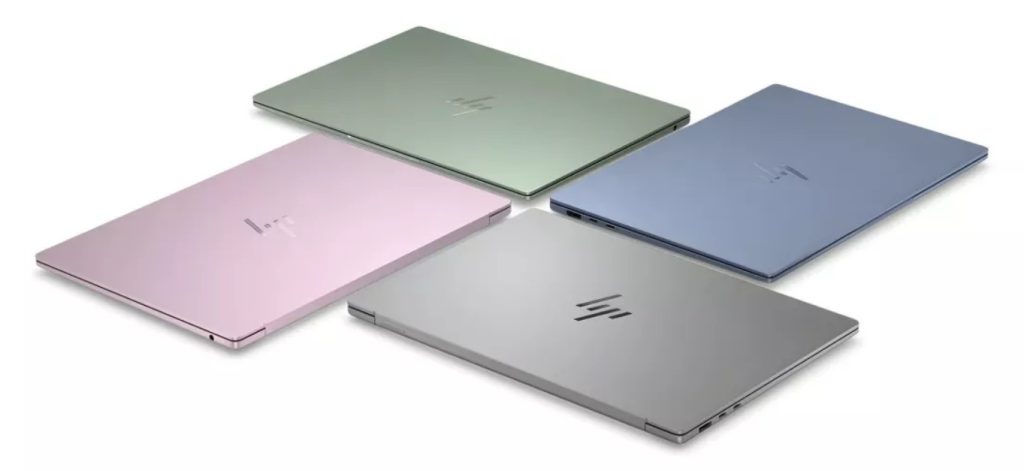
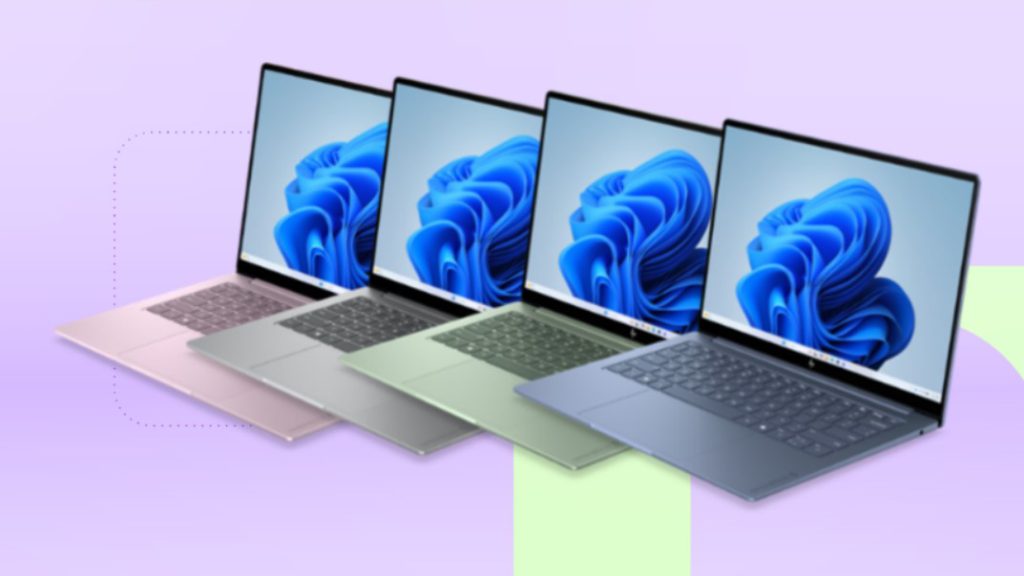
At approximately 2.6 pounds and 0.46 inches thick, the laptop is portable enough for daily commutes. HP offers it in pink, silver, blue, and green, with Gorilla Glass 3 protecting the display.
On connectivity, HP adds HDMI to a port lineup that otherwise mirrors the MacBook Neo. The OmniBook 5 includes HDMI 2.1, two USB-C ports, Wi-Fi 6E, Bluetooth 5.3, a 3.5mm combo jack, and a 1080p webcam. Apple’s MacBook Neo provides two USB-C ports and a headphone jack, with no HDMI output listed in its published specifications.
The base $699.99 Intel configuration includes:
- Intel Core 5 320 processor with integrated Intel Graphics
- 16GB LPDDR5 memory
- 256GB PCIe Gen4 NVMe SSD
- 14-inch OLED touchscreen with 100% DCI-P3 coverage
- Intel AI Boost NPU rated at 16 TOPS
The 256GB base storage is worth noting for shoppers with large media libraries or long-term storage needs, as it leaves limited headroom for demanding workloads.
Battery Claims and the “AI PC” Label
HP’s 42-hour battery figure needs context before it shapes your decision.
HP claims up to 42 hours of local video playback for the OmniBook 5. That figure reflects a manufacturer-rated scenario, not a general-use test. Real-world battery life will vary based on screen brightness, active applications, and wireless usage.
Fast charging is specified to reach approximately 50% in 30 minutes, and HP lists a 65W USB Mini GaN charger with the device. The Intel Core 5 320’s 16-TOPS NPU earns the OmniBook 5 an AI PC designation under HP’s product positioning, though the practical benefit depends substantially on whether the software you use takes advantage of local AI acceleration. HP’s own launch materials spend considerably more time on battery life and display quality than on AI capabilities.
How It Stacks Up Against the MacBook Neo
Two distinct value propositions, separated by an ecosystem choice rather than price alone.
Apple’s MacBook Neo currently lists at $699 and includes a 13-inch Liquid Retina display, Apple silicon, two USB-C ports, and 256GB of base storage. Based on published specifications and prices rather than independent head-to-head testing, the comparison comes down to what you value most.
HP’s case rests on the larger OLED touchscreen, built-in HDMI, Windows 11, and four color options. Apple’s case rests on macOS ecosystem integration and Apple silicon. Neither claim has been tested head-to-head independently.
What to Watch For When Reviews Arrive
The specs look competitive on paper; the real test comes later.
No independent benchmark or real-world review data was identified in available research for the OmniBook 5. When hands-on evaluations arrive in October, the figures worth scrutinizing are actual battery life under mixed workloads, thermal performance under sustained load, and whether 256GB of base storage holds up over time.