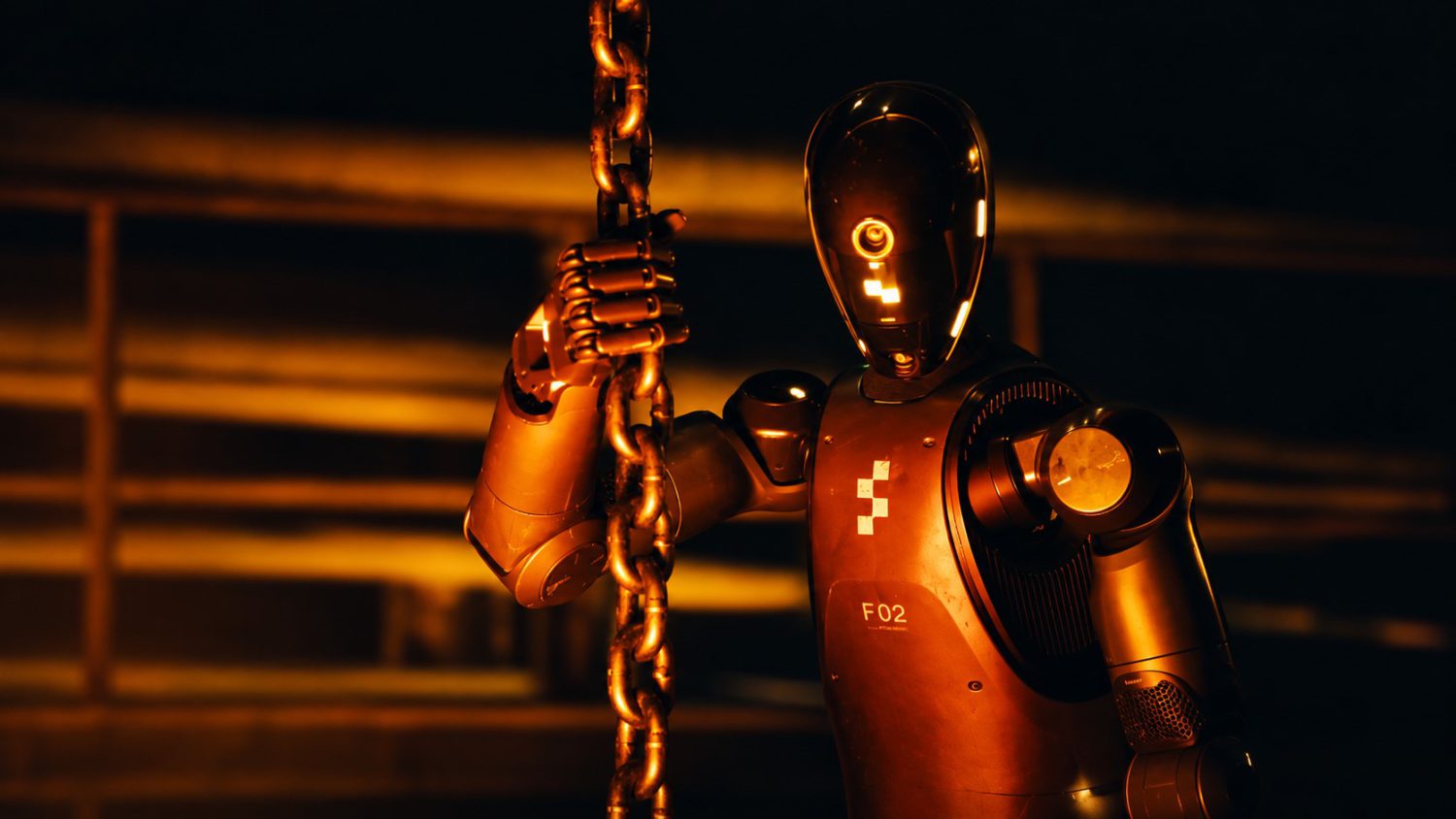
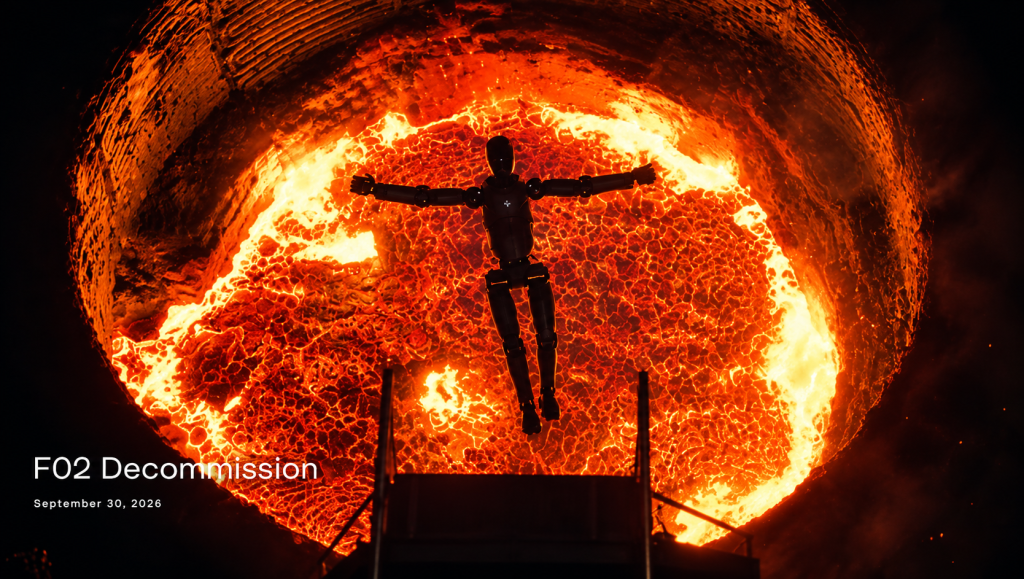
Retiring a humanoid robot isn’t like deleting an old Slack workspace. Figure made that point by shipping most of its F.02 fleet to a 75-ton electric arc furnace in Imatra, Finland, where the robots autonomously walked off a platform into the furnace.
This wasn’t performance art for its own sake. It reflects a structural problem every serious robotics company will eventually face: proprietary hardware generations are expensive to maintain, unsuitable for ordinary recycling channels, and loaded with trade secrets competitors cannot be allowed to examine.
The Logistics of Melting a Robot Fleet
Finding a foundry willing to accept lithium-ion-battery-filled humanoids turned out to be its own engineering challenge.
Figure reportedly contacted foundries in the United States and Mexico before Imatra agreed to take the job. The company also consulted former MythBusters personnel to locate a suitable facility, which is either a sign of genuine operational creativity or proof that “how do we blow this up safely” is a recurring question in robotics.
At the foundry, three graphite electrodes powered the arc furnace. Figure had a 24-hour operating window, six melts, and roughly 20 minutes per melt before cooling steel formed a crust.
The jump policy was trained at Figure’s San Jose campus using airbags, then deployed via a simulation-trained AI at a foundry the robots had never visited. Figure claims its AI policies continued functioning despite extreme heat and electromagnetic interference that knocked out cameras and other electronics. That is a company assertion, not an independently audited result.
Why Not Just Take Them Apart?
Custom actuators and proprietary mechanical systems don’t travel safely through standard recycling channels.
Disassembling the fleet manually would have consumed the kind of engineering hours Figure needs pointed at F.04 development. Think of it as the hardware equivalent of a software company wiping source code before an acquisition, except louder and in Finland.
A small number of F.02 units remain in storage at Figure’s headquarters. The metal recovered from the furnace is being shipped back to the United States and machined into limited commemorative artifacts.
Arnold Said “Melt Them”
The Terminator 2 reference wasn’t subtle, and Figure leaned into it completely.
Schwarzenegger wrote “You should melt them” in an apparent reference to the molten-metal finale of Terminator 2: Judgment Day, and he later participated in the public farewell. The Schwarzenegger connection is marketing framing. It says nothing about robot capability, safety, or commercial readiness, though it does guarantee the footage gets watched.
What F.02 Built, and What Comes Next
Helix 2.5’s household results are promising, but one number deserves a closer read.
F.02 carried real weight for Figure: first BMW deployment, first logistics deployment, first household-chore demonstrations, and the emergence of Helix. Its retirement freed up resources for F.03 and F.04 development.
On the software side, Figure says Helix 2.5 performed tidying, towel-folding, and bed-making across 30 rented Bay Area homes it had never seen, with no on-site fine-tuning. Company-reported figures put the task success rate at 56%, compared with 9% for a comparable system trained without the same pretraining on Figure’s Index dataset.
Those figures come from Figure and have not been independently replicated. A 56% success rate is not product-ready autonomy. The system fell short on nearly half of its trials, and household robots still need to handle safety, error recovery, and unpredictable human behavior at scale.
The Trade-Off
The robots that jumped into the fire made the ones still standing possible.
Figure is accelerating hardware generations quickly enough that protecting the next platform required destroying the previous one. At the same time, the company claims its software is learning to generalize across real homes it has never visited before. Whether that trade-off pays off depends on what F.03 and F.04 actually deliver.