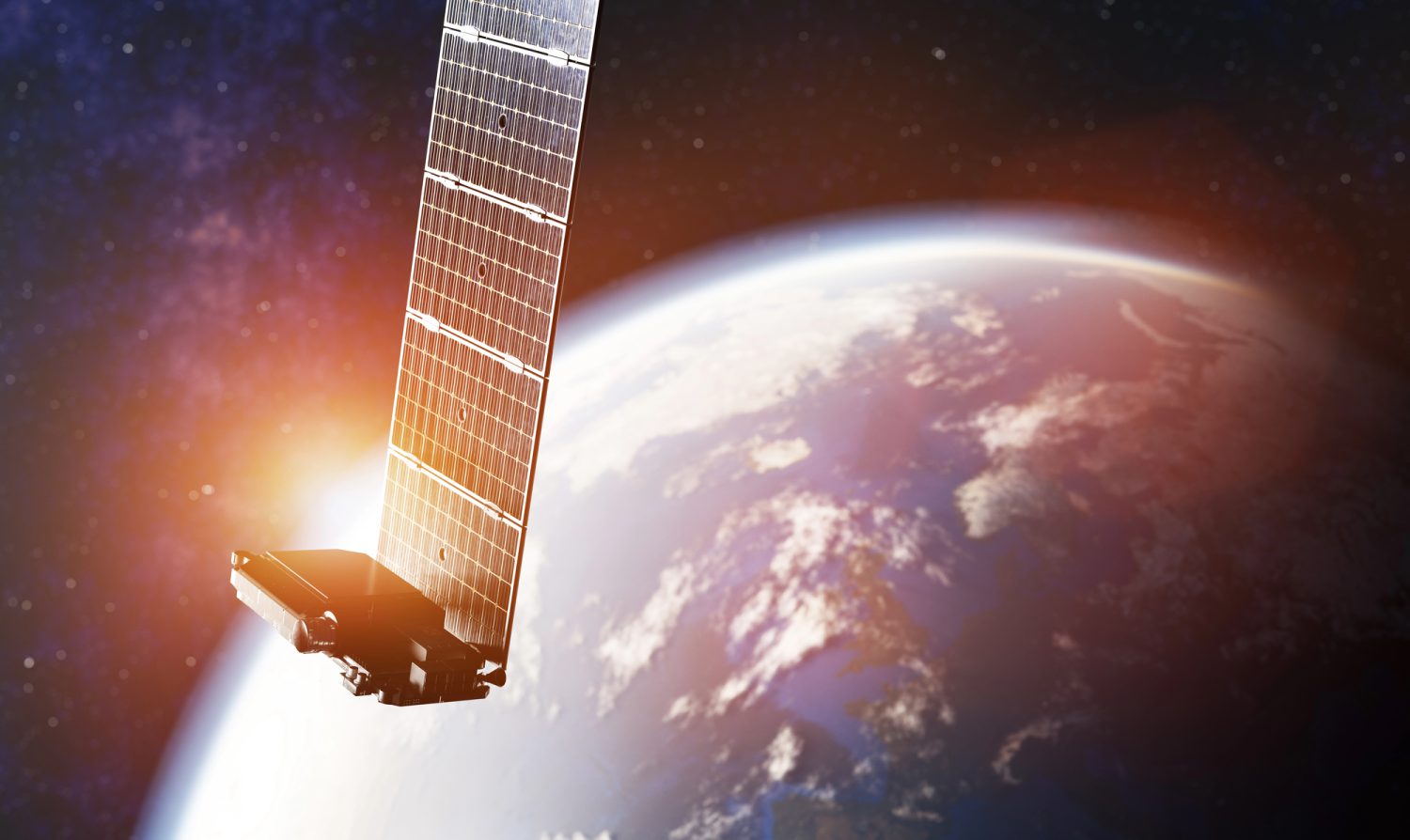
On Oct. 1, 2026, a SpaceX Falcon 9 rocket will lift off from Vandenberg Space Force Base carrying Google’s MVP satellite aboard the Transporter-18 rideshare mission. Inside: four TPUs, Google‘s specialized AI chips, with combined computing capacity roughly equivalent to one data-center server.
The satellite’s solar panels are expected to generate about one kilowatt of power, enough to handle short AI workloads, including limited requests involving Gemini. The operative word is short.
Travis Beals, Google’s senior director of product management for Project Suncatcher, told The New York Times that the chips can run for roughly 15 minutes before the system must shut down and cool. Without convective cooling, heat accumulates quickly, forcing a mandatory shutdown after each brief operating window.
Heat management is the first major obstacle. Space has no air, which means no convection cooling; Google routes heat through thermal-interface materials, aluminum and copper layers, and out through a radiator panel that releases it into the void. Whether that system holds under real orbital conditions is one of the mission’s central questions.
Radiation is the second. In space, high-energy particles can flip individual bits in memory, changing a zero to a one or vice versa, corrupting calculations or disrupting software.
Google tested its TPUs at the Crocker Nuclear Laboratory at UC Davis, using a cyclotron to simulate roughly five years of orbital radiation exposure. Restarting the processors generally corrected the resulting errors, and Google reported no hard failures up to the maximum tested level of 15 kilorad silicon. Orbital conditions will determine whether those ground results hold.
What Google Is Actually Trying to Learn, and What Comes Next
MVP gathers engineering data that no ground test can fully replicate, while Google’s longer vision remains years from any practical use.
MVP was developed with Planet, the satellite-imaging company in which Google has invested. Google planned to launch two prototype satellites in 2027, then accelerated the first test by installing its hardware on an existing Planet satellite platform.
The satellite is expected to operate for about one year, though it could remain in orbit for up to six years before atmospheric reentry. Ground testing cannot fully replicate the combined effects of launch vibration, radiation, vacuum, sunlight, shadow, and repeated thermal cycling. The orbital mission exists precisely to gather that data.
Google’s longer-term concepts are considerably more ambitious. The company has developed formation concepts involving more than 80 satellites working together on AI requests, a scale that recalls the ambition of programs like NASA’s Moon Mission planning. It is also considering a custom spacecraft potentially as large as a soccer field.
Two follow-up satellites are planned to test orbital computing and, eventually, communication links between spacecraft. The gap between today’s test and that vision is wide. James Manyika, Google’s senior vice president for research, told The New York Times: “We don’t expect, to be perfectly frank, that we’ll have anything usefully operational in the next few years.”
What This Test Actually Needs to Prove
A working chip in orbit would answer a narrow engineering question, not an economic one.
MVP’s real task is specific: determine whether Google’s specialized AI accelerator hardware can survive launch and deliver useful bursts of computation in orbit. A successful boot does not establish that space-based AI is economically viable, or that orbital systems can compete with terrestrial data centers on cost, reliability, or scale. The engineering data MVP returns will matter far more than the fact of its launch.