Two thousand dollars in AI tokens. Zero dollars for users. That gap says something concrete about where solo software development is heading.
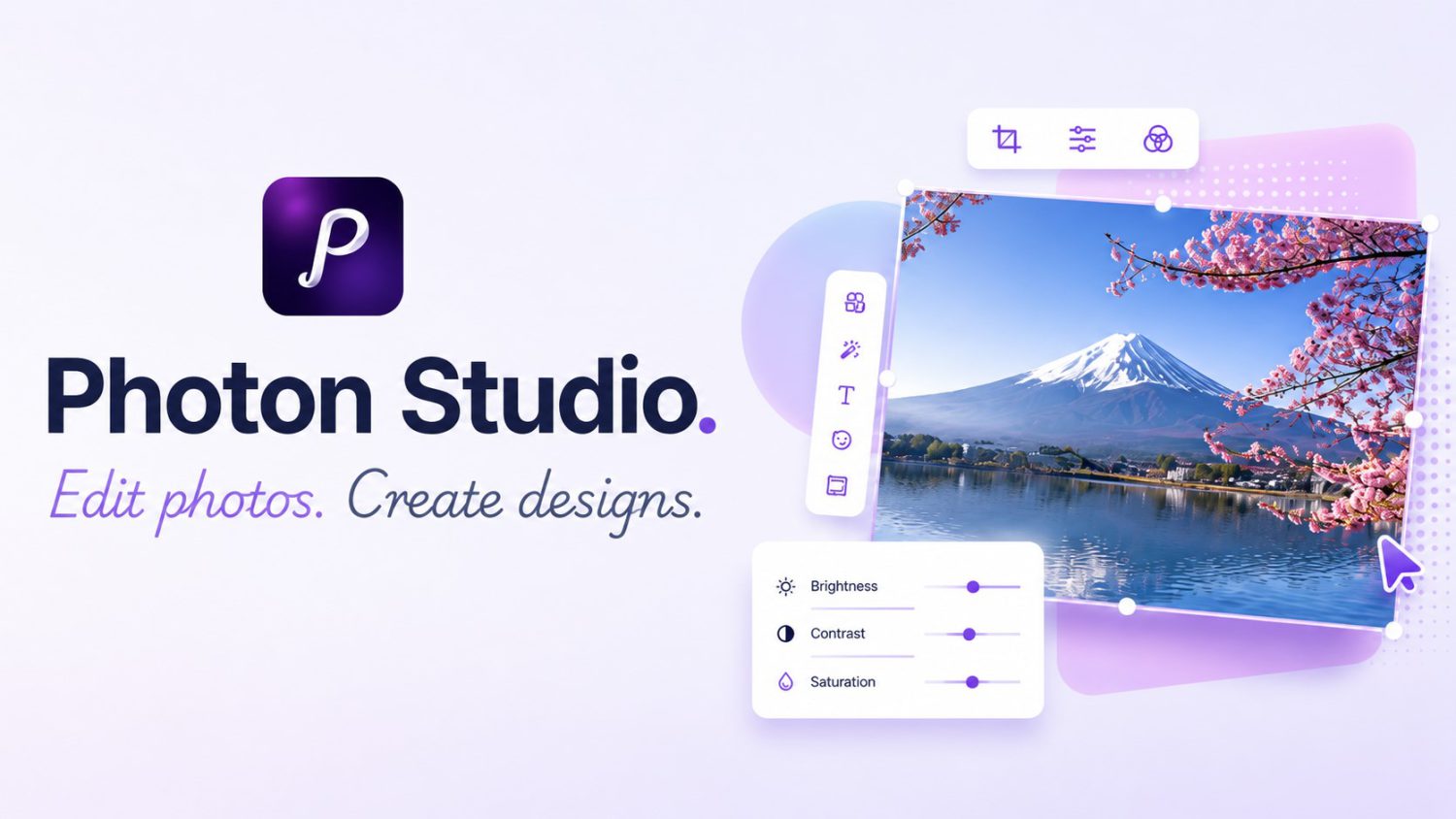
A developer at Tenzen Studio has released Photon Studio, a free desktop image editor for macOS, Windows 11, and Linux, built primarily through “vibe coding” with GPT-6 Astra. The app includes layers, masks, curves, liquify tools, and PSD file support, running offline with local processing. According to the creator’s post on r/vibecoding and coverage from Appmiao, roughly 170 users downloaded it on launch day, with a later post on Tenzen Studio’s X account citing 458 total downloads.
What You Actually Get
Photon Studio is a real desktop editor with honest limits, not a browser demo dressed up with a landing page.
Reviewers at Appmiao describe a panel-based interface that feels closer to a professional tool than a demo, with local-first processing that keeps your files off the cloud. PSD support means existing Photoshop documents open without conversion work.
That said, Appmiao is direct: Photon Studio cannot fully replace Photoshop yet, particularly for professional workflows built around plugins and decades of platform refinement. It sits in the territory of GIMP, Krita, and Photopea, but with a stronger emphasis on local, private editing. For those weighing hardware alongside software, the best cameras to pair with a capable offline editor are worth considering.
“I invested $2,000 in a project that involved an extensive exploration of all Photoshop functionalities,” the creator wrote on r/vibecoding. “The process began by integrating it with GPT Astra 6 at a high level for planning.”
How $2,000 in Tokens Became a Shipping Product
The build was iterative, openly buggy at first, and completed by one person working alongside an AI model.
The workflow began with a high-level planning session in GPT-6 Astra. Bug reports fed back into the model drove iterative fixes across extended sessions until the app reached a shippable state.
The creator openly acknowledged the result was functional but initially buggy and unstable. GPT-6 Astra’s long context window and computer-use capabilities, described by independent reviewers at Promptslove, reportedly made it practical for planning and revising complex application code across those sessions, though those capability claims come from third-party coverage rather than official OpenAI documentation.
For anyone still paying Adobe’s monthly subscription, Photon Studio is worth a look as a capable offline alternative, not a replacement. For indie developers watching this story, the more significant number is not the user count. It is $2,000 to ship a cross-platform creative tool from scratch, alone.