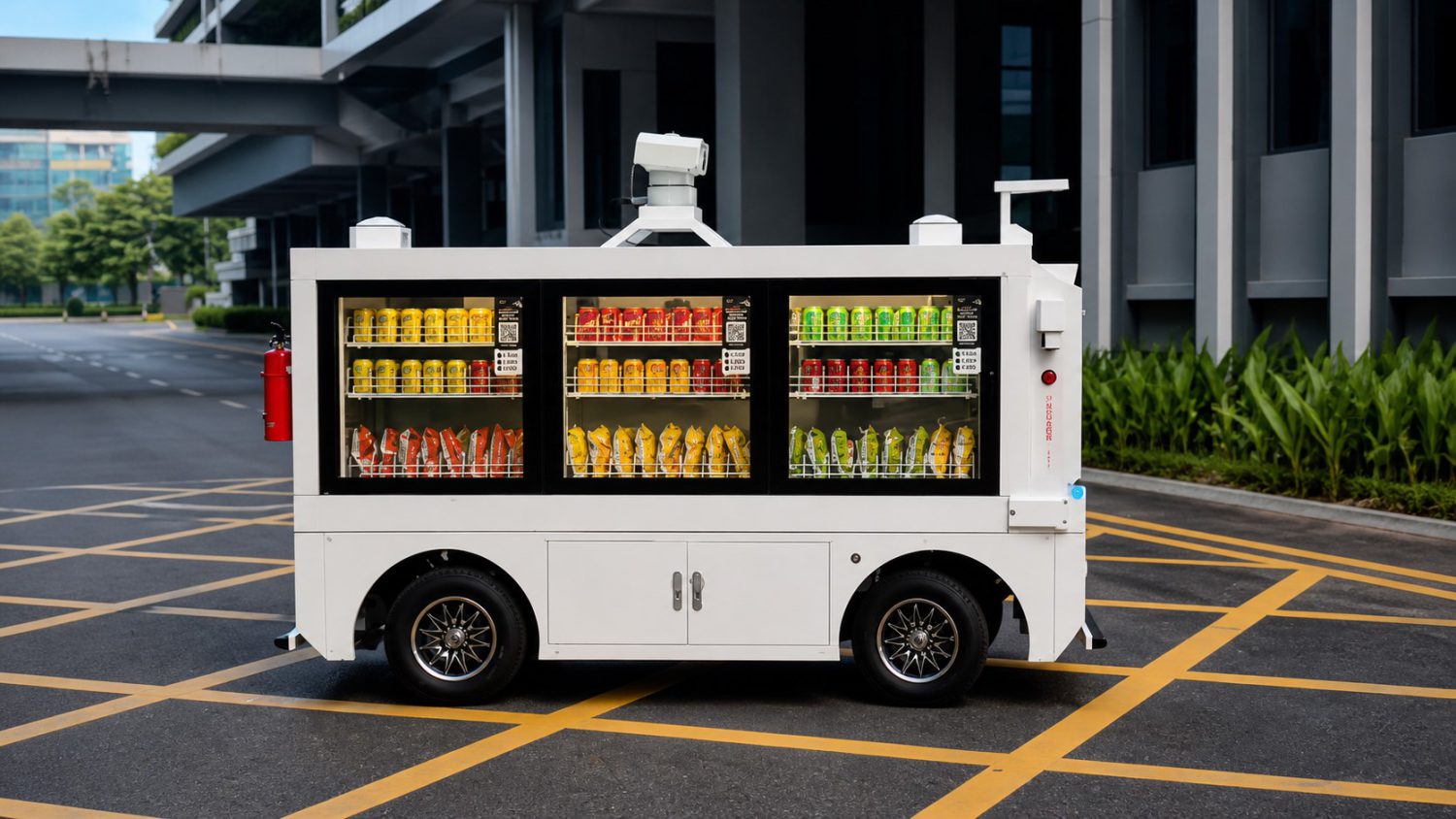
A small vehicle rolls toward you along a park path. You wave. It stops. You scan a QR code, select a drink, and walk away with it: no cashier, no kiosk, no app order to wait on. That transaction is already happening in Chinese parks and scenic destinations. The companies making it possible have attracted buyers including Alibaba’s logistics arm Cainiao Networks, JD.com, and Meituan-Dianping, as Jie of Neolix told Kr Asia.
This is not a concept vehicle. The category has been in operation since at least 2019, and it is quietly building a commercial footprint.
How the Vehicle Actually Works
Autonomous navigation handles the driving; a QR code handles the sale.
These vehicles use AI-powered systems to plan routes and recognize road conditions, according to People’s Daily reporting on China’s unmanned vehicle expansion. They also detect traffic signals and avoid obstacles. The autonomy operates at low speeds, which suits the controlled environments where these machines are currently deployed.
The retail interaction is straightforward. Users wave to stop the vehicle, press a button, or scan a QR code to complete a purchase.
Xingshen Tech, one manufacturer in this space, describes the system on its product page as capable of dispensing beverages or snacks based on “user request or flow distribution in the area.” That description comes from official marketing material, not independent reporting.
Where These Vehicles Are Already Running
Wuhan parks, tourist destinations, and transit-adjacent zones are the current proving grounds.
A mountain park in Wuhan added autonomous vehicles for food vending, sightseeing, and cleaning alongside shuttle buses, according to South China Morning Post. The deployment illustrates how cities are treating these machines as one piece of a broader city technology network rather than a standalone product.
Neolix, the Chinese startup with the clearest presence in independent reporting on this category, has vehicles described by Kr Asia as operating “as moving vending machines in tourist destinations.” The company’s confirmed buyers suggest this is less a research experiment and more a platform that logistics incumbents are already folding into their operations.
One distinction is worth stating plainly: these vehicles operate in controlled or semi-closed settings. Parks, scenic areas, and transit-adjacent zones present far less regulatory complexity than public roads. Available reporting does not identify the specific legal framework governing these deployments, but the pattern of controlled-environment operation is consistent across multiple sources.
If these vehicles scale from scenic spots into campuses, transit hubs, and high-foot-traffic commercial zones, the format creates a new class of mobile retail with minimal staffing requirements. The customer list Neolix cited signals that logistics and delivery incumbents see the platform as complementary to their existing operations, not as a moonshot.
The category has moved from pilot to operational in controlled settings. The next observable test is whether the underlying systems hold up when environments get less predictable, crowds get denser, and the routes stop being so clean. That transition, not the park deployment, is where autonomous retail either earns its place or stalls out.