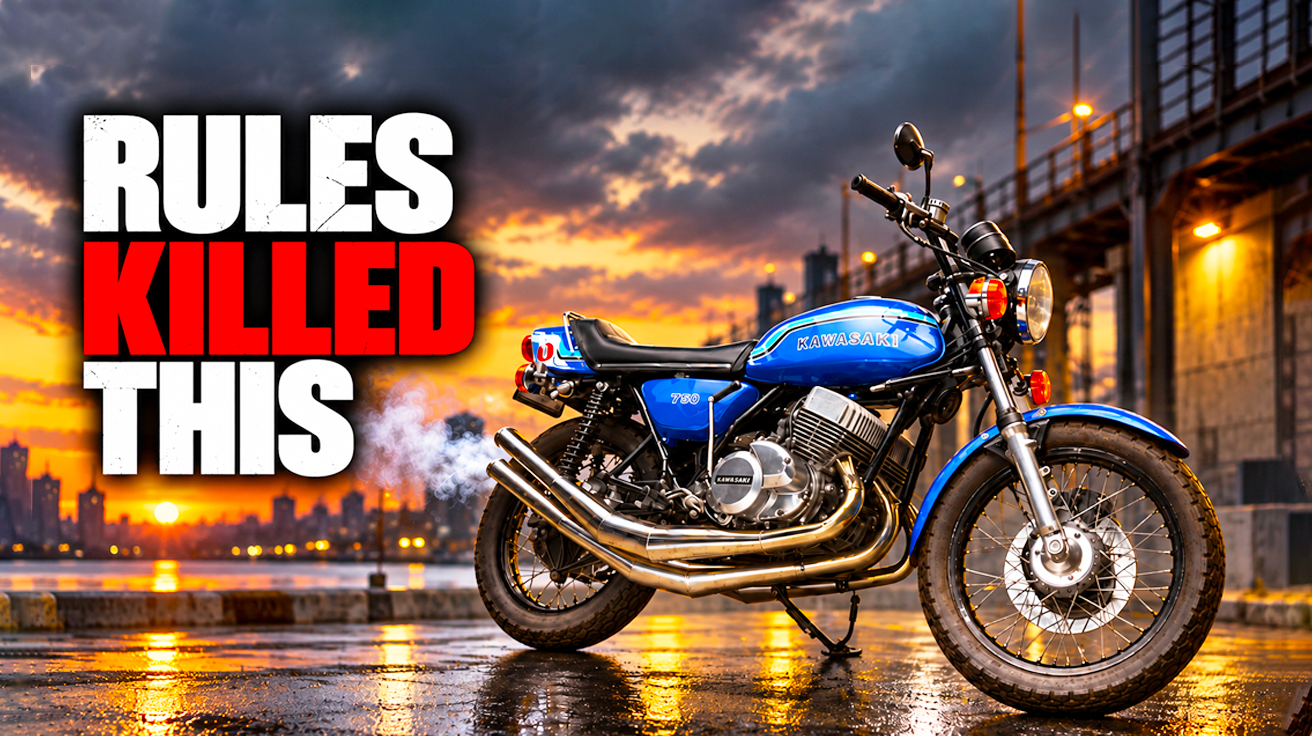
The 1970s brought a wild chapter in motorcycle engineering, when innovation leapt ahead of regulation and designers pushed boundaries with little oversight. Emissions standards barely existed, noise limits were unheard of, and safety committees hadn’t yet arrived. This era produced machines with raw character and unapologetic performance, bikes that prioritized speed and personality over compliance. These motorcycles defined an untamed decade, proving legendary status comes from pushing limits rather than playing it safe.
7. Honda CB750
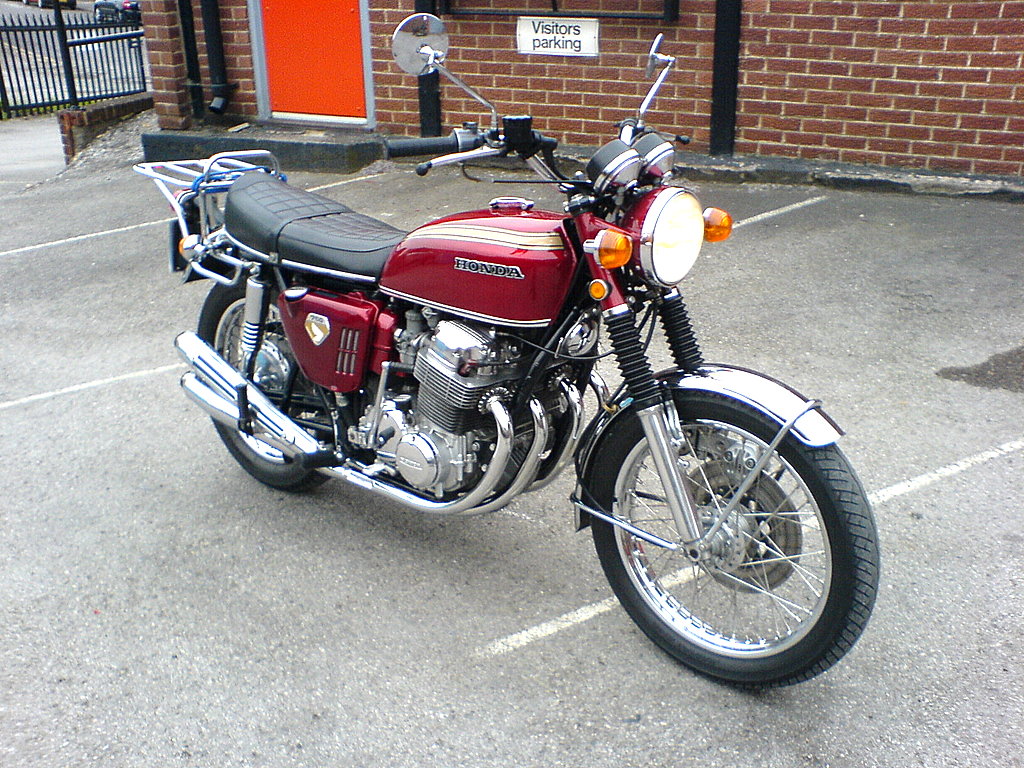
The machine that wrote the superbike playbook and left competitors scrambling to catch up.
The Honda CB750 debuted in 1969, forever changing motorcycle engineering. This pioneering machine became the first mass-production motorcycle with a hydraulic front disc brake, an innovation that delivered unprecedented control. Its 736 cc air-cooled inline-four engine with SOHC, four carburetors, and electric starter produced 67 hp at 8,000 rpm. This formidable power helped Dick Mann win the AMA Daytona 200 in March 1970, solidifying its legend.
The CB750 quickly became the industry’s new benchmark, setting the blueprint for what a “superbike” could achieve. Early versions, especially the rare “sandcast” engines from initial production runs, command serious collector attention. One reportedly sold for roughly $218,000, transforming what was once an affordable street bike into investment-grade motorcycling royalty. Its raw, carbureted inline-four configuration cannot meet current EPA emissions standards. This machine laid the groundwork for everything that followed.
6. Kawasaki Z1 900
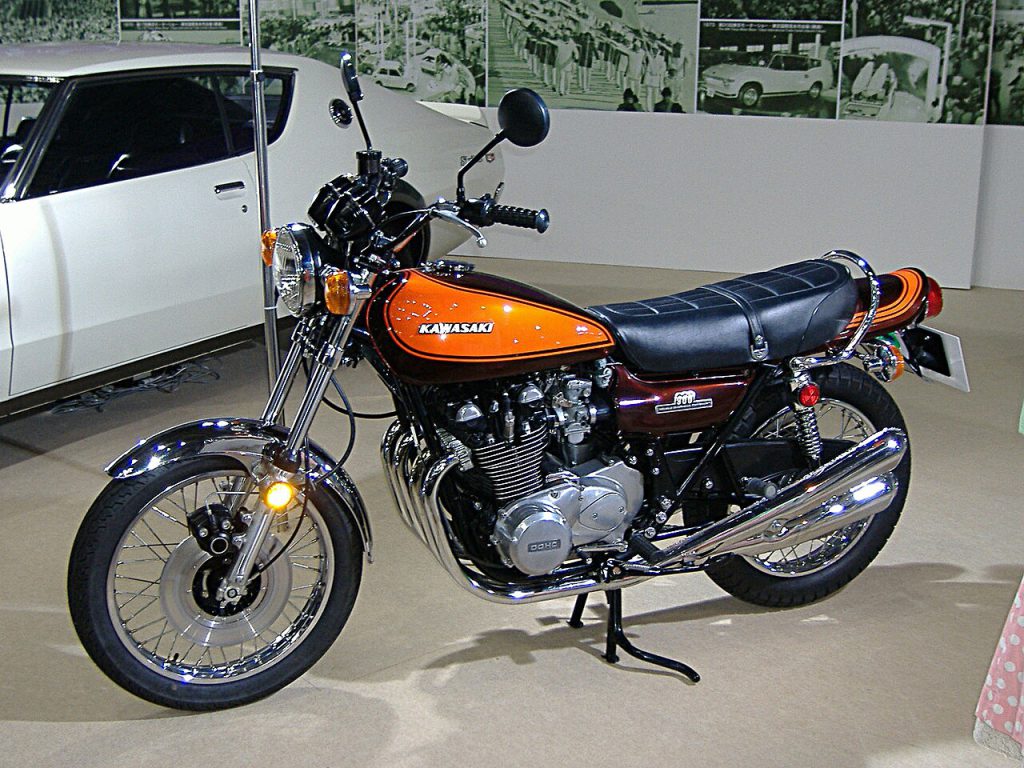
Engineers called it “New York Steak” because they were building something far meatier than the competition.
By 1972, the motorcycle world thought it understood superbikes. Then Kawasaki unleashed the Z1 900 and reset expectations. This bike’s 903 cc air-cooled inline-four engine with DOHC delivered a formidable 82 hp at 8,500 rpm, using a perfectly square 66 x 66 mm bore and stroke. It redefined performance benchmarks, establishing a new standard for Japanese muscle and leaving competitors scrambling to respond.
This machine proved its raw power and endurance during its 24-hour record run at Daytona, covering 2,631 miles at an average 109 mph. The Z1’s gloriously analog character demanded real skill, requiring riders to manage carburetion, timing, and throttle response without electronic assistance. Anyone used to riding modern, traction-control-equipped bikes might find wrestling a Z1 requires genuine talent and attention. Kawasaki produced around 85,000 units between 1972 and 1975, but its carbureted, emissions-uncontrolled design renders it incompatible with today’s stringent EPA and Euro regulations.
5. Kawasaki H2 750 Mach IV
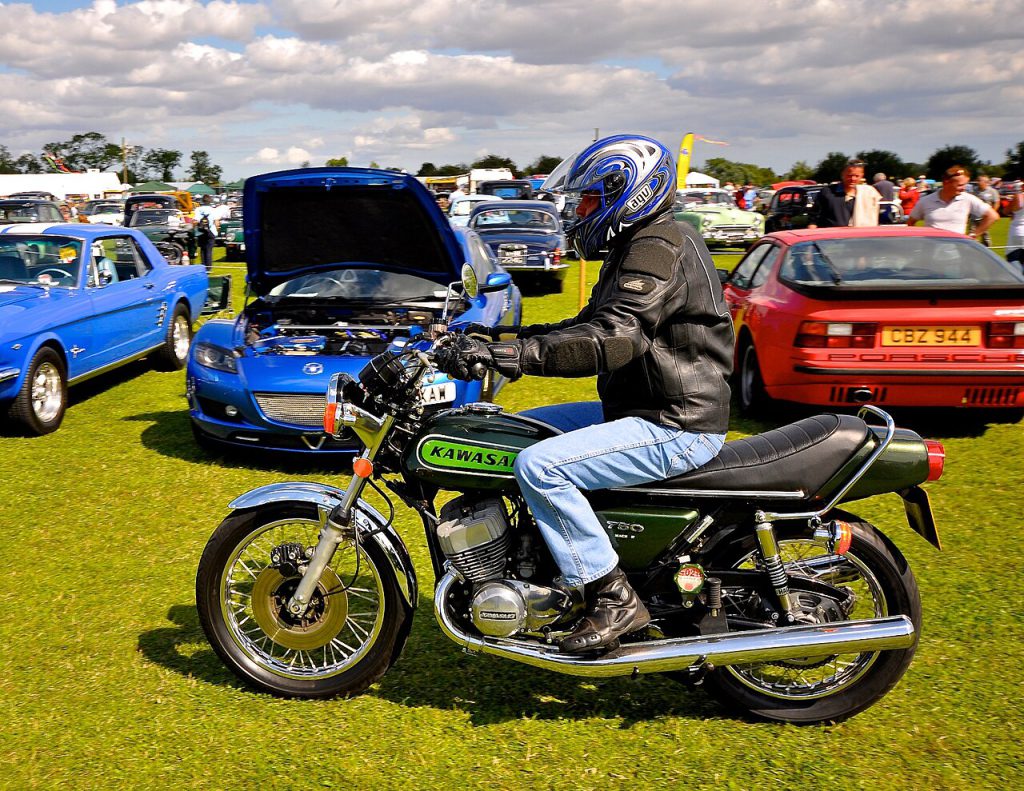
The bike that earned “Widowmaker” as a title, not an insult.
The Kawasaki H2 750 Mach IV earned its infamous “Widowmaker” moniker through performance and handling that demanded respect. Introduced in 1971, this 748 cc air-cooled two-stroke inline-three with oil injection delivered 74 hp at 6,800 rpm. It cleared a quarter mile in a flat 12 seconds. Its short wheelbase, flexing frame, and abrupt powerband created handling characteristics that separated skilled riders from everyone else.
Its raw, unfiltered nature hit regulatory barriers as two-stroke street bikes fell out of favor with stricter emissions enforcement. The combination of oil-burning exhaust and uncontrolled hydrocarbon emissions made these machines regulatory nightmares. Around 47,600 units were built during its production run. Today, pristine examples command up to $50,000 at auction, testament to its brutal legend and collector appeal among those who appreciate motorcycling’s wilder past.
4. Suzuki GT750
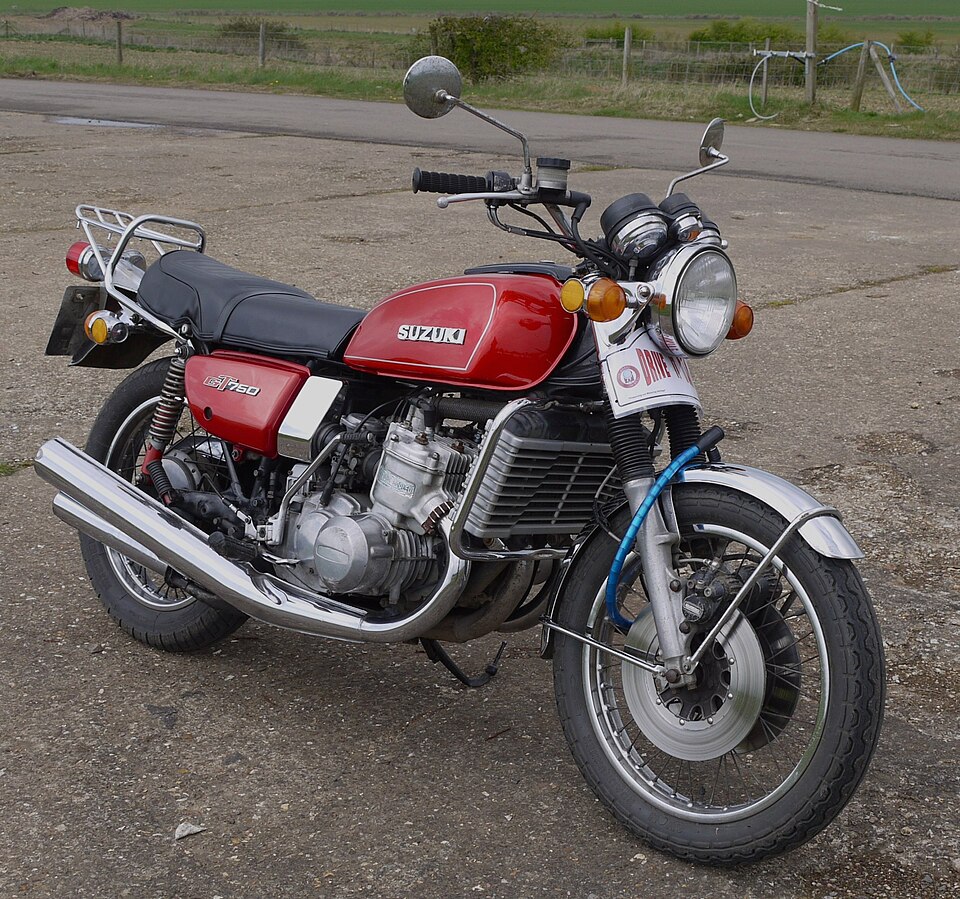
The first liquid-cooled Japanese production bike, built when cooling systems were considered exotic technology.
Most 1970s two-strokes earned reputations for abrupt power and twitchy handling, but the Suzuki GT750 defied expectations. Debuting in 1971, this motorcycle marked genuine innovation as the first mass-production Japanese model featuring liquid cooling, a rarity for its time. Designed by Etsuo Yokouchi, its 738 cc liquid-cooled two-stroke inline-three was built for smooth, long-distance touring rather than drag-strip heroics. Riders called it the “Water Buffalo,” “Kettle,” or “Water Bottle,” all nicknames acknowledging its pioneering cooling system.
Compared to its unhinged contemporaries, the GT750 delivered a ride that felt refined and controlled. The addition of twin front disc brakes by 1973 further boosted its credentials, making it a surprisingly sophisticated machine for the era. This brief window where a high-performance two-stroke could prioritize comfort represented an engineering path that regulations would soon close. Suzuki eventually replaced the GT750 with the four-stroke GS750 in 1977 as emissions regulations tightened, marking the end of a unique chapter.
3. Ducati 750 Super Sport “green frame”
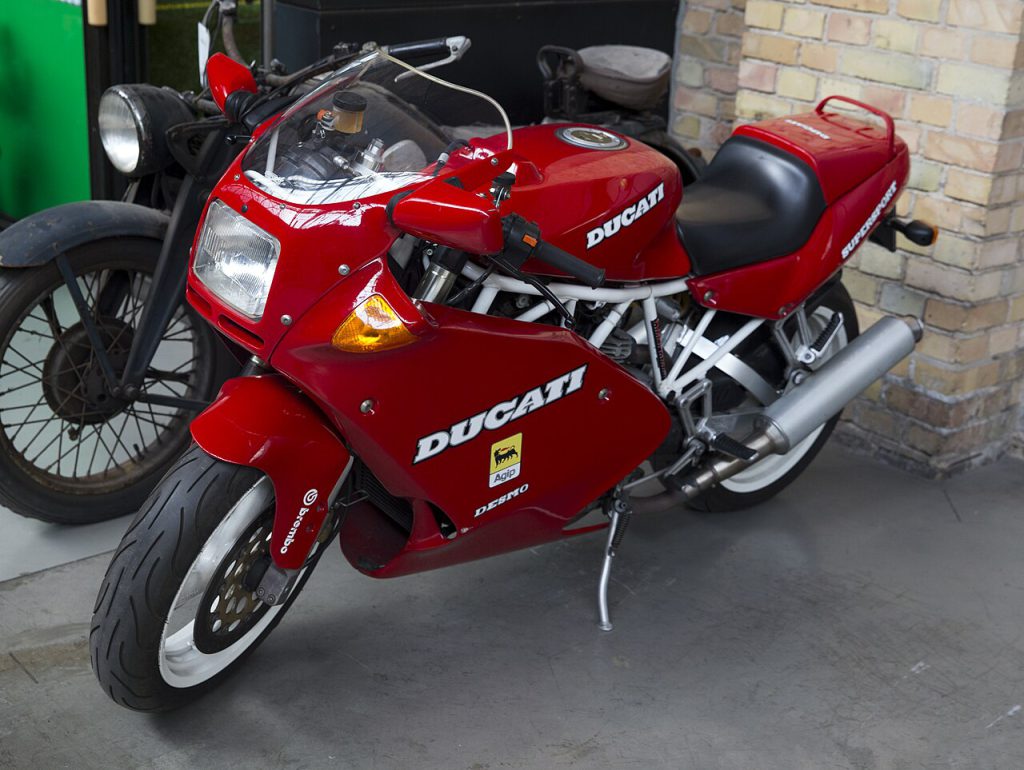
Track aggression brought straight to the street, built with zero apologies for comfort or compliance.
The 1972 Imola 200 race proved pivotal when Paul Smart secured an unexpected victory for Ducati. This triumph spurred creation of the 750 Super Sport “green frame,” bringing race-bred performance directly to public roads. Its 748 cc L-twin engine featured Ducati’s renowned desmodromic valve system, where mechanical cam followers both opened and closed valves rather than relying on springs. Only 401 examples were built, making it exceptionally rare among collectible motorcycles.
These bikes carried raw, unfiltered 40 mm Dell’Orto racing carburetors and a fiberglass fuel tank with a clear viewing strip for fuel level. Owning one means holding motorcycling royalty, a concept that resonates with anyone who’s coveted vintage technology for its historical significance. Today, auction prices range from $198,000 to nearly $250,000. It represents an era when design prioritized pure performance and personality, unfiltered by modern regulations governing emissions, noise, and safety equipment.
2. Honda CBX 1000
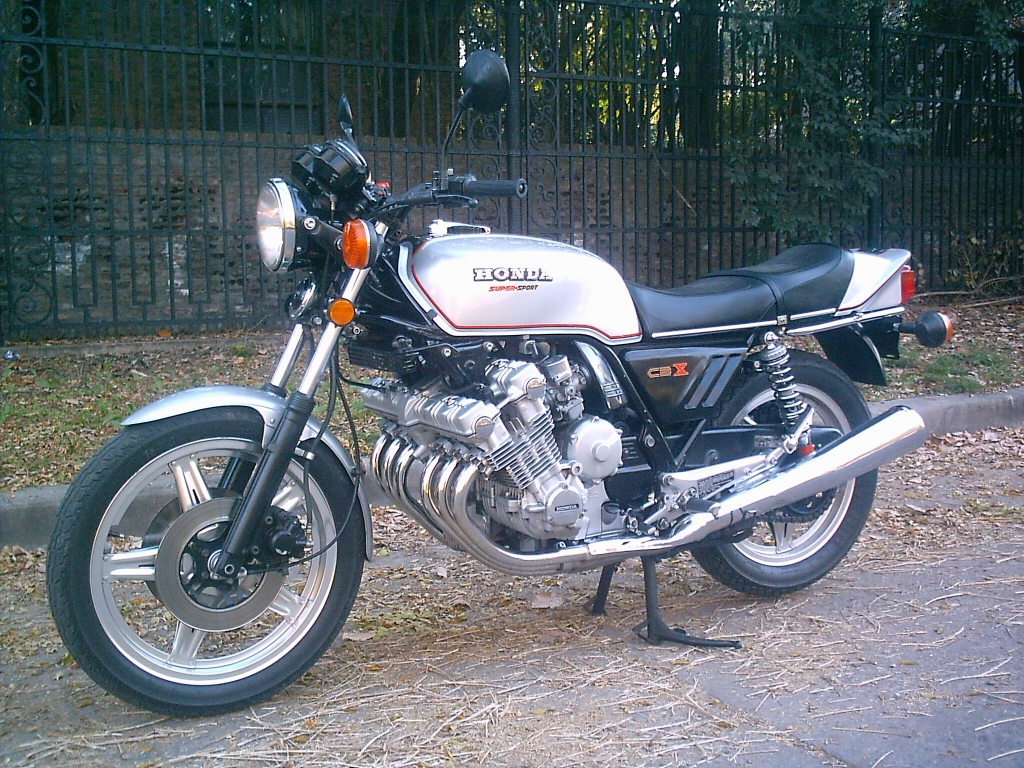
A six-cylinder superbike that sounded like a turbine and felt gloriously over-engineered.
In 1978, Honda unveiled the CBX 1000, a dramatic six-cylinder superbike that felt like an engineering manifesto. Designed by Shoichiro Irimajiri, a veteran of 1960s GP racing bikes, this machine showcased an air-cooled 1047 cc inline-six engine. Surprisingly compact, it measured only about 2 inches (5 cm) wider than a CB750 despite packing two additional cylinders. The engine, with 24 valves and six carburetors, churned out 105 hp, pushing the bike past 130 mph (209 km/h) with a distinctive turbine-like exhaust note.
Some technology feels gloriously excessive, built because engineers could rather than because they should. The CBX embodied that philosophy. Its complex, air-cooled, multi-carbureted design ultimately proved its downfall, becoming impossible to certify under tightening emissions standards. Managing six carburetors in perfect synchronization while meeting hydrocarbon and CO limits represented an engineering challenge Honda eventually abandoned. The CBX remains one of the most extravagant Japanese production motorcycles ever built, a monument to an era before emissions compliance dominated design decisions.
1. Laverda Jota
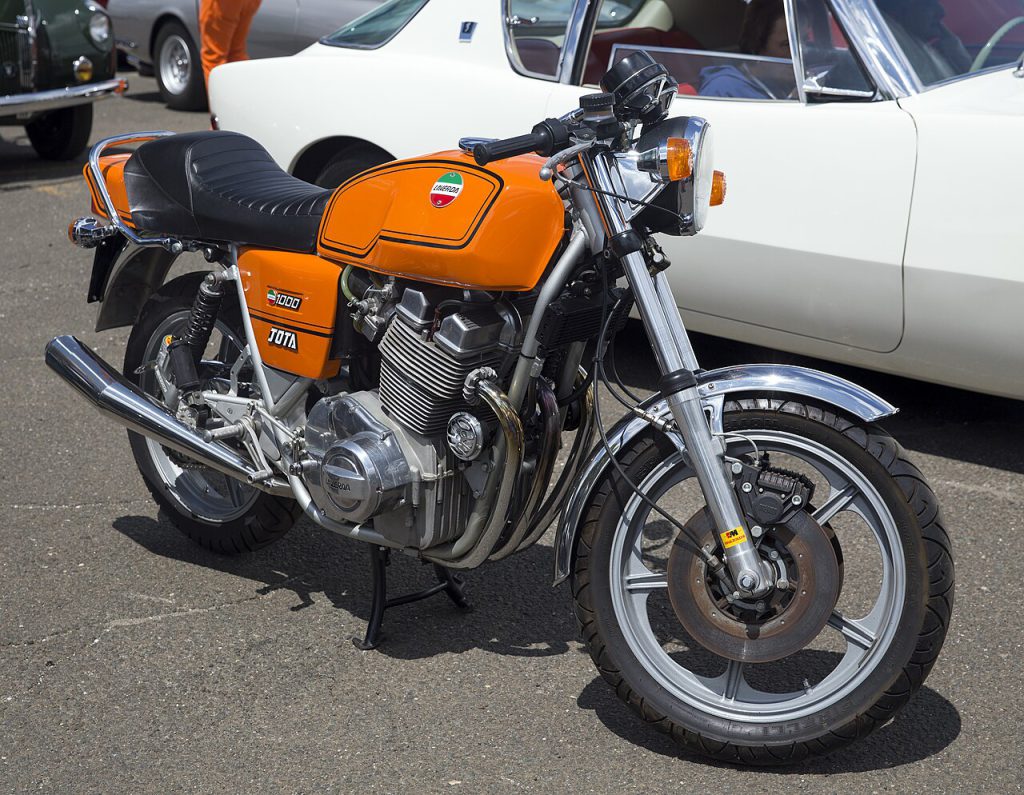
Not merely transport, but a 981 cc power ballad with an exhaust note that announced your arrival three blocks early.
Modified by the Slater brothers with hotter cams and higher compression, the Laverda Jota’s air-cooled 981 cc triple engine earned recognition among the fastest production motorcycles from the mid-1970s through early 1980s. It became the first production bike clocked past 140 mph (225 km/h), a feat that made international headlines. Riders heard it before they saw it, with an idle so loud and uneven it felt deliberately confrontational, but on the track it dominated British production racing across multiple seasons.
Named after a Spanish folk dance, this machine moved less like choreography and more like controlled chaos. Only around 7,100 Laverda triples were built across all variants, making this particular high-performance iteration exceptionally rare. The very characteristic that defined its brutal charm became its regulatory undoing. 1979 noise laws forced design changes, effectively taming the beast through restrictive exhaust systems and reduced compression. That raw, uncatalyzed bark was essential to its identity, a sound today’s regulations prohibit outright. The Jota represents an era when motorcycles prioritized character over compliance, built for riders who wanted every ride to feel like an event rather than transportation.