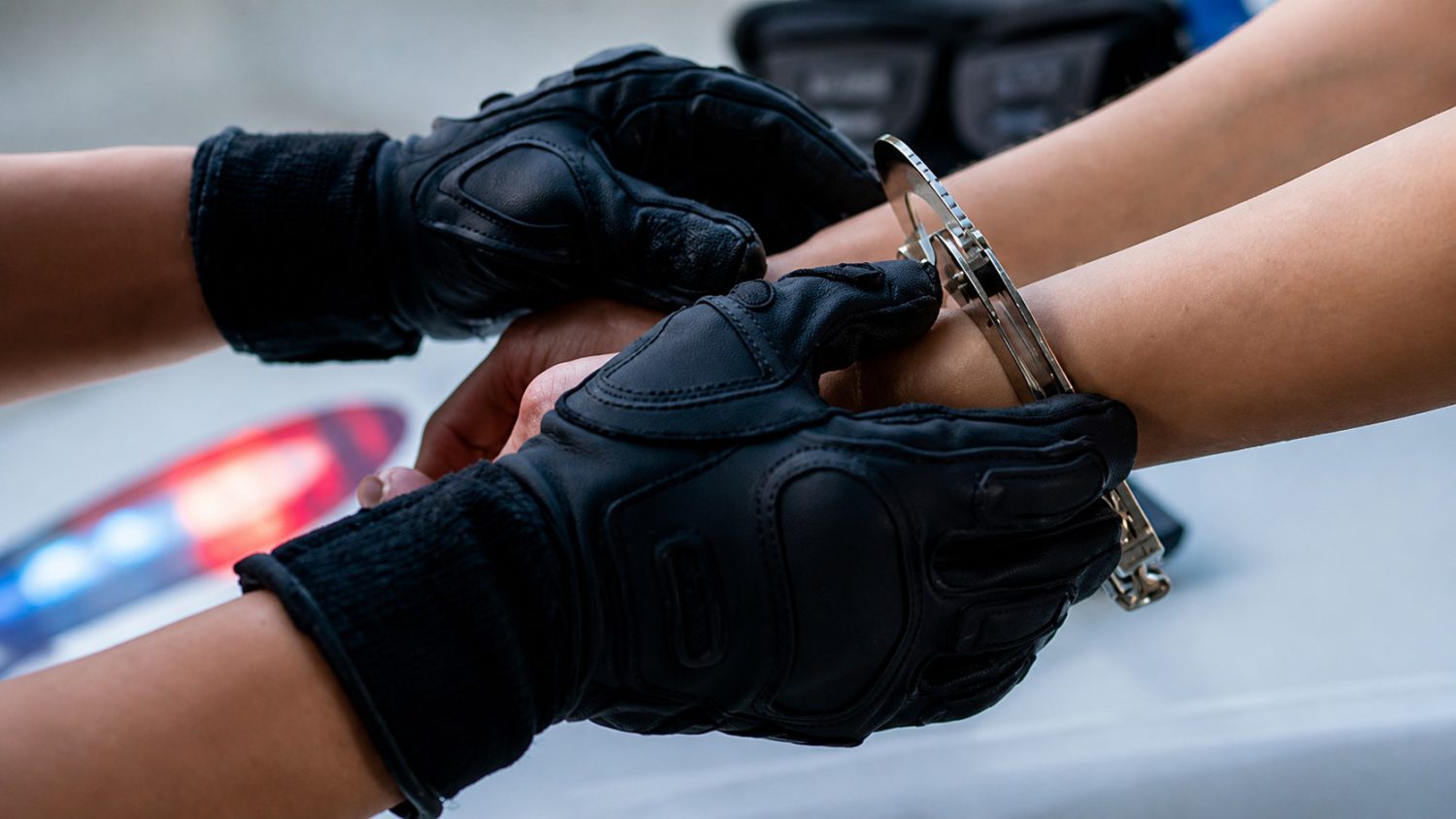
The standard-looking patrol glove clips to an officer’s vest until needed. Activated, it delivers 324 to 362 volts through contact pads pressed directly against skin — anywhere from one to fifteen seconds, until compliance is gained. That’s the G.L.O.V.E.: Generated Low Output Voltage Emitter, manufactured by Compliant Technologies and positioned as a less-lethal option sitting just below Tasers on the use-of-force ladder. Omaha’s city council approved 40 pairs for just under $66,000 in May 2025. Twenty-nine of OPD’s 34 school resource officers are trained and authorized to use them across Omaha, Elkhorn, Millard, and Westside school districts.
This school year, the gloves were used twice — both times on OPS students, both reviewed and deemed within policy.
- A trespassing student at Omaha South High was shocked for approximately two seconds during an attempted escape.
- A student at OPS’s Integrated Learning Program — which serves students with behavioral and learning needs — was shocked twice during an altercation with a security guard.
“Nothing is more important to us than the health, safety and well-being of the 52,000 students we serve.” — Omaha Public Schools
Who’s Saying What
The institutional responses reveal a gap between how police and school officials define acceptable tools in an educational setting.
OPS sent a formal letter to Mayor John Ewing Jr. and Police Chief Todd Schmaderer requesting that SROs stop carrying the gloves on district grounds, immediately. The district described their use as “counterproductive” — a diplomatic word doing considerable heavy lifting. OPD agreed to honor the request, though SROs retain their standard kit: Tasers, OC spray, batons, and firearms.
Chief Schmaderer defended his officers’ relationships with students and suggested critics have made “erroneous assumptions.” Mayor Ewing, who helped launch the SRO program, called the G.L.O.V.E. “the least impactful” tool officers carry. Calling any pain-compliance device the mildest option in a lineup still leaves the question of whether any such option belongs in a school hallway.
Community pushback was concrete and sustained. About 30 parents, students, and community members addressed the OPS board the preceding Monday night, according to Nebraska Public Media. Board member Gini Magnuson — also an OPS parent — drew a harder line: “I do not support the use of any use of force or pain compliance with our students, including pepper spray, tasers and electric shock gloves.” That position extends well beyond banning one device, and it signals where this debate is likely headed next.
Beyond Omaha’s Classrooms
OPS’s decision is a policy letter, not a law — and the gloves are still authorized in classrooms across the metro.
The gloves remain in use at Elkhorn, Millard, and Westside schools. The Douglas County Sheriff’s Office reports it does not possess any. Nationally, ICE is preparing to spend up to $20 million on the same technology — with reporting from Fortune citing Omaha’s school deployment as an early real-world test case. School safety analysts have urged districts to “think twice” before treating pain-compliance devices as routine SRO equipment, noting the potential for student trauma and legal exposure. OPS listened. Whether neighboring districts follow is still an open question.