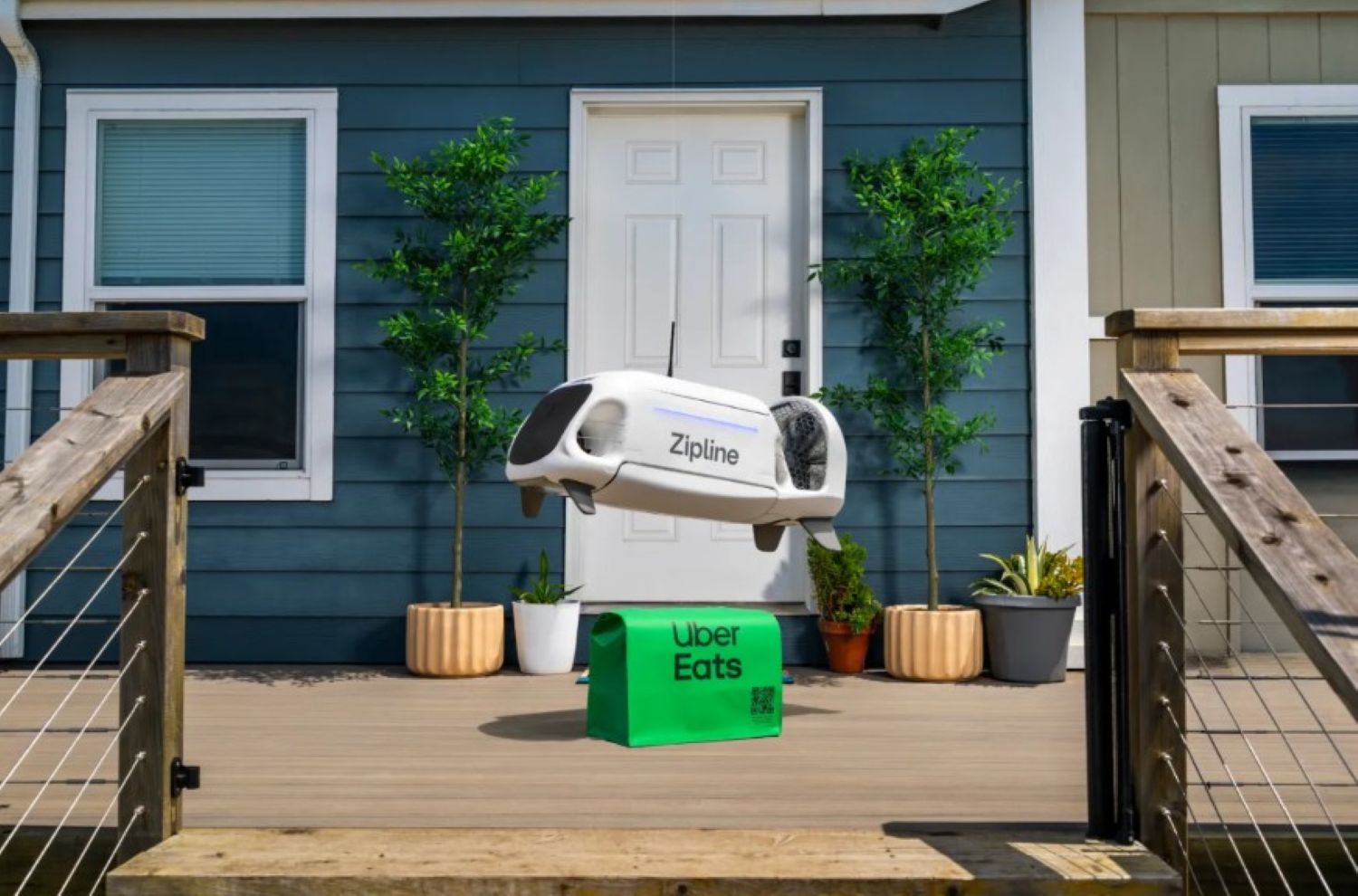
Your burrito arrives in under 10 minutes, dropped from the sky by an autonomous drone while you’re still finding your wallet. That’s not a sci-fi short — it’s what Uber and Zipline are pitching as ordinary life by 2029. On August 17, the two companies announced a partnership to integrate Zipline’s drones into Uber Eats, with an undisclosed strategic investment from Uber and a target of one million drone deliveries per day by end of 2029.
From Pea Ridge to “Dozens of Cities”
Zipline has the receipts. Now Uber wants to scale them.
Zipline isn’t an unproven startup chasing hype. The company has completed more than 2.5 million commercial deliveries — roughly one million in the past year alone — covering healthcare logistics, Walmart retail orders, and food from partners including Chipotle. Uber itself tested drone delivery with Flytrex in 2025, so this isn’t its first aerial experiment. Here’s where things stand now:
- First deployments: later in 2026, in existing Zipline markets (Pea Ridge, Arkansas; Dallas–Fort Worth)
- Speed claim: orders delivered in 5–10 minutes under favorable conditions
- Expansion target: dozens of US cities over time
- Investment amount: strategic, undisclosed
“Drone delivery will become part of everyday life for hundreds of millions of people in the US,” Zipline said, as reported by PCMag. That claim rests entirely on one metric: one million completed trips per day by the end of 2029.
The Race Is Already Running
DoorDash and Wing have a four-year head start — and they’re still expanding.
DoorDash and Wing, Alphabet’s drone unit, launched their partnership in 2022. By April 2026, they’d expanded to metro Atlanta, where customers near Tanger Outlets Locust Grove can already order restaurant food via a drone icon in the DoorDash app — delivery in about 20 minutes. Tens of thousands of flights completed. Uber is entering a race that’s already in the second lap.
One million daily drone flights would make aerial delivery competition as routine as watching a rideshare pin crawl toward your location. But the obstacles are real: FAA Beyond Visual Line of Sight approvals, community noise pushback, weather constraints, and dense urban airspace management remain unsolved at scale. Reuters and Flying Magazine both frame the 2029 target as ambitious rather than guaranteed. Regulatory clearance isn’t a formality — it’s the whole ballgame.
What Changes for You
Faster delivery in the suburbs, and more questions than answers for gig workers.
For Uber Eats users in launch markets, drones appear as an opt-in alongside standard couriers — not a replacement. The real advantage shows up in lower-density suburban areas where road delivery is slower and less efficient. If you’re in Dallas–Fort Worth, this could matter sooner than you’d expect.
For gig workers, the picture stays murky. Neither company has addressed how drone volume affects courier demand — and that’s a gap worth watching as deployments scale.
If Uber and Zipline get anywhere near their target, American skies become infrastructure. At that point, city planners — not just app designers — will be deciding how this lands.