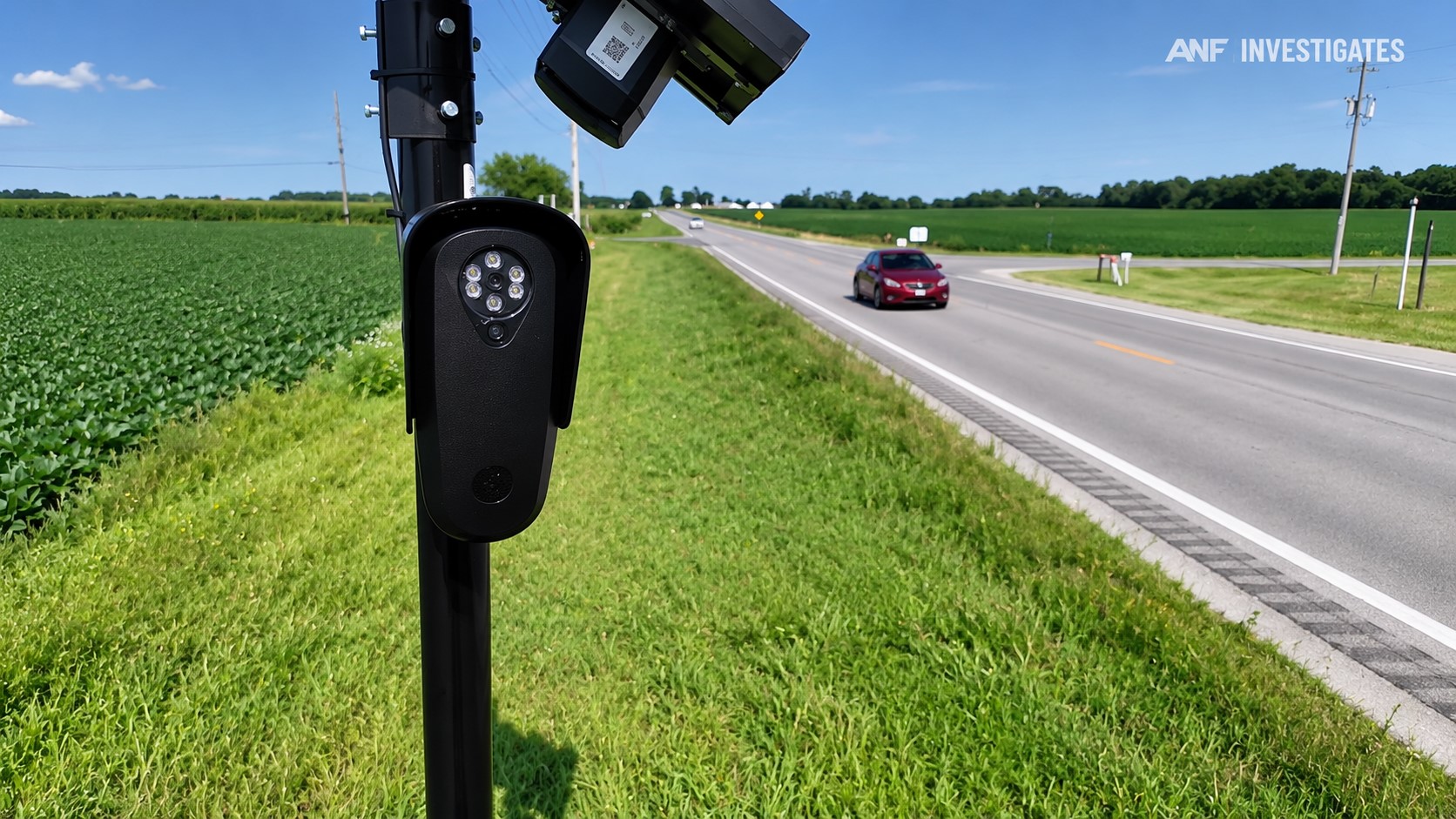
A resident steps up to the mic at a town council meeting, says something inconvenient, then drives home — unaware that somewhere in a police database, that license plate just became a person of interest. No warrant. No probable cause. Just an officer with a grievance and a subscription service the town approved at a meeting most residents never knew about.
That scenario isn’t hypothetical anymore. In 2026, it’s documented — from Georgia to Rhode Island.
How Flock Works – and How It Can Be Weaponized
The system was built to catch criminals; the problem is there’s nothing reliable stopping it from being aimed at everyone else.
Flock Safety sells automated license-plate reader (ALPR) networks to police departments nationwide. The pitch is straightforward: catch criminals faster by searching vehicle movement data after incidents occur. What the system doesn’t include is a reliable filter between a legitimate investigation and a personal score to settle. Unlike federal wiretap law, no federal statute currently governs ALPR data retention periods or inter-agency sharing agreements, leaving oversight entirely to municipal contracts.
The documented abuse cases are piling up:
- The Electronic Frontier Foundation identified more than 50 agencies running hundreds of Flock searches tied to protest activity
- A CNN report from July 2026, citing an Institute for Justice tally, found at least two dozen cases where officers resigned or were arrested for allegedly using Flock to stalk romantic partners
- A police chief in Braselton, Georgia, was arrested for allegedly using ALPR cameras to stalk and harass private citizens
- Court documents show searches conducted far outside officers’ jurisdictions, according to a 2026 investigation republished by Yahoo
- Flock told 404 Media it was “aware of 15 incidents of abuse” — a figure critics argue the platform’s design makes structurally impossible to trust
Towns Are Starting to Fight Back
From small New England communities to Southern cities, local officials are asking the questions nobody thought to ask when they signed the original contract.
Communities from Narragansett to Hopkinton are now holding hearings and debating contract cancellations. The Washington Post reported in early August 2026 that municipal backlash has grown politically broad — reaching well beyond activist circles into city councils and select boards conducting basic procurement reviews nobody prioritized at signing.
The uncomfortable reality: the tool marketed to fight crime has become something residents increasingly need protection from.
The Electronic Frontier Foundation’s position is structural, not anecdotal — broad search access without warrant requirements creates predictable abuse, regardless of any individual officer’s intent.
Mass surveillance infrastructure isn’t an abstract policy concern anymore. It’s a surveillance app your town may have quietly renewed, and your car’s movements could already be in the log. The only real question is what your council plans to do about it — before someone you know finds out the hard way. For residents ready to push back, the EFF’s Street-Level Surveillance guide is a concrete place to start.