Customers who preordered a Framework Laptop 13 Pro with 64GB of LPCAMM2 RAM received an email last week delivering the kind of news no one wants before a shipment: they’re getting 32GB instead. This is the fallout of AI’s insatiable appetite for memory chips — and the moment a company built on transparency had to deliver some genuinely bad news.
The Cost Spike No One Could Absorb
Framework’s memory suppliers more than doubled their prices, forcing preorder downgrades and a $100 bump to the base configuration.
LPCAMM2 supplier costs hit “more than double” what Framework had in prior inventory, according to the company’s blog. CEO Nirav Patel called the situation “major and unfortunate,” adding that Framework chose an approach that “minimizes the impact of this challenge,” per Notebookcheck. Translation: there was no good option, only less-bad ones.
Customers in Laptop Batches 5 and later who ordered 64GB configurations are being moved to 32GB modules at the original 32GB price. DIY and mainboard preorders with 32GB beyond certain batches drop to 16GB at the original 16GB price. Pre-built 32GB systems stay untouched. Anyone unhappy can cancel for a full deposit refund.
The new standalone module prices tell the real story:
- 32GB LPCAMM2: jumped from $439 to roughly $800
- 64GB LPCAMM2: jumped from $849 to approximately $1,600
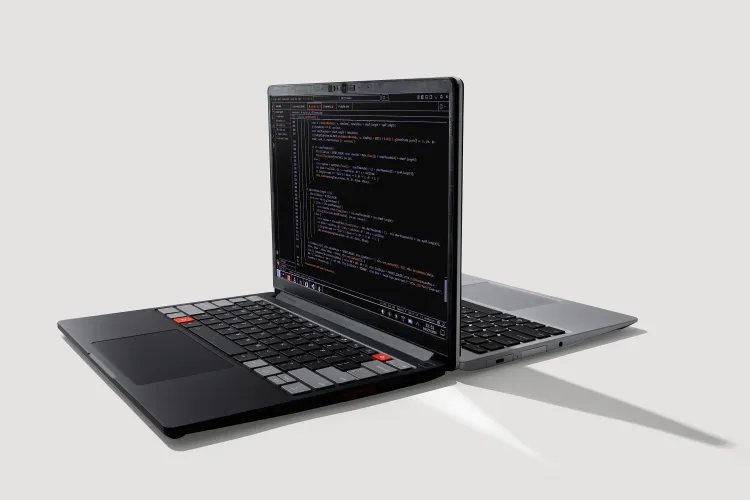
- Pre-built base price: now $1,599 (was $1,499), with Intel Core Ultra 5 325, 16GB RAM, and 512GB storage
- Affected orders: Laptop Batch 5+, Mainboard Batch 8+
The DIY Upgrade Math Just Broke
Framework’s modular promise was affordable upgrades later — but an $800 RAM module rewrites that equation entirely.
Traditional laptop makers lock out upgrades by design. Framework’s entire pitch was the opposite. A buyer who grabbed the DIY edition at $1,199 with 16GB, planning to slot in 32GB down the road, now faces an $800 module cost. That pushes the total near $1,999 for a 32GB ultrabook — a scenario where you may be paying too much without realizing it.
The upgrade path didn’t disappear — it just got repriced like a Ticketmaster “dynamic pricing” moment, where your face-value seat quietly becomes a worse one the week of the show. Framework at least emails you first and offers your money back. Technically fair. Still stings.
None of this is Framework’s fault in any straightforward sense. AI data-center buildouts are consuming DRAM at a pace that leaves consumer hardware competing for scraps. LPCAMM2 remains early in supply-chain maturity, which means this kind of volatility could repeat. Framework’s transparency — weighted-average-cost explainers, batch-by-batch pricing updates — is genuine and notably rare in this industry. But honesty about getting squeezed doesn’t change the squeeze itself.
If you’re holding a preorder, the math deserves a hard second look. If you’re watching from the sidelines, this is what happens when every sector draws from the same memory pool at once — and the consumer end runs dry first.