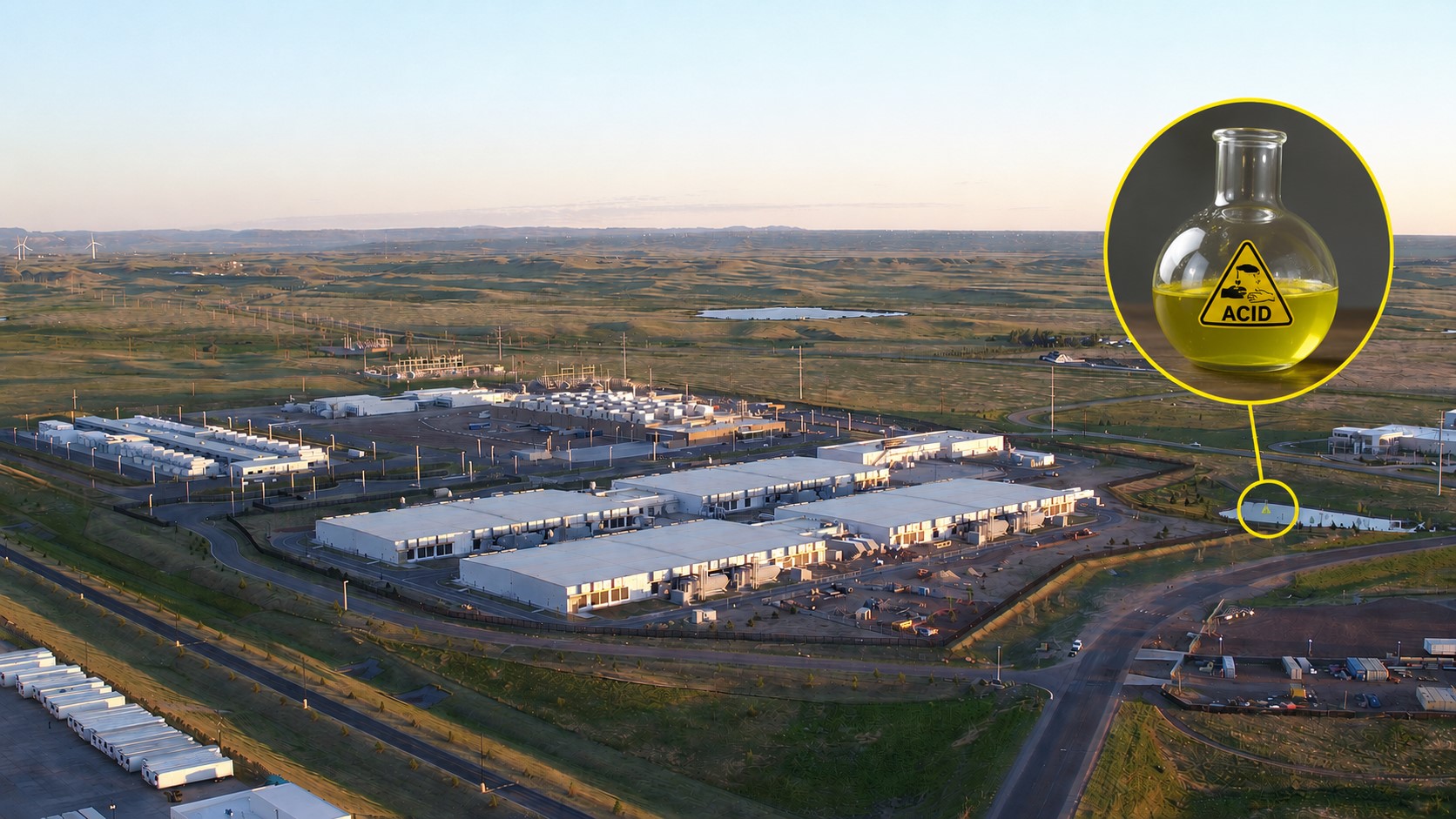
Sometime between midnight and dawn on July 15–16, 2026, activists from Extinction Rebellion Netherlands hurled rubber balloons over a perimeter fence in Amsterdam’s Westpoort industrial zone. Their target: freshly poured concrete foundations for a hyperscale data center being built by Pure Data Centres, with Microsoft as the expected anchor tenant. The balloons reportedly contained a mixture of hydrogen peroxide, acetic acid, salt, and acrylic paint — theoretically corrosive, practically underwhelming against several thousand tons of reinforced concrete. The foundations didn’t flinch. But something shifted anyway.
What Actually Happened That Night
The attack delivered more symbolism than structural damage, though the chemical details remain unverified.
Multiple sources confirm the following:
- Extinction Rebellion Netherlands claimed responsibility, stating the chemical mixture attacks concrete while hydrogen peroxide accelerates rebar corrosion, according to the group’s own post-action statement.
- The site sits near Amsterdam’s Sloterdijk station, in a zone already strained by power demand.
- Pure DC confirmed balloons were thrown but reported no structural damage and no construction delays, according to Dutch newspaper NRC.
- Amsterdam police opened an investigation; the exact chemical contents have not been independently verified.
- Pure DC is pursuing legal action, warning the alleged chemicals “could have seriously injured protestors or workers and are irresponsible and dangerous,” according to the Times of India.
The Register characterized the tactic’s structural effectiveness as “dubious” — a fair assessment given the scale of reinforced concrete foundations involved.
The Bigger Target Isn’t Concrete
XR is treating AI infrastructure the way earlier movements treated oil pipelines — as physical symbols of systemic harm.
XR spokesperson Martijn Dekker connected the data center to climate breakdown, concentrated corporate power, and Israel’s campaign in Gaza — three distinct grievances directed at one construction site, according to Futurism. The rhetorical bundling is ambitious; the coherence is contested.
More concretely, XR alleges the Pure DC project exploits a loophole in Dutch regulations restricting hyperscale facilities. The Netherlands has tightened rules around large-scale data centers precisely because regions like Westpoort already face power shortages. That regulatory tension remains unresolved. XR has announced plans for further actions at other Dutch hyperscale sites, according to NRC.
For anyone who uses cloud services or cares where AI queries physically live, the pattern matters. Data centers are becoming contested ground the same way pipelines did a decade ago. The balloons didn’t crack any foundations. But the era when you could pour concrete for a hyperscale facility without organized resistance — chemical or otherwise — appears to be over.