A thrust-vectoring nozzle designed in the 1990s to help F-16s win dogfights just fired up for a completely different purpose: making a fighter jet take off like a SpaceX Falcon 9 booster. GE Aerospace completed integration, actuation, and engine light-off testing of its Axisymmetric Vectoring Exhaust Nozzle — AVEN — on the F110-GE-129E at its Peebles, Ohio test facility. That nozzle is the single component standing between Shield AI’s X-BAT autonomous combat aircraft and its first vertical flight.
No Runway, No Problem — If the Engine Delivers
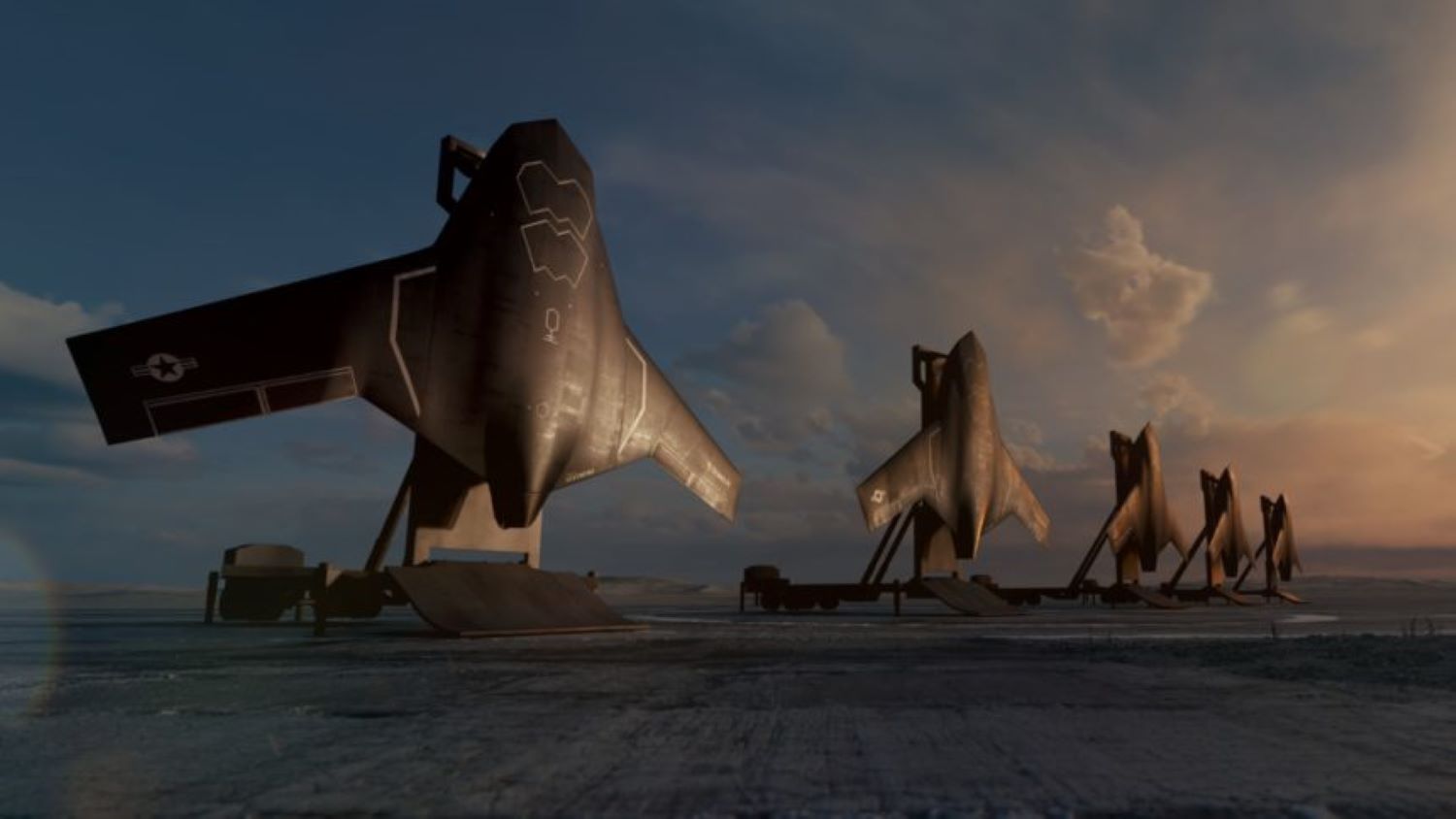
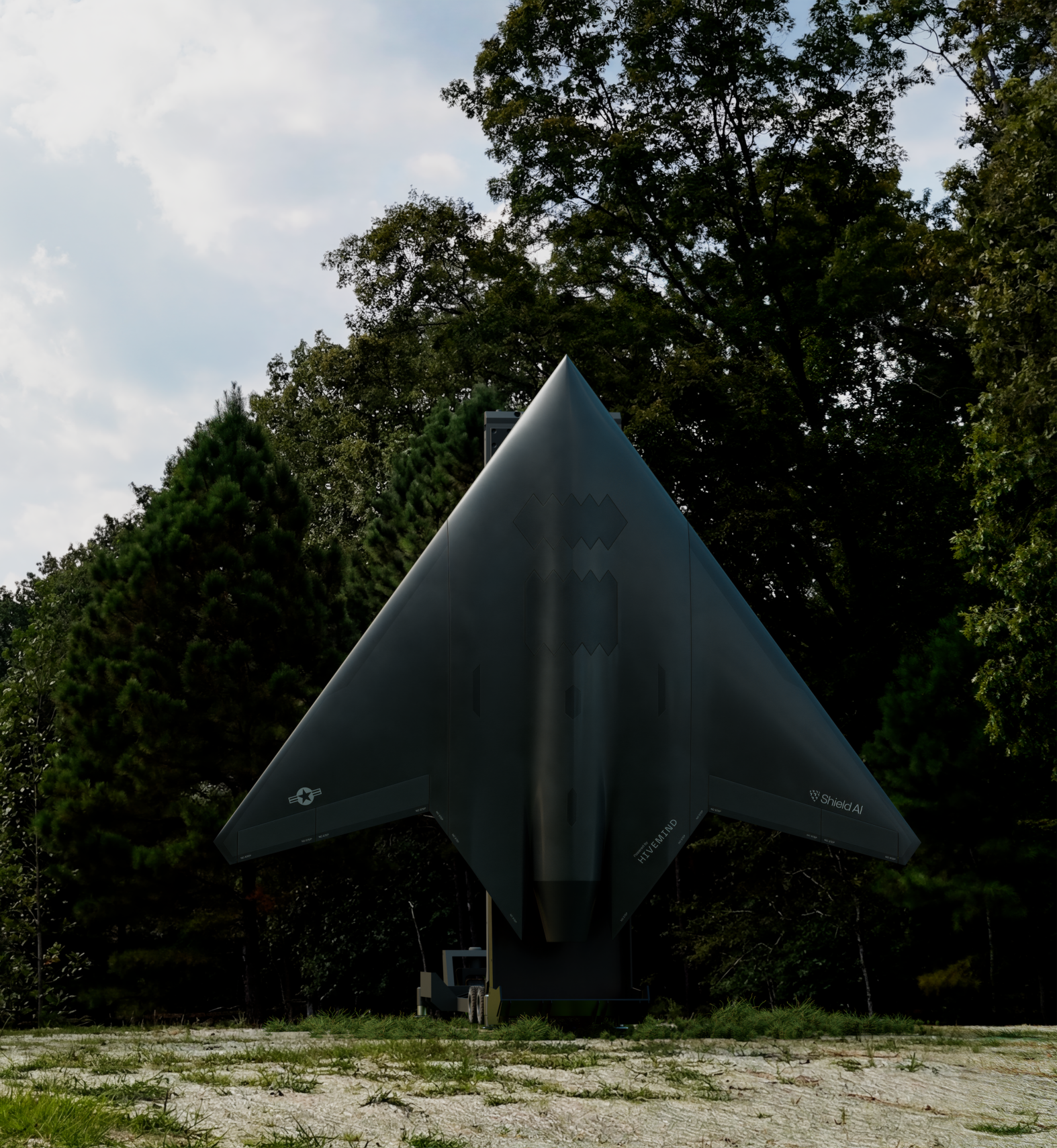
X-BAT is a tail-sitting, jet-powered autonomous fighter built to launch from ships, islands, and trailer-mounted pads — anywhere a conventional runway isn’t.
X-BAT launches vertically on its tail, then transitions to forward flight, powered by the F110 engine family — a platform with over 11 million flight hours across F-15 and F-16 fleets. Mature hardware doing a genuinely new job. Shield AI’s stated specs put the combat radius above 2,000 nautical miles when armed, with two internal weapon bays each carrying up to 2,000 lbs of ordnance — roughly F-35-class payload. The whole aircraft is piloted by Shield AI’s Hivemind autonomy software, which requires no GPS or active comms link to operate.
AVEN is what makes any of that possible. The nozzle pivots exhaust flow in three dimensions, letting X-BAT balance on its tailpipe during vertical operations — the world’s most aggressive gyroscope. Armor Harris, Shield AI’s SVP of aircraft engineering, was direct about the stakes: “X-BAT is designed to take off and land vertically from anywhere — no airbase, no runway — and that capability lives or dies with propulsion,” according to GE Aerospace. The added wrinkle: AVEN must now gimbal faster than its original 1990s spec ever demanded. Legacy hardware, considerably harder demands.
That hardware previously logged 73 hours of ground testing and 135 flight hours across 95 flights on Cold War-era demonstrators — then went dormant. Shield AI and GE refurbished it, like remastering a 90s record for a streaming audience. The recordings were always solid. This is the first fully integrated test of AVEN, its control system, and the F110 since those original campaigns.
One Engine, No Backup — The Trade-Off Worth Watching
X-BAT consolidates everything into a single engine and nozzle — a deliberate bet on proven reliability over redundancy.
Unlike the F-35B’s lift fan or the Harrier’s distributed nozzle arrangement, X-BAT bets the aircraft on one engine and one nozzle. Engine failure during hover means no recovery — a single-point-of-failure risk that analysts have flagged in technical commentary, per reporting by The War Zone. The counterargument is straightforward: 40 years of continuous F110 production delivers a reliability baseline that clean-sheet VTOL architectures simply cannot match yet. That’s the trade Shield AI is explicitly making.
Additional ground testing precedes installation on the full-scale prototype. The current schedule targets:
- Flight testing beginning at the end of this year
- First sortie in 2028
- Production beginning in 2029/30
The propulsion gatekeeper is cleared. Whether the schedule holds through actual vertical flight trials — that’s the harder question.
If those fall tests succeed, X-BAT stops being a concept brief and becomes proof that fighter-class airpower can reach the places conventional jets simply cannot go.
Correction:
Editor’s note (July 22, 2026): Article has been edited to correct the project’s current schedule..