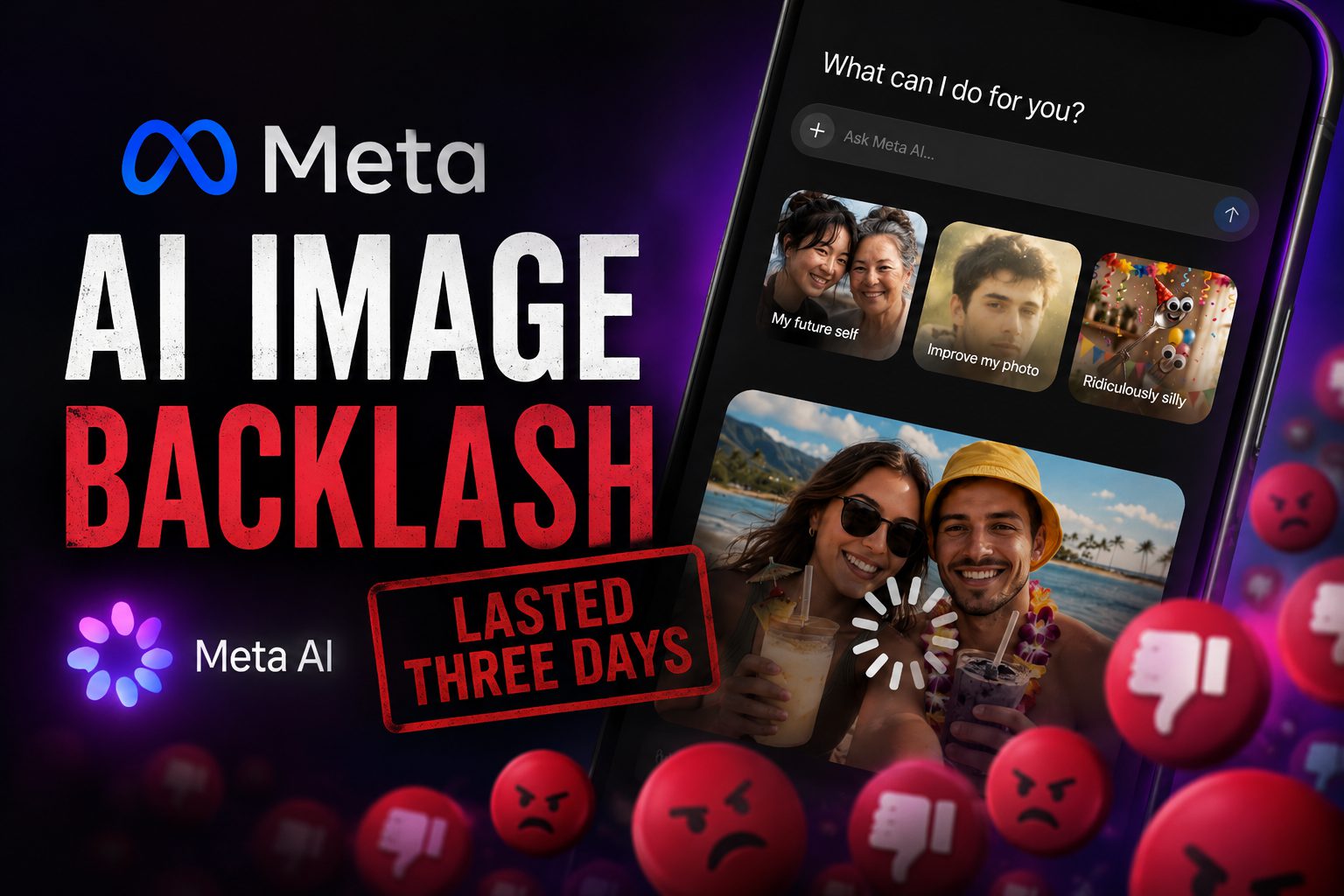
Seventy-two hours. That’s how long Meta’s newest AI feature survived before public outrage forced it offline. On July 7, the company launched Muse Image, a text-to-image generator baked into Meta AI that let anyone @-mention a public Instagram account and use that person’s photos as raw material for AI-generated images. Your vacation shots, your selfies, your carefully curated feed — all of it became ingredients in someone else’s AI blender. No notification when your content was used. No opt-in required. Just a default toggle buried in your settings that Meta called “easy” to find.
What Meta Actually Built
A creative tool that treated your public photos like stock imagery — without asking.
Meta pitched Muse Image as a creative partner for custom event invitations and collaborative mockups, according to its official July 7 blog post. The controversial piece: tag any public Instagram handle, and Meta AI would pull that account’s photos to generate or remix new images — ready to post, no permission needed from the account owner.
- Adult users with public accounts were included by default
- Private accounts and users under 18 were automatically excluded
- Users received no notification when their content was used
- Opting out required navigating Settings, then Sharing and reuse, then toggling off Posts and Reels separately
- Meta’s position: public content plus an available opt-out equals sufficient control
Meta described the opt-out as “just a couple clicks.” Users and unions saw it differently. SAG-AFTRA — fresh off Hollywood’s bruising AI fights over digital doubles and likeness rights — issued a sharp public warning. The union called anything short of explicit opt-in “unacceptable, and an utter miscalculation of public sentiment regarding the obvious dangers and harms inherent in such use.” Talent agency CAA echoed those concerns. Opt-out guides spread across social platforms within hours.
When an organization that spent years negotiating AI protections for performers calls your consent design reckless, that lands differently than a standard privacy complaint.
The Bigger Pattern
This keeps happening because platforms keep confusing “public” with “available.”
By Friday, July 10 — roughly three days after launch — Meta folded. “We’ve heard the feedback that this feature missed the mark, so it’s no longer available,” the company stated in an updated blog post. The underlying Muse Image model still works for standard text-to-image generation. Only the Instagram-tagging mechanism was removed.
This episode fits a now-familiar cycle: ship an aggressive AI feature built on existing user content, absorb the backlash, retreat. It’s the tech equivalent of touching a hot stove repeatedly and acting surprised each time. Meta still has Muse Video in development, which raises legitimate questions about whether the same opt-out-by-default logic will resurface in a different wrapper.
The opt-out toggles remain in your Instagram settings even with this specific feature gone — worth disabling while the broader Muse Image model stays active. Because if this three-day episode proved anything, it’s that “public” was never the same as “consented.”