Your phone does everything. That’s exactly the problem. The Clicks Communicator — a compact Android handset built around a full physical QWERTY keyboard — argues that your attention crisis is a hardware problem. Designed explicitly as a second phone for messaging, email, and calls rather than doomscrolling, this BlackBerry-shaped proposition has moved beyond concept renders. Working prototypes now exist, running real software and making actual calls. That’s the news peg, and it matters.
The Keyboard Is the Whole Point
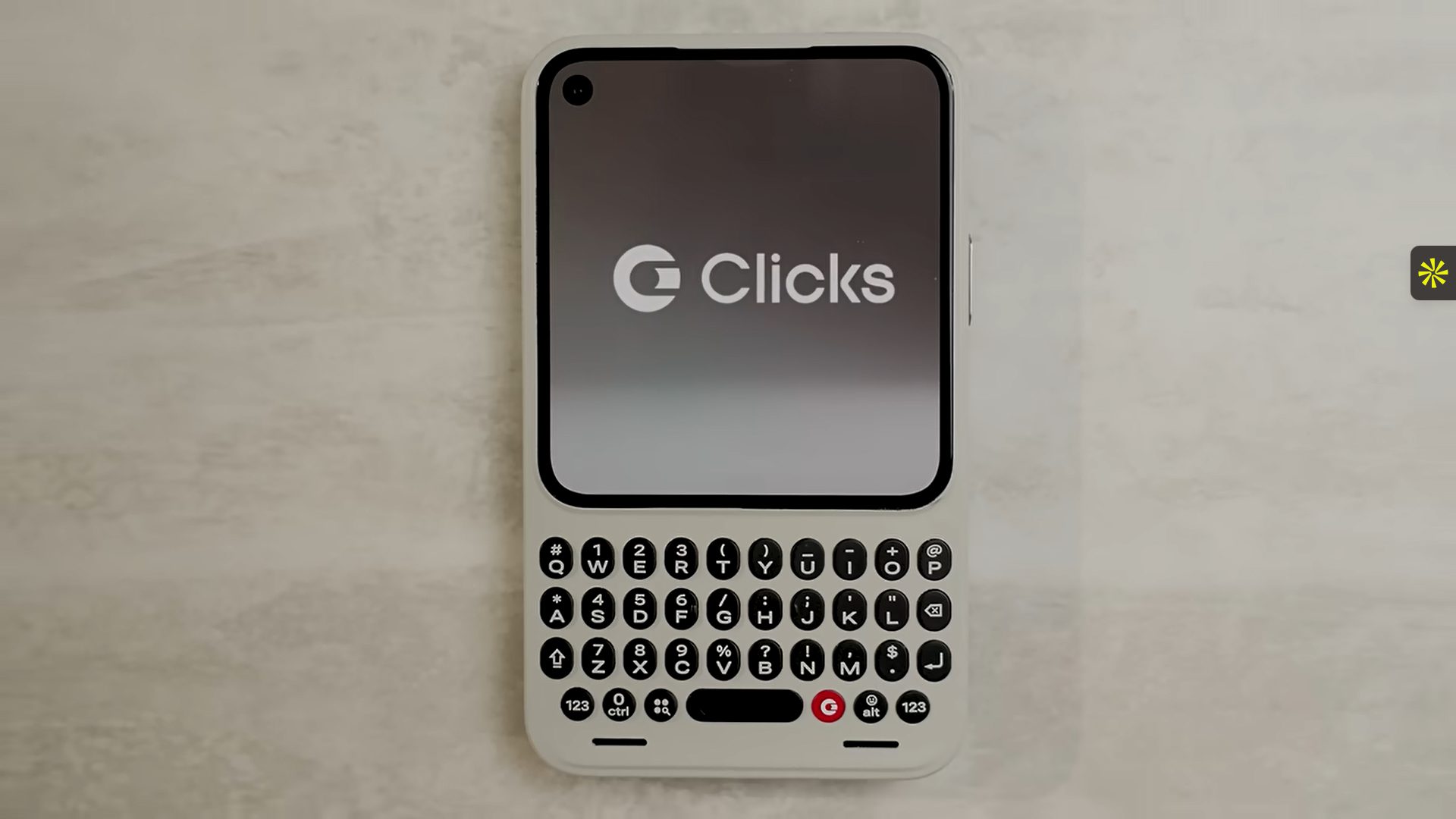
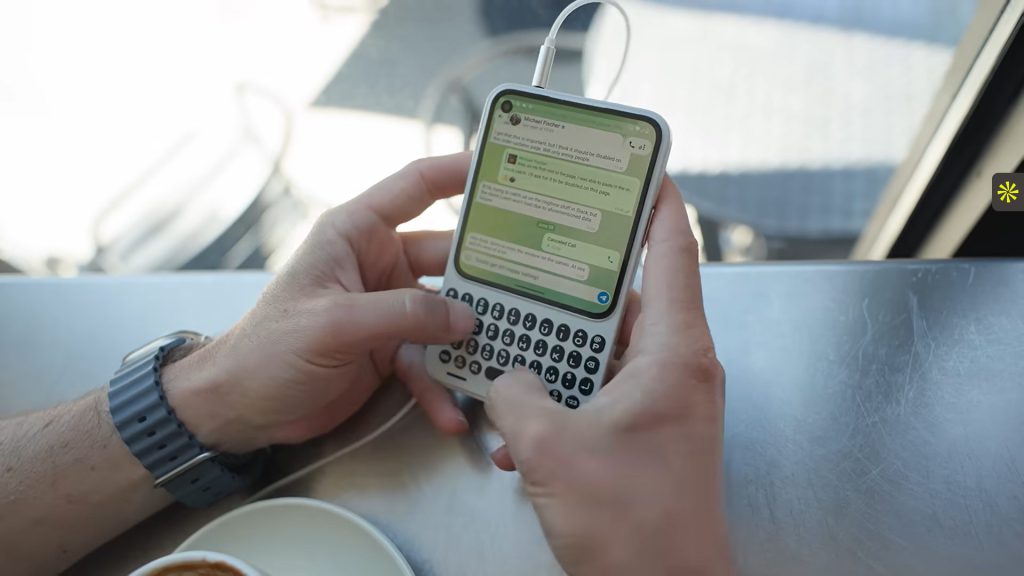
A 4.03-inch AMOLED screen sits above pill-shaped keys designed with input from a former BlackBerry engineer, and the spacebar doubles as a fingerprint sensor.
Measuring 131.5mm tall and weighing roughly 170 grams, the Communicator fits in your hand like a phone from 2012 — except with a 4.03-inch AMOLED display running at 1080 x 1200 resolution. The keyboard beneath it features slightly elevated, pill-shaped keys engineered for confident thumb typing. That broad spacebar hides a fingerprint sensor right where your thumb naturally rests. Even better, the entire keyboard surface is capacitive, meaning you can swipe across the keys to scroll without ever touching the screen. According to PCMag, Clicks brought on a designer from the original BlackBerry team to get the key sculpting right. TechCrunch noted the prototype keys feel slightly less tactile than the planned final hardware — worth flagging for anyone expecting that classic BlackBerry click on day one.
Key Specs at a Glance
- 4 nm MediaTek 5G chipset, 8GB RAM, 256GB storage plus microSD expansion up to 2TB
- 4,000mAh silicon-carbon battery with USB-C (18W) and Qi wireless charging (15W)
- Android 16 with Niagara Launcher-based UI; updates promised through at least Android 20
- 50MP rear camera with OIS, 24MP front camera, 3.5mm headphone jack included
- Nano-SIM plus eSIM, Wi-Fi 6, Bluetooth 5.4, NFC with Google Pay, GPS
Inside, it runs a 4 nm MediaTek 5G chip paired with 8GB RAM and 256GB of onboard storage, with microSD expansion reaching up to 2TB. A 4,000mAh silicon-carbon battery supports both USB-C 18W wired and 15W Qi wireless charging. Droid-Life calls this “a very mid-range Android phone” in terms of raw specs — that framing is accurate and honest. No published benchmarks exist yet.
The software leans hard into the focus-phone philosophy. A text-centric home screen built on Niagara Launcher surfaces notifications inline rather than as anxiety-inducing banner floods. A hardware Signal light alerts you to important messages without waking the screen. Hold the side-mounted Prompt Key for quick voice-to-text. Think of it as the anti-slot-machine — the opposite of every engagement trick your main phone deploys like a Netflix autoplay algorithm on a lazy Sunday.
CES 2026 showed non-functional mockups. As of Q2 2026, working prototypes handle calls, messaging, and app navigation. Certifications are scheduled for Q3, with shipping to reservation holders targeted for Q4 2026. Retail price sits at $499, with early reservations offering an effective price around $399 through a deposit system — though exact mechanics remain subject to change, per community tracking.
A Niche Device That Knows It
Three audiences stand to care most here, and none of them are chasing spec-sheet bragging rights.
- Ex-BlackBerry loyalists who miss tactile precision
- Digital minimalists wanting a phone that doesn’t algorithmically devour their evening
- Compact-phone enthusiasts tired of pocketing 6.8-inch glass slabs
Removable back covers in Smoke, Clover, and Onyx signal a device comfortable with its own niche identity — this isn’t competing with your Galaxy or iPhone flagship, and it isn’t trying to.
Whether $499 is the right ask for a phone that explicitly wants to be your second phone is a real question worth sitting with. The answer probably depends on how much your attention is worth to you — and whether you’re the kind of person who misses typing on physical keys enough to carry an extra device. What’s changed is that Clicks is no longer asking you to speculate. The hardware exists, the software runs, and Q4 2026 is close enough to hold them to it.