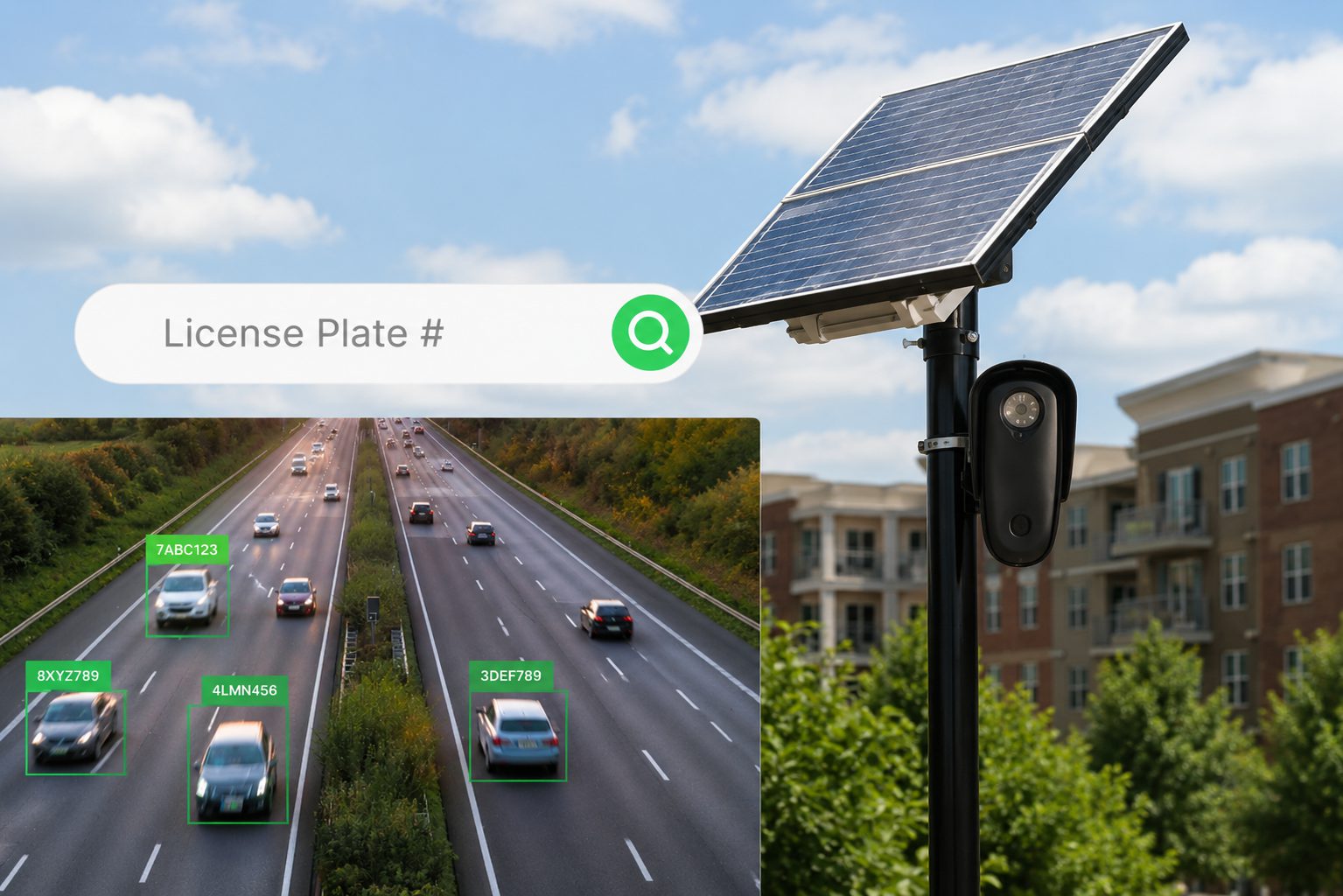
Twenty billion license plate scans every month. That number, reported by NBC News, represents the volume of vehicle data flowing through Flock Safety‘s camera network right now. Every trip to the grocery store, every school pickup, every late-night drive-through run — captured, logged, searchable. Flock calls it a precision crime-fighting tool. Privacy advocates call it mass surveillance with a friendly logo. Meanwhile, at least 30 cities and counties — including college towns such as Cambridge, Massachusetts, Eugene, Oregon, and Santa Cruz, California — have canceled Flock contracts or deactivated cameras since early 2025, according to NPR. The argument is no longer theoretical.
What These Cameras Actually See
Flock’s system captures far more than plate numbers — and shares that data across state lines.
These aren’t your standard red-light cameras. Flock’s devices record plate numbers, vehicle make, model, color, and other distinguishing features, then feed that data into real-time alerts for officers, according to the company’s own materials. No manual video review required.
- More than 5,000 law enforcement agencies use the platform, per NBC News
- Over 20 billion scans processed monthly
- A substantial share of those agencies contribute data to a live, searchable national database, enabling cross-jurisdiction searches
- Data retention policies vary by agency; local departments can set their own timelines
- Flock’s stated focus is license plate recognition; the company does not emphasize facial recognition in its platform materials
“We should be using what is essentially a mass surveillance technology only for the worst possible crimes,” said Chad Marlow of the ACLU.
From Policy Debate to Contract Cancellations
Dayton and Troy show what happens when surveillance data leaves local hands.
In Troy, New York, a 26-camera deployment sparked a contentious city council meeting where residents called the system overly invasive. The mayor pointed to crime-solving and missing-person cases. Reasonable people disagreed, loudly.
Then came Dayton, Ohio. Officials there suspended the program after learning that outside agencies had accessed local Flock data thousands of times for immigration-related searches.
That’s the moment a surveillance debate became a trust crisis.
Traditional investigative tools target suspects. Flock’s network records everyone — a distinction the ACLU has flagged repeatedly. The organization warns that Flock is expanding beyond simple plate reads into broader AI-powered vehicle and person analysis, moving the platform closer to persistent tracking infrastructure than a targeted crime-fighting tool. Flock maintains the system helps solve serious crimes and locate missing people. Both positions carry real weight.
What Comes Next
Your plate has probably already been scanned — the question is who decides what happens to that data.
If you drive anywhere in the United States, your vehicle has likely passed through this network. Whether this surveillance infrastructure quietly becomes permanent depends entirely on whether more city councils follow Dayton’s lead — or stop asking questions altogether.