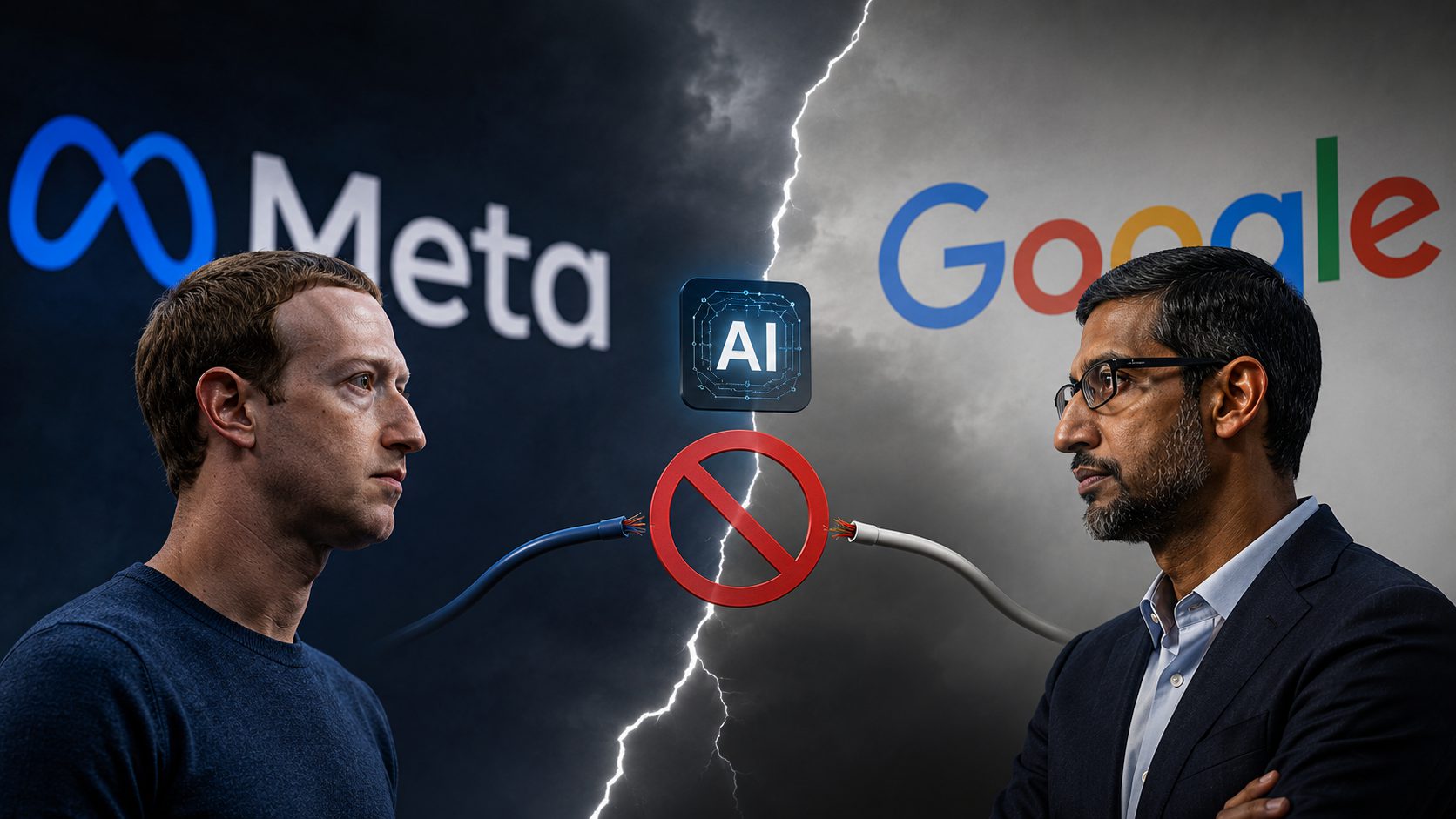
Behind Meta’s open-source AI announcements, a quieter story was unfolding. Customer service, advertiser chatbots, scam detection, content moderation, internal coding tools — all running, at least partly, on Google’s Gemini models. Then around March 2026, according to the Financial Times, Google told Meta it couldn’t supply the compute Meta wanted. The AI self-sufficiency narrative cracked like a phone screen on day one.
When Your Rival’s AI Keeps the Lights On
Meta’s internal AI stack relied heavily on Google’s Gemini — and the dependency ran deeper than anyone outside the company knew.
The scope of Meta’s Gemini dependency is striking. Sources told the Financial Times that Gemini was chosen because it was “performing better than Meta’s own models” for specific internal tasks. Meta also ran Anthropic’s Claude alongside Gemini and Llama — hedging bets across providers rather than committing to a single external source.
Here’s what the reporting reveals:
- Gemini powered customer service, ad tools, coding assistance, and harmful content takedowns across Meta’s platforms
- Google imposed capacity limits around March 2026 after Meta requested more compute than available
- Meta’s demand was unusually high compared to other Google Cloud customers
- Employees were told to conserve “AI tokens” — the units measuring how much model capacity each request consumes
- Meta began shifting workloads to Muse Spark, its own internal model built for content moderation
The Token Wall Nobody Talked About
Global AI compute demand is now growing faster than even the largest infrastructure providers can build to meet it.
This isn’t Google punishing Meta. It’s structural. Google Cloud‘s AI backlog now exceeds $460 billion, according to Alphabet’s recent results. Its models process over 16 billion tokens per minute — up 60% quarter-over-quarter. Even after enormous data center investment, demand is outrunning supply. It’s the GPU shortage during the crypto boom, except now the scarce resource is inference capacity for models that half the Fortune 500 wants running simultaneously.
Meta’s response has been swift — possibly forced. The company is investing up to $600 billion in US data center capacity through 2028, building custom MTIA chips with Broadcom. This mirrors the ambition behind the Stargate Project, as the race to control AI infrastructure accelerates across the industry. Separately, per CNBC, Meta is replacing third-party human moderation vendors like Accenture and Concentrix with AI systems. Muse Spark is absorbing moderation duties that Gemini once handled.
The uncomfortable reality: “AI-native” is doing heavy lifting as a marketing term. Behind the keynotes, the biggest platforms are buying critical AI capacity from the same companies they’re racing against. Meta builds toward self-sufficiency, but Meta’s token-rationing memo is this era’s equivalent of discovering your favorite restaurant sources its signature bread from the shop next door. What happens next depends entirely on who controls the ovens — and right now, that list is very short.