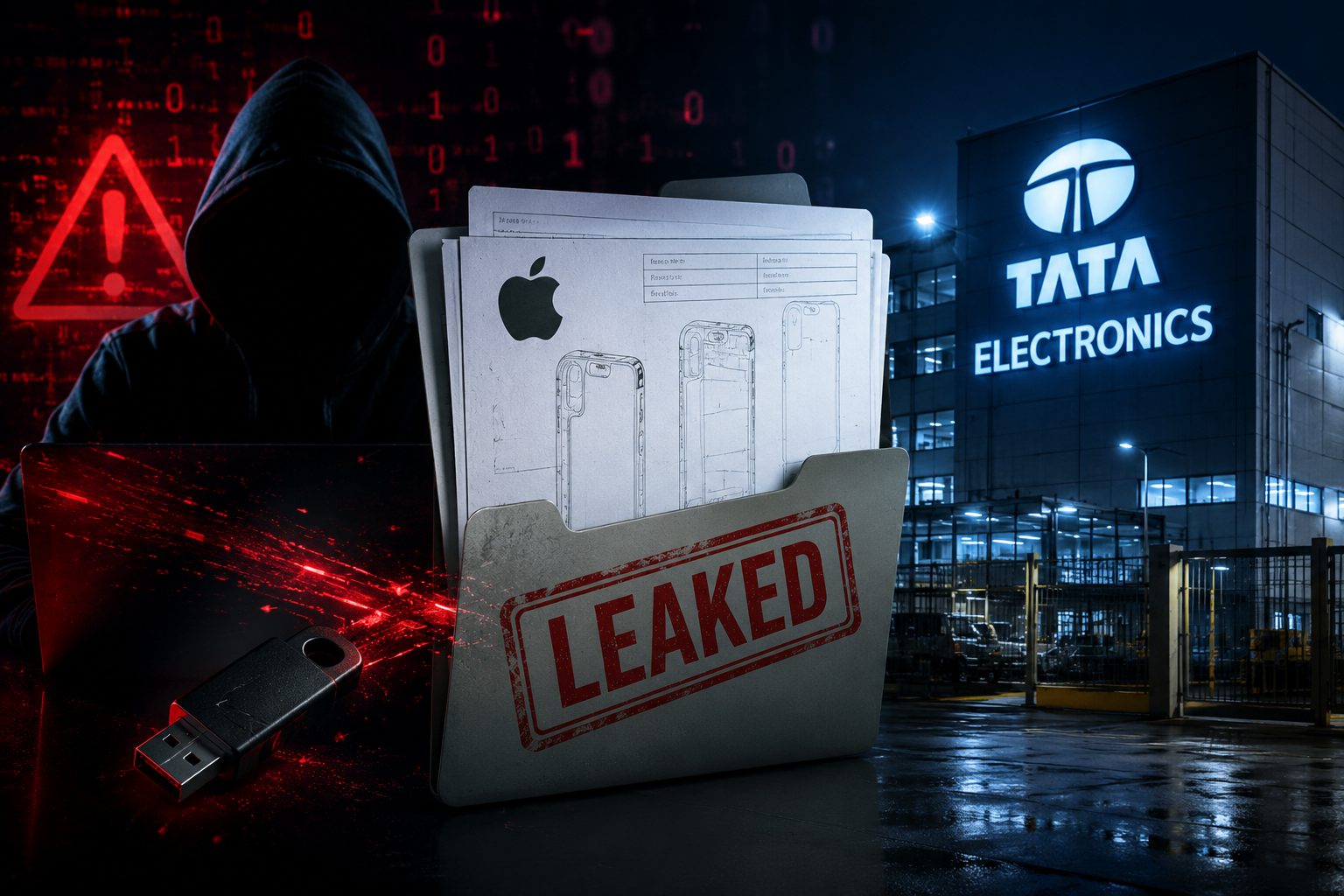
Apple’s systems weren’t touched. They didn’t need to be. A ransomware group called World Leaks claims it stole 630 GB of data — more than 200,000 files — from Tata Electronics, one of Apple’s most important manufacturing partners in India. The haul reportedly includes Apple manufacturing specs, iPhone circuit board inspection standards, and Tesla engineering drawings stamped “trade secret.” According to Reuters, the files appeared on a dark-web forum around June 10, 2026. The attackers went after the delivery driver, not the warehouse.
What Actually Got Leaked
Security researchers describe a trove spanning proprietary hardware data, employee records, and Tesla design files.
A 52-page Apple document is the headline item — but the scope runs deeper. According to MacRumors, the leaked dataset reportedly contains:
- A 52-page Apple document with proprietary markings detailing quality inspection standards for iPhone circuit board components
- Folders labeled “com.apple.factorydata,” suggesting factory-specific process information
- Internal emails, multi-year event logs, and passport scans of employees — including foreign nationals
- Tesla engineering drawings for the Model 3 redesign, marked “confidential” and “trade secret”
Reuters and other outlets have not independently verified the authenticity of these documents.
Sources familiar with Apple’s internal discussions told Moneycontrol the leaked material is mostly older, dating to around 2021, and “does not contain critical or sensitive operational data.” That framing offers some comfort — though even dated quality specs hold real value for counterfeiters studying Apple’s manufacturing tolerances.
Apple has issued no public statement. Its global cybersecurity team is reportedly conducting a “full analysis,” according to sources cited by Reuters and Moneycontrol. Tata confirmed “a cybersecurity incident on some of our systems” and says operations “remain unaffected.” The company reportedly received a ransom demand but declined to comment publicly on any ransom communication.
The Bigger Problem Behind the Breach
Tata sits at the center of Apple’s China-diversification strategy — and this isn’t the first time a supplier got hit.
This follows the Luxshare–RansomHub incident, where hackers claimed to possess CAD models and engineering designs of unreleased Apple products, according to Macworld. The pattern is hard to ignore. As cybersecurity commentators have noted, “suppliers can become targets because they often hold sensitive information belonging to much larger companies.”
Tata is building out Apple’s Indian manufacturing footprint — iPhone components, factory operations, the full diversification playbook. Think of it as a franchise expanding aggressively into new cities without upgrading its cybersecurity infrastructure to match. The company also faces a separate health probe over alleged contamination near an iPhone parts plant, meaning regulatory scrutiny is arriving from multiple directions at once.
Apple’s security team may recommend new safeguards across its supplier network, per Moneycontrol sources. The real question isn’t whether this particular data dump matters today — it’s whether Apple’s supplier vetting can scale as fast as its manufacturing ambitions. The phone in your pocket passed through dozens of hands to reach you, and not all of those hands have the same security standards.