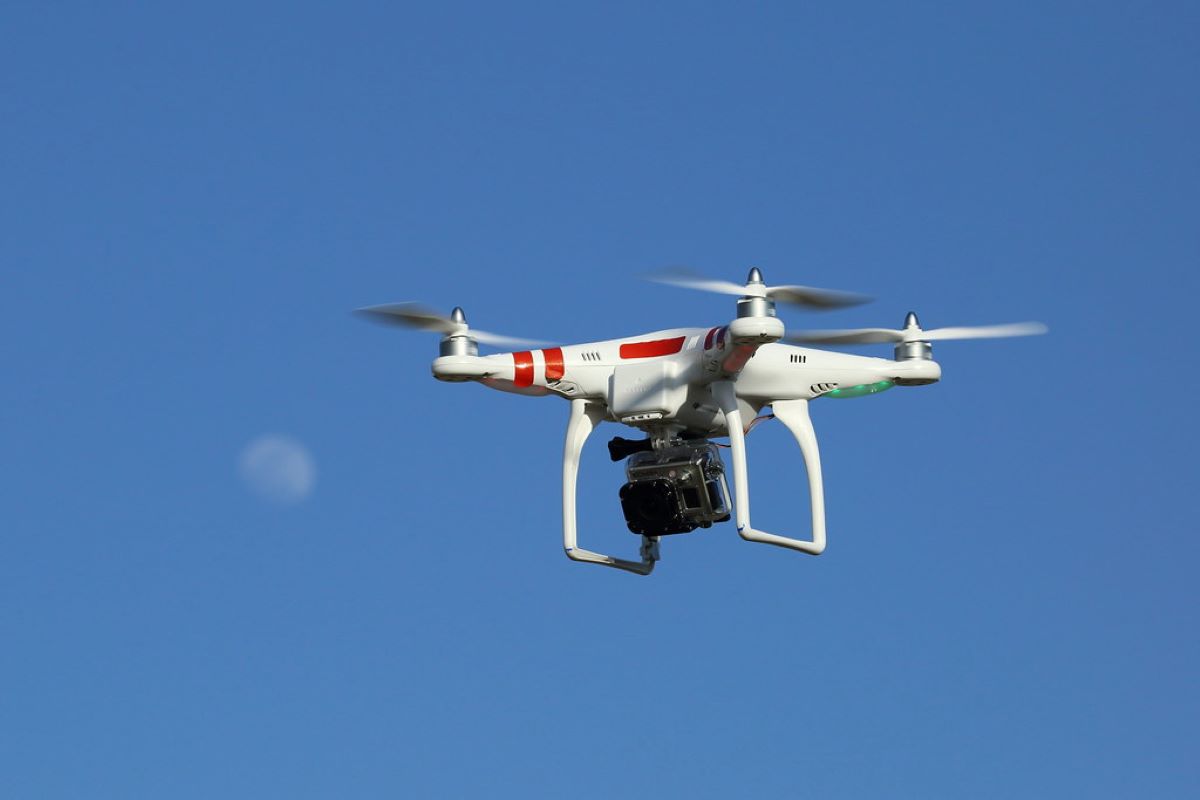
An armed suspect hid in a cluttered garage. Negotiators got nowhere. So Sacramento County deputies sent in a quadcopter fitted with a high-powered magnet, piloted by an officer wearing FPV (first-person view) goggles. The drone hovered close, the magnet grabbed the knife, and the blade spun through the air back toward waiting deputies. No shots fired. No officers inside the garage. The whole thing looked like a deleted scene from Black Mirror — except the Sacramento County Sheriff’s Office posted the footage to Instagram, soundtracked with the Mission: Impossible theme, and called it a “nationwide first,” according to SFGATE.
Drones as First Responders: Already Answering Your 911 Calls
The magnet grab is dramatic, but the quieter statewide pattern is what should really hold your attention.
Across California, agencies are running Drone as First Responder (DFR) programs — launching drones to 911 calls before patrol cars even roll. Chula Vista PD pioneered this model in 2018. Fremont’s city council approved its own program in 2024. Yucaipa’s San Bernardino County Sheriff’s station launched on May 28.
The numbers from Yucaipa’s first weeks are striking. According to the San Bernardino County Sheriff’s Department, drones responded to over 100 calls, beating deputies to the scene 71% of the time. The department claims drones contributed to 12 arrests and provided aerial overwatch during 44 incidents.
- Sacramento magnet-drone disarmament: knife removed from suspect’s hand indoors, FPV goggles used by pilot
- Yucaipa (launched May 28): drones beat deputies to scene on 71% of calls; contributed to 12 arrests
- Roughly 1,500 U.S. police agencies run drone programs; 58 are in California alone
- Chula Vista PD: first U.S. DFR program, established 2018
- New Mexico: Bernalillo County deputies used drone video to help disarm two armed minors — the tactic is spreading beyond California
“By providing deputies with timely and accurate information, the DFR program helps improve service to the community while promoting safer outcomes for both residents and first responders,” the San Bernardino County Sheriff’s Department stated, according to SFGATE.
The Question Nobody’s Answering Yet
Official releases are full of arrest numbers and dramatic footage — and short on answers about oversight and data retention.
Those official releases rarely explain exactly how drones contributed to each arrest or what happens to footage afterward. Civil liberties critics, as summarized in New York Post coverage, argue that classifying drones as routine gear edges local policing toward militarized surveillance — particularly without clear policies governing flights inside homes or how long video is stored in residential neighborhoods.
California state law can require agencies to classify drones as “military equipment,” triggering public hearings and mandated use policies. That transparency gap is where critics are digging in. When your sheriff’s office is marketing drone footage with action-movie soundtracks, it’s fair to ask whether the oversight conversation is keeping pace with the PR campaign.
What Comes After the Magnet?
The technology is already outrunning the rulebook — and your city may not have written its rules yet.
If a drone can snatch a knife, the next payloads aren’t hard to imagine: non-lethal munitions, medical supply drops, coordination with ground robots already appearing at California standoffs. Whether your city writes clear policies before or after the drones start flying over your block may be the most consequential local governance question nobody is debating loudly enough. Evaluating your Home Security options is one practical step residents can take in the meantime.