Screw in a lightbulb, connect to its Wi-Fi, and download a banned book. That is the entire user experience of the Banned Book Library, a project from security researcher Rick Osgood that turns a cheap ESP32-powered smart bulb into what he calls an “inexpensive, cyberpunk-style digital dead drop,” according to his project blog. The timing is pointed: book challenges in schools and public libraries have hit historic levels, and Osgood’s answer fits in a lamp socket.
Inside the Bulb: How a Dollar-Store Chip Becomes a Library
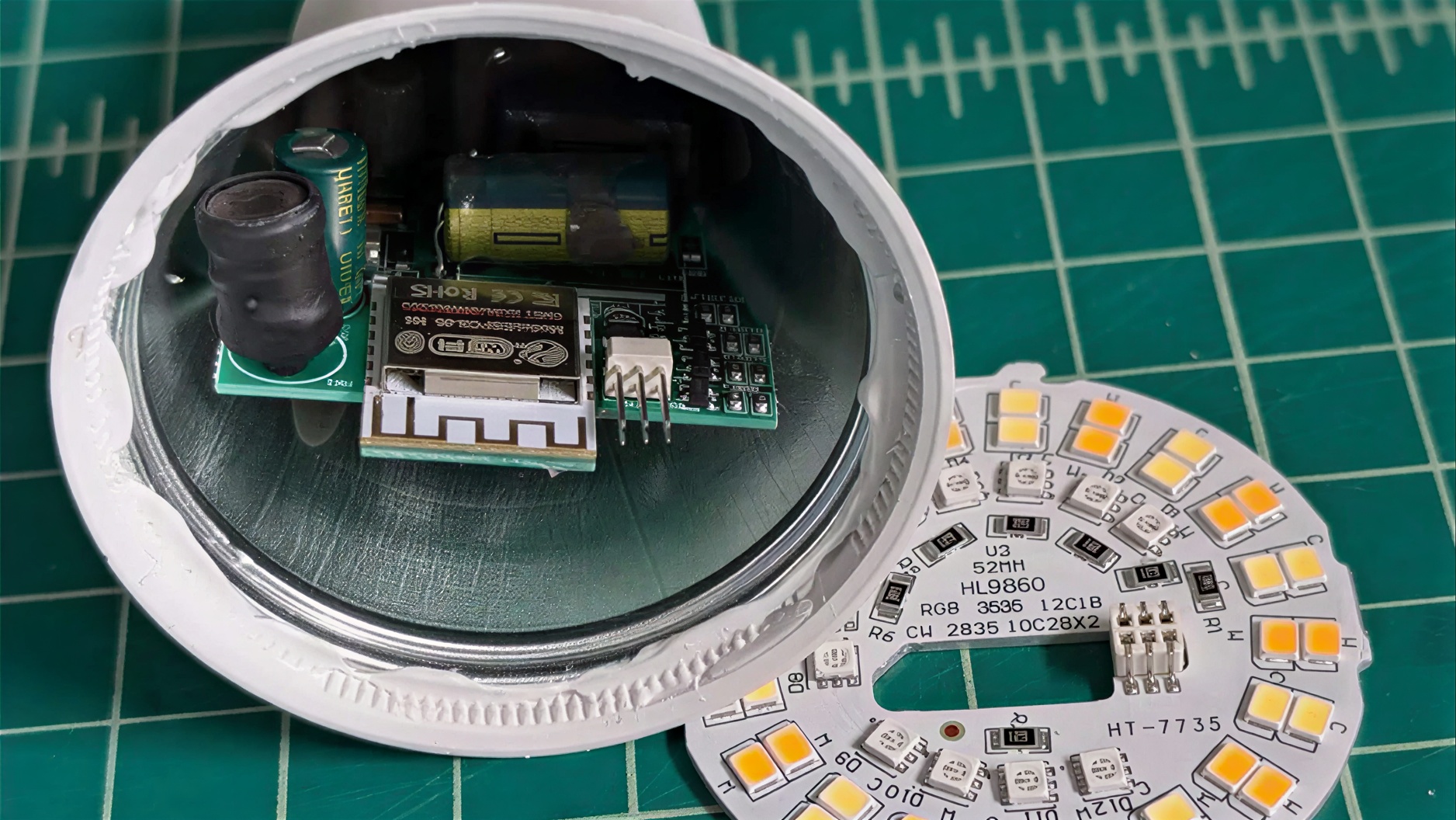
Stripped of its corporate cloud firmware, a humble ESP32-C3 chip becomes a surprisingly capable — if compact — offline book server.
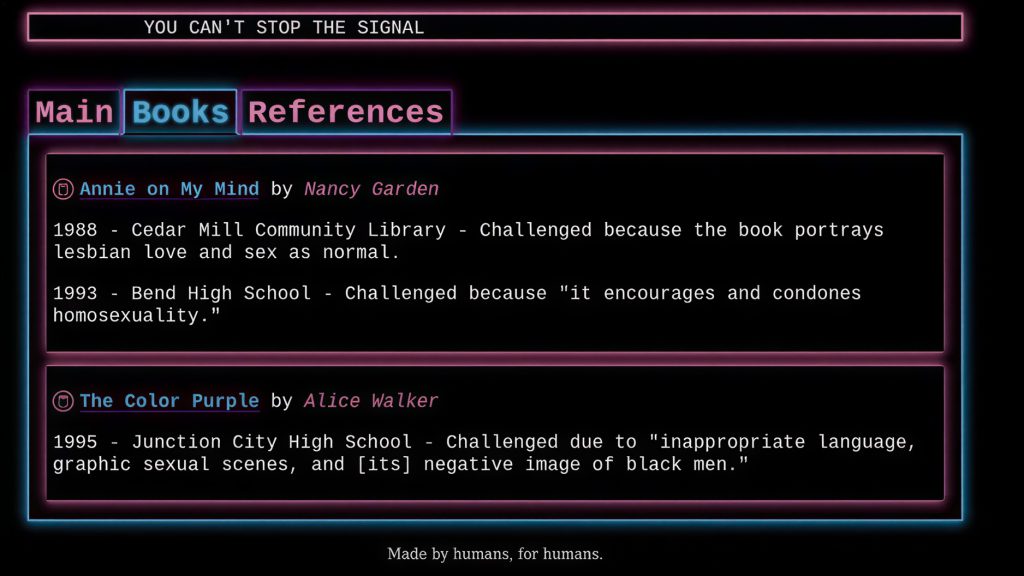
Reflashed with custom code, the ESP32-C3 chip inside the bulb broadcasts a password-free Wi-Fi network. Connect with any phone or laptop, and a captive portal — like the login page at a hotel — redirects straight to a styled index of downloadable ebooks. The whole thing runs offline. No internet required, no home network credentials stored on the device. If someone unscrews the bulb and inspects it, there is nothing sensitive to find beyond the books themselves.
Storage is the brutal constraint. The bulb has 4MB of total flash memory. After Osgood repartitioned the chip — ditching a failed microSD card experiment along the way — roughly 2MB ended up allocated to the LittleFS filesystem that holds books and web assets. A typical EPUB runs about 350KB. That amounts to a handful of titles per bulb, not a catalog. Think of it less as a library and more as a curated reading list embedded in drywall.
What a Lightbulb Says About Who Controls Your Devices
This project weaponizes a decade of open-firmware tinkering and points it directly at the fight over information access.
Communities like Tasmota and ESPHome have spent years prying smart gadgets away from corporate clouds. Osgood takes that tradition and points it at information access. The firmware, configuration files, and example content are fully open source on Codeberg, with step-by-step build instructions for intermediate makers. Osgood imagines these bulbs installed in community spaces, homes, or public fixtures — anywhere the switch is on, the library is open.
The concept echoes earlier dead-drop projects, from USB sticks cemented into New York City walls to the PirateBox local file-sharing servers of the 2010s. This version just happens to look like something sold at any hardware store.
Real cautions apply:
- Flashing custom firmware can brick the bulb permanently.
- Transporting a content-loaded bulb across borders where material restrictions exist carries genuine legal risk — jurisdiction matters enormously.
- Osgood’s demo wisely ships only public-domain texts, leaving content choices to end users.
Hackaday described the project as “crazy — but great,” which captures the tension neatly.
Policymakers wrestling with book bans now face an uncomfortable reality: any networked object can be a storage node. The Electronic Frontier Foundation and digital-rights advocates have long warned that information control becomes exponentially harder as storage shrinks and everyday devices grow smarter. A lightbulb that hosts forbidden texts — open source, cheap, and indistinguishable from the one in your kitchen — makes that argument more concrete than any policy white paper. The metaphor of enlightenment just got uncomfortably literal.