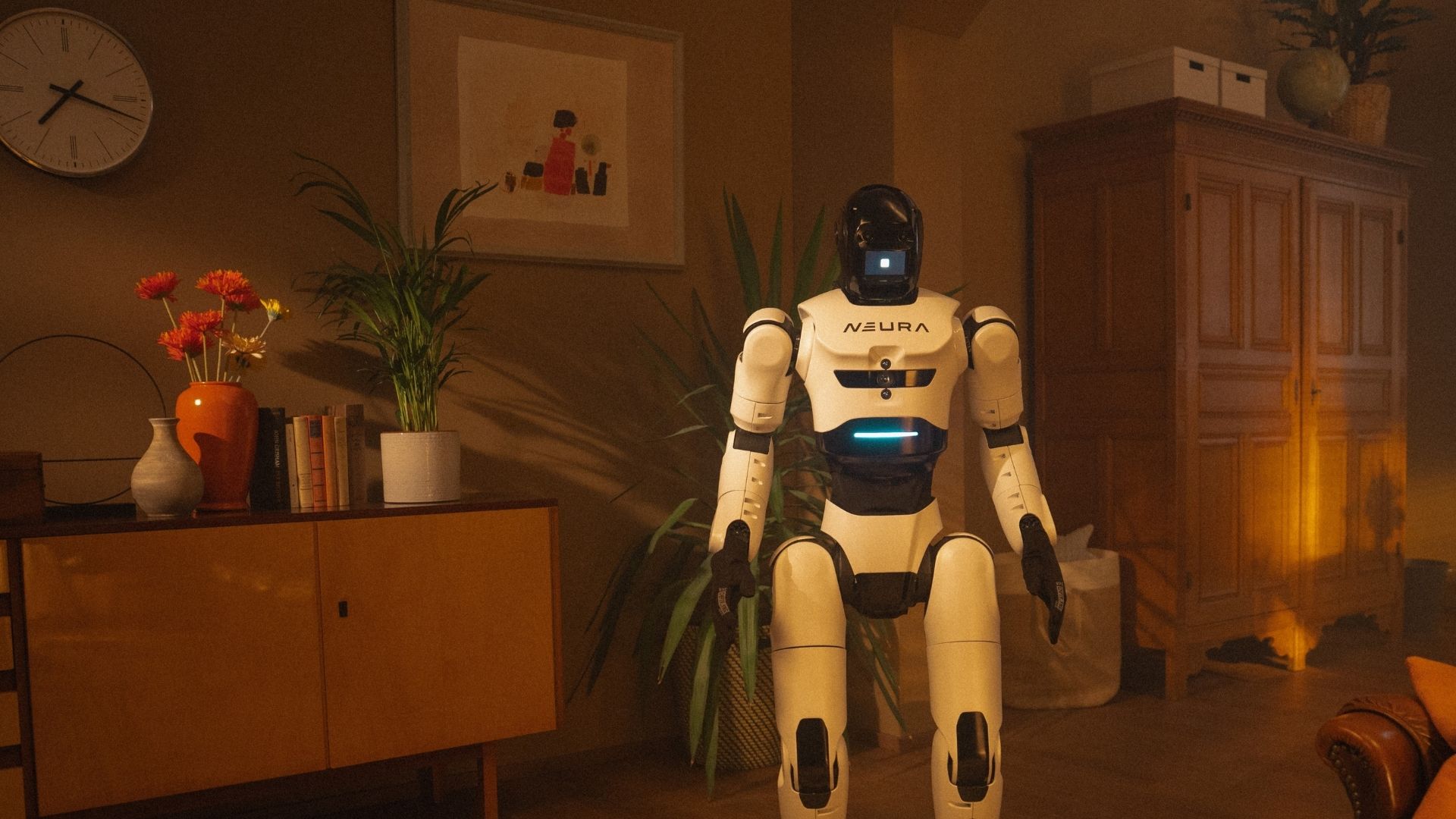
Dead robot prototypes gathering dust in labs won’t solve warehouse labor shortages, but Neura Robotics thinks its cognitive humanoid might. The German startup just secured up to $1.4 billion in Series C funding—one of the largest rounds in humanoid robotics history—backed by Amazon, Nvidia, Tether, Qualcomm, and Bosch. Unlike typical hardware startups burning cash on moonshot promises, Neura’s betting on something smarter: plugging robots directly into enterprise software stacks you already use.
Strategic Partnerships Trump Pure Capital
This isn’t just investor enthusiasm for shiny robots. Amazon Web Services becomes Neura’s primary cloud provider, meaning their Neuraverse platform—think app store for robot skills—runs on the same infrastructure powering half the internet. NVIDIA supplies digital twin simulations through Isaac and Omniverse, while SAP integration lets robots access real-time business data. Your ERP system could literally tell a humanoid which inventory to prioritize.
The partnership extends beyond software. Amazon plans to deploy Neura’s cognitive robots in select fulfillment centers worldwide, generating massive real-world training data. Unlike language models trained on internet text, Physical AI systems need actual manipulation experience—something Amazon’s warehouses provide at scale, enhancing workplace safety.
From German Lab to Global Factory Floor
Founded in 2019 by David Reger, Neura builds everything in-house: AI, sensors, control software, and mechanical components. Their portfolio includes MAiRA (cognitive collaborative robot) and 4NE1, positioned as the first humanoid designed for series production rather than flashy demos. The company claims over $1 billion in order backlog, suggesting enterprise demand exists beyond Silicon Valley hype, much like the growing demand for efficient office automation.
Production scaling matters more than prototypes. While Tesla shows off Optimus dancing and Figure raises headlines, Neura focuses on manufacturing readiness. Moving from 6,000 robots this year to tens of thousands next year requires serious supply chain coordination—exactly what partnerships with Bosch and other industrial giants enable.
European Answer to US-China Robotics Race
Neura positions itself as Europe’s humanoid contender against Tesla, Figure, and Chinese competitors. But their real advantage might be cultural: European regulatory compliance, SAP familiarity, and AWS reliability could matter more to enterprise buyers than raw performance specs.
The Tether partnership adds another wrinkle—robots with self-custodial wallets participating in machine-to-machine economies. Imagine humanoids autonomously ordering parts or paying for cloud compute time. It sounds like science fiction until you realize your phone already handles contactless payments.
Whether Neura delivers on scaling cognitive robotics beyond pilot programs remains uncertain. But tying humanoids to mature enterprise platforms like AWS and SAP reduces integration risk—potentially accelerating adoption faster than pure-play robotics startups operating in isolation.