




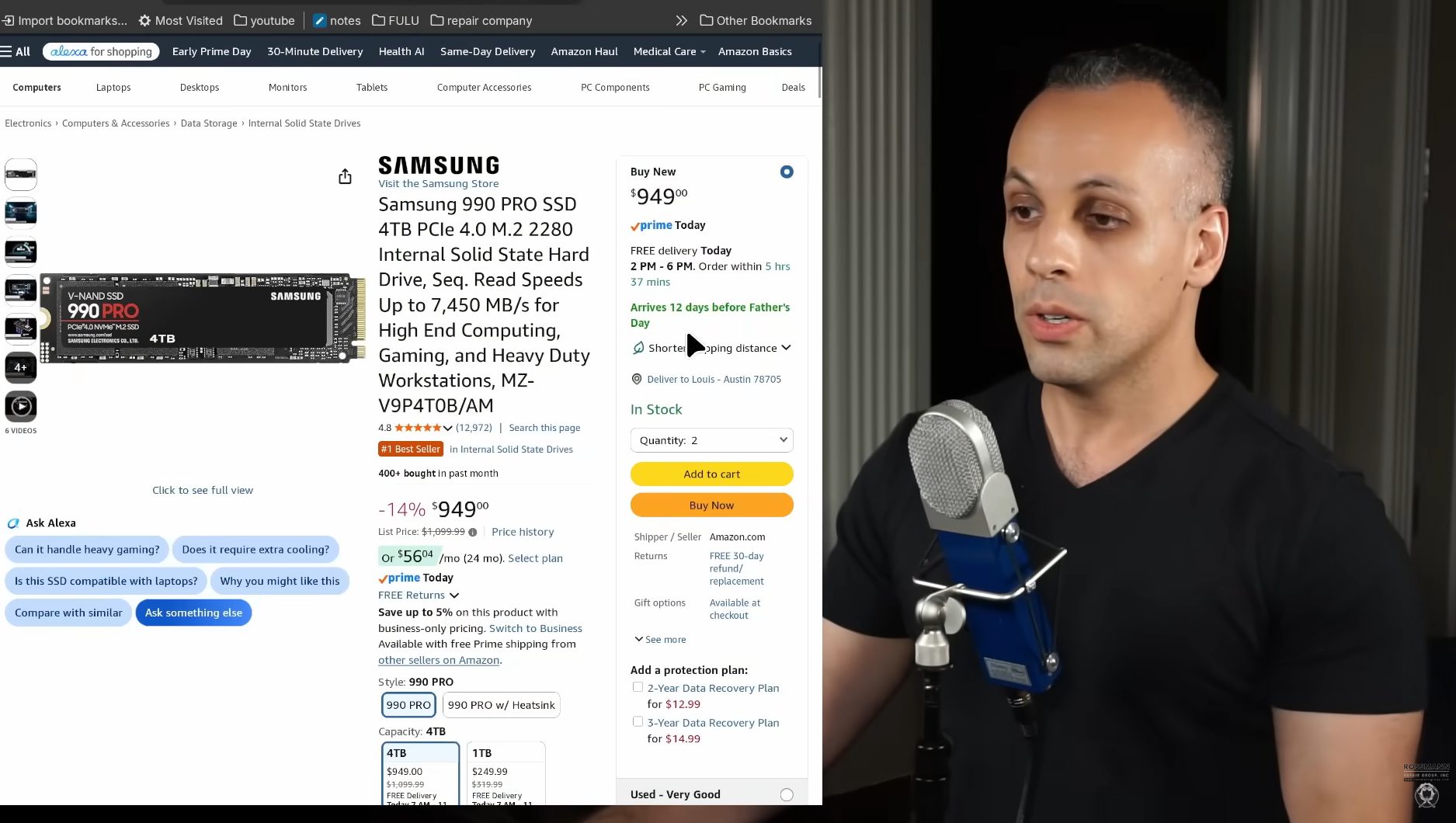
Your expensive SSD dies within warranty, but the manufacturer claims they can’t replace it due to “shortages”—while simultaneously selling the same drive on Amazon for three times what they’ll refund you. Louis Rossmann, the right-to-repair YouTuber, faces exactly this situation with Samsung, and he’s had enough.
When “Verified Good” Means Anything But
Samsung returned Rossmann’s failed 990 Pro 4TB claiming it passed testing, despite obvious performance issues.
Rossmann’s Samsung 990 Pro 4TB failed spectacularly within its five-year warranty window. He’d used it conservatively—RAID 1 setup with proper cooling, well under the 2,400 TBW (terabytes written—the drive’s expected lifespan) limit. Samsung’s B2B support initially agreed the drive showed “fatal controller or firmware-level lockup” requiring replacement. Textbook warranty case, right?
Wrong. After shipping the drive to Samsung’s service center, it returned with a “verified good” stamp. Rossmann connected it to professional data-recovery hardware and watched write speeds collapse to 40-60 MB/s before the drive stopped responding entirely. Your Netflix buffer has better performance consistency.
The Shortage That Wasn’t
Samsung cites inventory shortages while selling the same drive on their own Amazon storefront.
When Rossmann contested the “repair,” Samsung reopened his case but claimed they couldn’t provide a replacement due to memory shortages. Their solution? A $330 refund matching his original Best Buy purchase price. The same 990 Pro 4TB now sells for $950 on Samsung’s official Amazon store.
This isn’t about actual scarcity—it’s about Samsung preferring a $330 loss over a $950 replacement cost. The memory crisis has flipped traditional warranty math, where “current market value” clauses typically protect manufacturers from paying more than depreciated prices.
Legal Notice Served
Rossmann gives Samsung 60 days before filing suit in Travis County, Texas.
Samsung’s own warranty terms specify refunds based on “then current market value,” not original purchase price. During normal times, this protects them when products depreciate. Now it potentially requires paying nearly triple the refund they’ve offered. Rossmann has given Samsung 60 days’ notice before proceeding to small claims court.
This case could force manufacturers to honor warranty language even when market conditions make replacements expensive, or push them to rewrite future warranties with depreciation schedules that cap their exposure during component shortages.


























