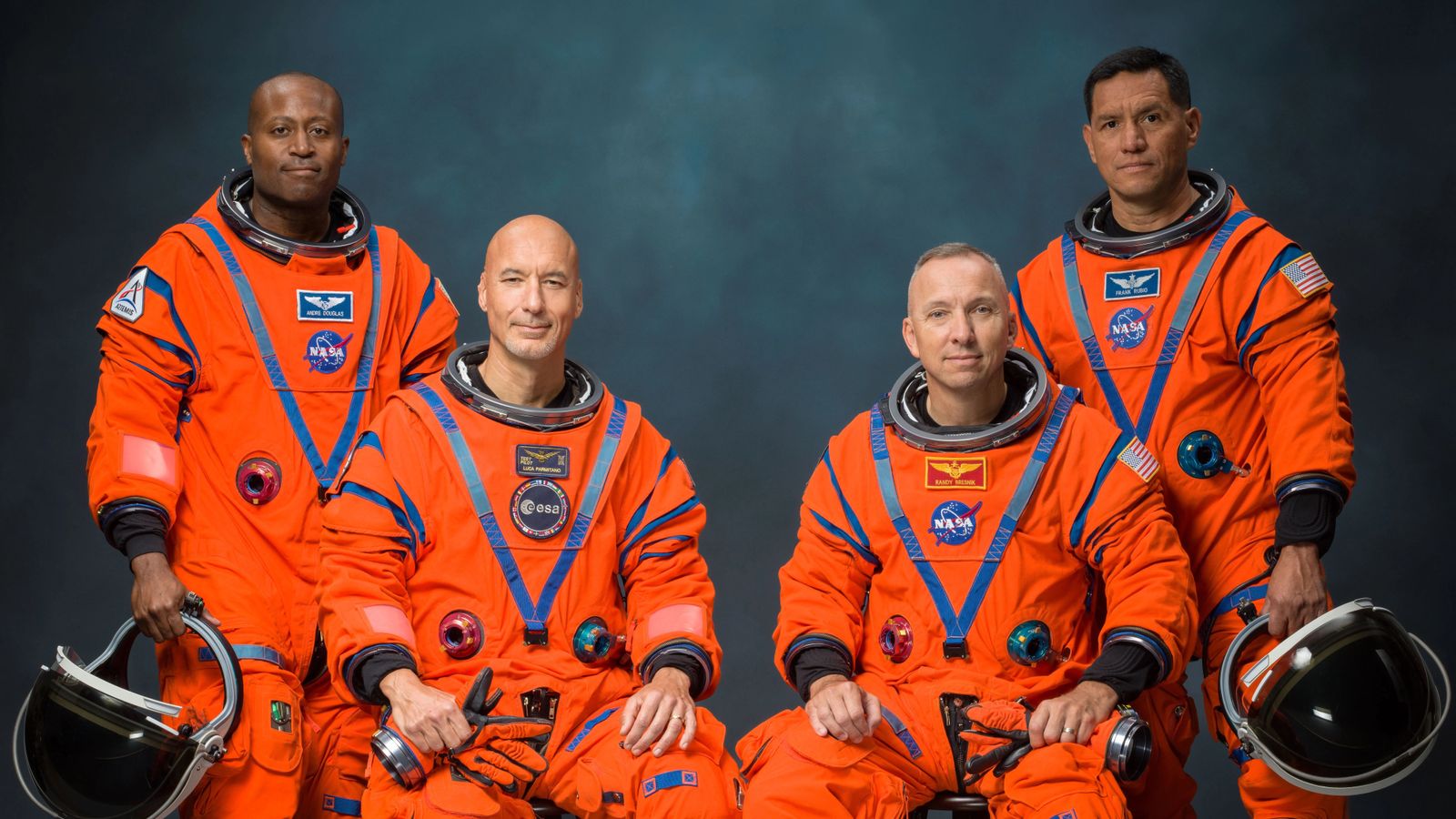
NASA recently outlined plans for four astronauts on Artemis III, but this isn’t your typical feel-good space story. Think of it as the ultimate systems integration test—like watching Apple and Android try to work together, except with billion-dollar rockets and human lives on the line. The mission reportedly will test whether commercial space companies can actually integrate with government hardware at the scale needed for lunar operations.
Why NASA Picked the A-Team
These aren’t rookie astronauts—they’re troubleshooters chosen for their ability to handle the unexpected.
The proposed crew includes experienced space veterans with proven track records in complex operations:
- Commander Randy Bresnik supposedly brings over 7,000 flight hours and ISS command experience
- Pilot Luca Parmitano, representing the European Space Agency, previously commanded the ISS as Italy’s first spacewalking astronaut
- Mission specialist Frank Rubio recently survived a record-breaking 371 days in space when a coolant leak stranded him longer than planned
- Mission specialist Andre Douglas rounds out the crew as a Coast Guard reserve commander, making his spaceflight debut
NASA also reportedly named Bob Hines as backup crew, because when you’re testing untested systems, redundancy matters.
The Real Challenge Isn’t Flying—It’s Docking
Artemis III will test whether NASA’s government rocket can successfully integrate with SpaceX and Blue Origin landers.
The mission allegedly keeps the crew in Earth orbit to practice rendezvous and docking procedures with commercial lunar landers—essentially debugging the handoff between NASA’s Space Launch System and private contractors’ vehicles. This integration challenge mirrors every platform compatibility nightmare you’ve experienced, except the stakes involve human survival and multi-billion-dollar hardware. Success here could validate the commercial space model that affects everything from your satellite internet to future space tourism options.
Budget Reality Check Looms Large
Political uncertainty threatens ambitious timelines despite crew announcement momentum.
The proposed launch target assumes everything goes perfectly with both government and commercial systems—a big assumption given recent technical setbacks across the industry. Space policy observers suggest that proposed NASA budget cuts threaten the partnerships essential for sustained lunar presence. Recent administrations have repeatedly proposed significant reductions to NASA’s workforce and funding, creating the kind of uncertainty that kills long-term technical programs.
Your Future Space Access Depends on This Test
Successful integration could accelerate the commercial space economy that impacts daily technology services.
If Artemis III proves government and commercial systems can work together reliably, it might validate the business model driving everything from Starlink satellites to orbital manufacturing. Success could pave the way toward routine lunar operations by decade’s end. Failure might push human lunar return into the 2030s, potentially ceding leadership to other nations investing heavily in their own space capabilities. Either way, this crew isn’t just testing spacecraft—they’re testing whether public-private space partnerships actually work at scale.