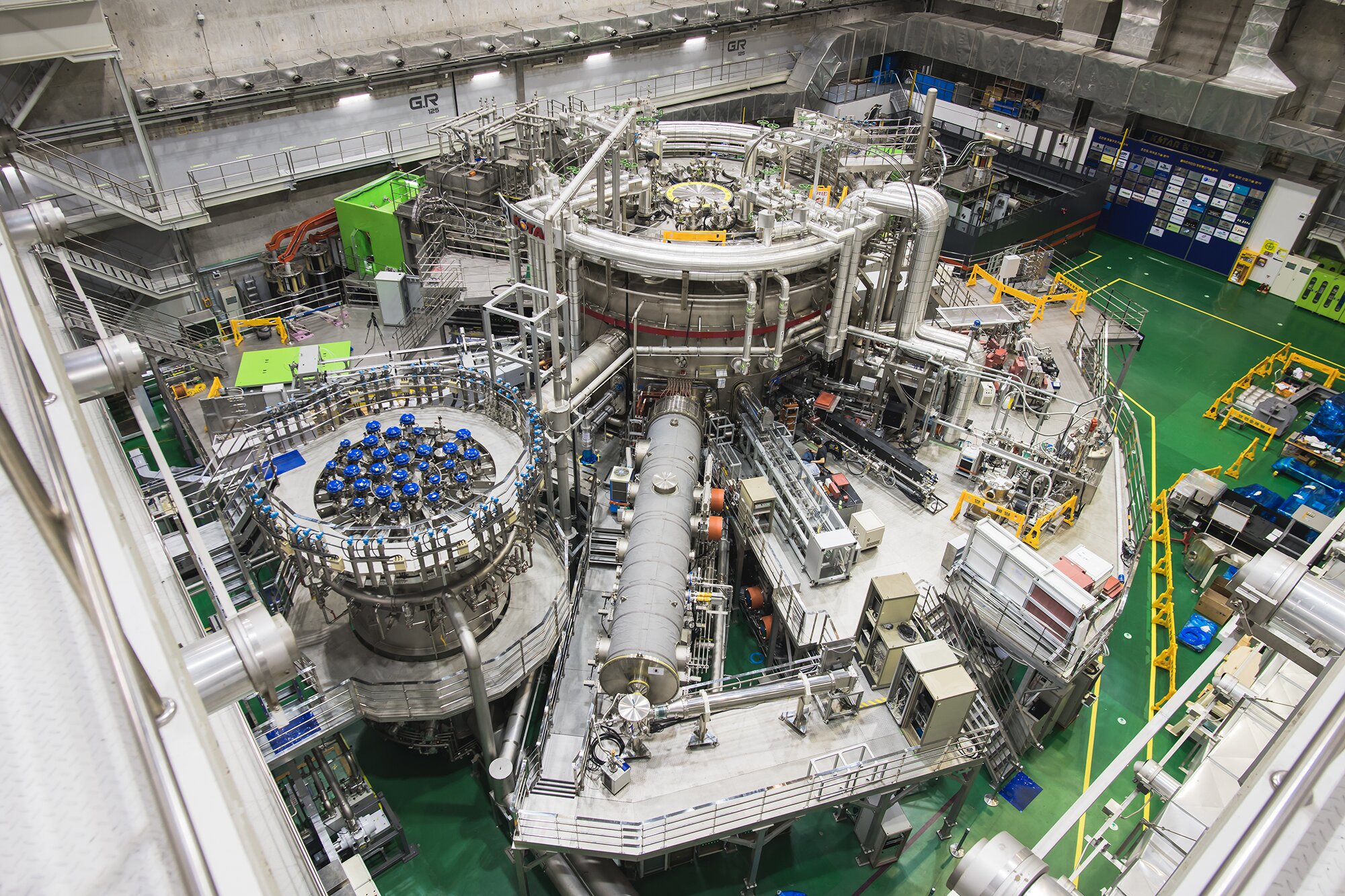
Your electricity bill keeps climbing while the planet keeps warming. South Korea’s KSTAR reactor just delivered a breakthrough that could eventually address both problems: sustaining stable plasma at fusion temperatures for 102 seconds straight. Think of it like keeping a miniature star contained in a magnetic bottle—except this star could one day power your home without any carbon emissions.
The Science Behind the Milestone
Engineers achieved record stability using upgraded tungsten materials that withstand extreme heat.
The 102-second achievement represents more than just endurance—it demonstrates “high-confinement mode” operation, where magnetic fields keep plasma particles tightly packed for maximum efficiency. According to the Korea Institute of Fusion Energy announcement, KSTAR’s team upgraded to tungsten divertors, components that handle exhaust from the 100-million-degree plasma like heat shields on a spacecraft re-entering Earth’s atmosphere. These materials prevent the reaction from destabilizing under conditions seven times hotter than the sun’s core.
Why Duration Matters More Than Temperature
Future fusion plants need sustained operation, not brief bursts of energy.
Previous fusion experiments often resembled fireworks—spectacular but fleeting. Commercial power plants require steady, predictable energy output over hours or days. Korea Institute of Fusion Energy researchers proved they can maintain the delicate balance needed for controlled fusion, bringing the technology closer to replacing fossil fuels. South Korea’s “artificial sun“ nickname reflects national pride in leading this global energy race.
The Road Ahead Remains Long
Engineering challenges still separate laboratory success from your local power grid.
KSTAR’s milestone represents significant research progress, but commercial fusion power remains decades away according to industry roadmaps. The reactor doesn’t generate electricity yet—it tests the science needed for future plants. KFE aims to extend operation to 300 seconds next, while engineering teams worldwide tackle remaining obstacles like materials that can withstand decades of neutron bombardment and systems that produce more energy than they consume.
This breakthrough proves fusion can achieve the stability required for practical power generation. Your grandchildren might plug into fusion-powered grids, but your current energy bills still depend on today’s renewable and nuclear options.