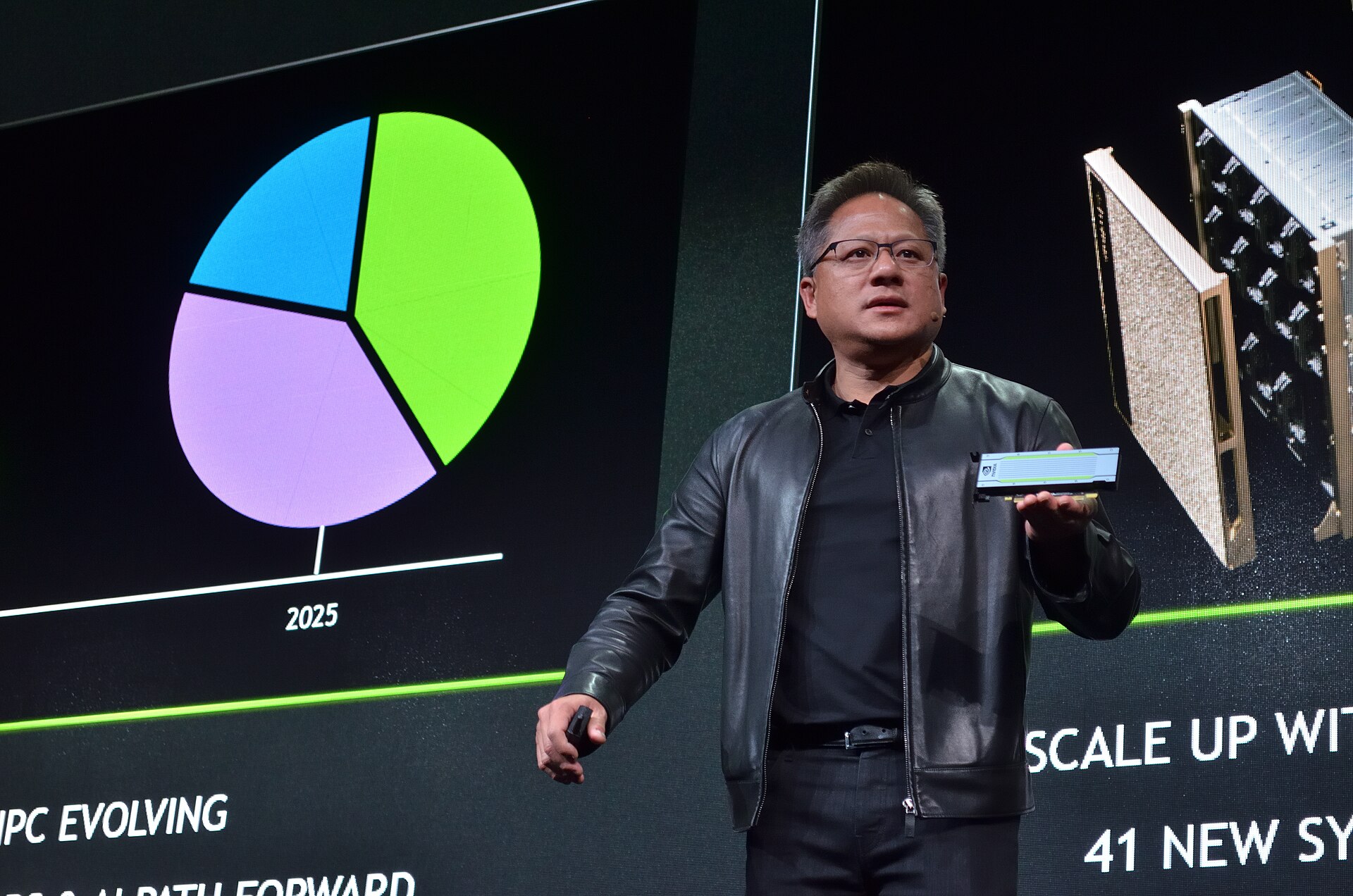
Nvidia’s Jensen Huang just claimed his company unlocked a “brand new $200 billion market“ with the Vera CPU. This comes fresh off another record-breaking quarter, making it tempting to dismiss as typical Huang hyperbole.
Except his track record suggests otherwise.
The Agentic AI Gambit
Huang’s betting on autonomous software agents that will reshape how businesses operate.
Huang’s betting big on what he calls agentic AI—autonomous software agents that handle tasks like:
- Scheduling meetings
- Managing workflows
- Coordinating with other systems
Unlike today’s GPU-heavy AI training, these AI agents primarily run on CPUs, using tools and APIs like digital employees.
Vera isn’t your typical multi-core server chip. Instead of maximizing parallel application instances, it’s optimized for token processing—the way AI models consume and generate text chunks. Think of it as the difference between a freight train (traditional CPUs moving lots of cargo) and a Formula 1 car (Vera racing through AI conversations).
The pitch resonates because you’ve probably experienced the lag between asking ChatGPT something and getting a response. Multiply that by billions of AI agents, and suddenly CPU optimization for token throughput makes sense.
Reality Check Time
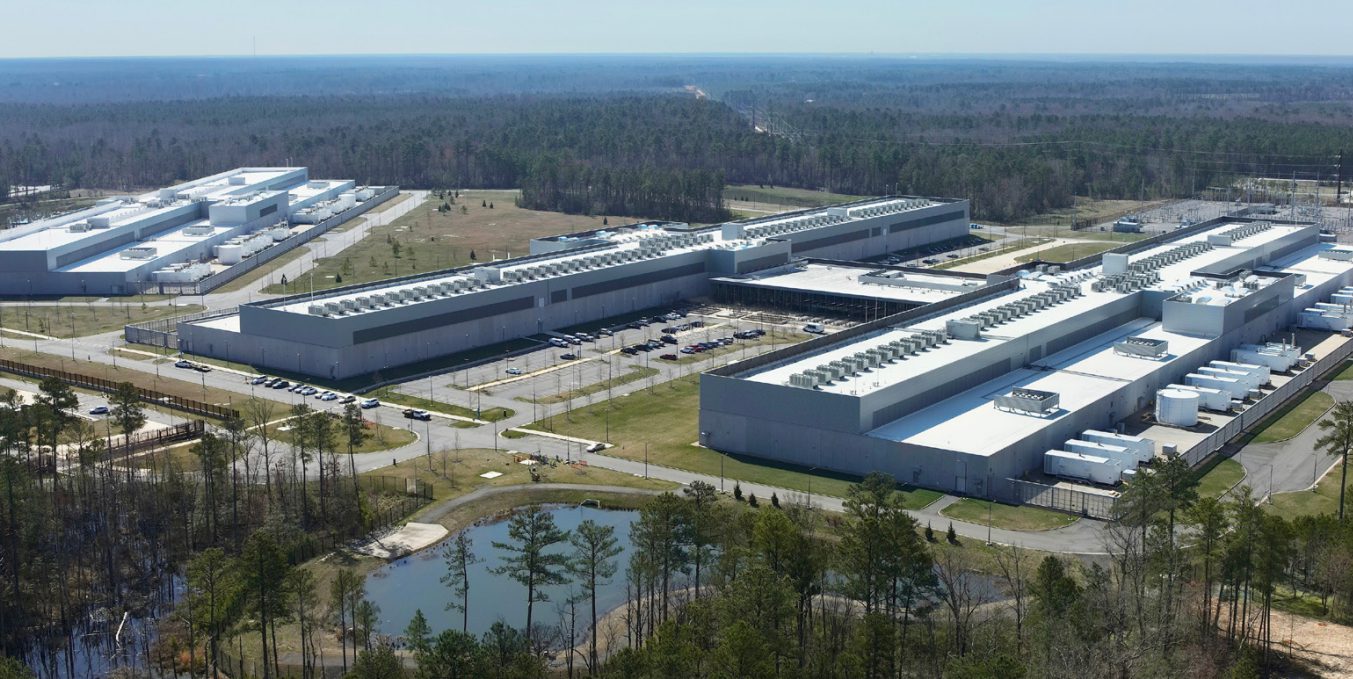
The $200B market claim faces serious competitive headwinds from hyperscalers.
Here’s where things get interesting. Huang has earned his reputation as tech’s most effective hype man—someone compared him to Salesforce’s Marc Benioff for relentless optimism. But he’s also consistently delivered on ambitious promises, from GPU computing to AI dominance.
The $200B total addressable market figure lacks detailed public justification, though early Vera adoption suggests real demand. However, hyperscalers like AWS are aggressively pushing their own chips. AWS CEO Andy Jassy recently claimed they can build AI processors “at least as well, and possibly better than Nvidia.”
That’s not idle posturing. Hyperscalers are increasingly developing custom silicon to reduce dependence on third-party vendors like Nvidia.
The Bigger Picture
Controlling both AI “brain” and “hands” could create powerful vendor lock-in effects.
If Huang’s right about billions of AI agents reshaping computing, Vera positions Nvidia perfectly. Controlling both the GPU “brain” and CPU “hands” of AI systems creates powerful lock-in effects, making it harder for cloud providers to substitute homegrown alternatives.
But if hyperscalers successfully deploy their own CPU-GPU stacks, Nvidia’s $200B opportunity shrinks considerably. The real test isn’t whether agentic AI arrives—it’s whether Nvidia maintains control when it does.
Your enterprise AI costs and vendor choices hang in the balance.