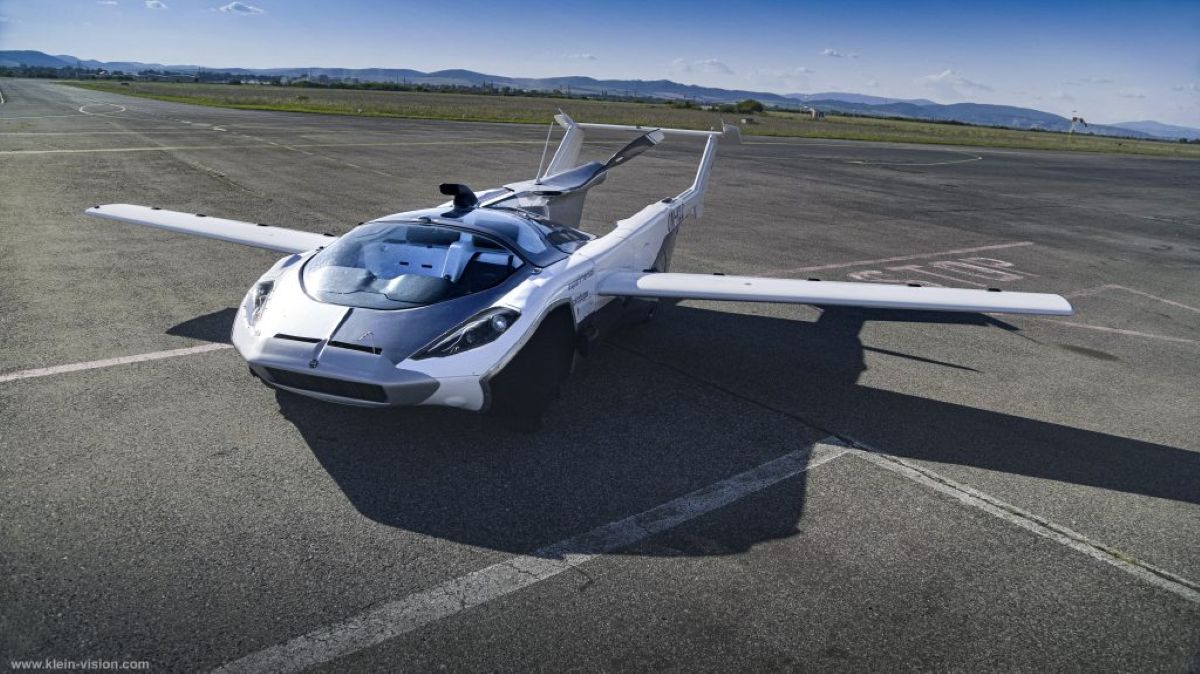
The AirCar transforms from road vehicle to aircraft in under two minutes, turning decades of sci-fi promises into certified reality. After 30 years of engineering by Slovak inventor Stefan Klein, this hybrid machine just completed over 170 flight hours and 500 takeoffs, proving that flying cars work—they’re just not what The Jetsons promised.
Engineering Breakthrough Meets Aviation Reality
Three decades of development deliver the first certified roadable aircraft with automatic transformation.
Klein Vision’s AirCar 2 represents serious aerospace engineering disguised as automotive fantasy. The 1,764-pound vehicle uses a 280-horsepower engine (upgraded from earlier 140-160 hp versions) to reach 124 mph on roads and 155 mph in flight. Wings extend automatically, spoilers retract, and the transformation happens faster than most people can parallel park.
This isn’t some garage project—it’s the first fixed-wing flying car to earn official airworthiness certification from Slovakia’s transport authority after passing EASA-compatible safety tests. The certification milestone, achieved in January 2022, sets Klein’s creation apart from competitors still chasing regulatory approval.
Luxury Positioning for Elite Aviators
The $800,000-$1 million price tag reflects reality: this targets wealthy pilots, not commuters.
Your daily commute won’t involve takeoff clearance anytime soon. The AirCar requires a pilot’s license, runway access, and enough disposable income to treat seven figures like pocket change. Klein Vision plans a 2026 launch targeting the same crowd that collects vintage Ferraris and private jets.
Think of it as the world’s most expensive convertible—except the roof becomes wings and you need air traffic control approval to put it down. This positioning makes sense when you consider the specialized training, infrastructure requirements, and maintenance costs that come with owning a certified aircraft.
Infrastructure and Regulatory Hurdles
Real-world adoption faces the same barriers that have grounded flying car dreams for generations.
Even certified aircraft can’t escape bureaucracy. The AirCar needs runway infrastructure that doesn’t exist in most cities, plus regulatory frameworks that treat it as both car and plane. Insurance companies are still figuring out liability for fender-benders at 5,000 feet.
Meanwhile, competitors like Alef Aeronautics and ASKA are pursuing vertical takeoff designs that promise parking lot departures—though none have achieved the AirCar’s dual certification milestone. The fixed-wing approach may require runways, but it delivers proven aerodynamic efficiency that eVTOL competitors are still working to match.
The AirCar proves flying cars are technically possible, just not practically inevitable. After three decades of development, Klein’s achievement deserves recognition—even if your morning commute will remain decidedly terrestrial for the foreseeable future.