Most people think emergency prep means a bunker and a 30-year food supply. It doesn’t. It means having the right gear, in the right place, before something goes wrong. These 15 categories cover the basics without the paranoia.
This content may contain affiliate links. If you wish to support us and use these links to buy something, we may earn a commission.
First Aid Kits
Pre-made kits are a starting point, not a solution.
Most off-the-shelf kits are heavy on small bandages and light on everything that actually matters when someone is seriously hurt. Build your own kit and you’ll know what’s in it and exactly how to use it. That means gauze, medical tape, tourniquets, pain relievers, anti-nausea medication, anti-diarrheals, and any personal prescriptions you can keep in reserve.
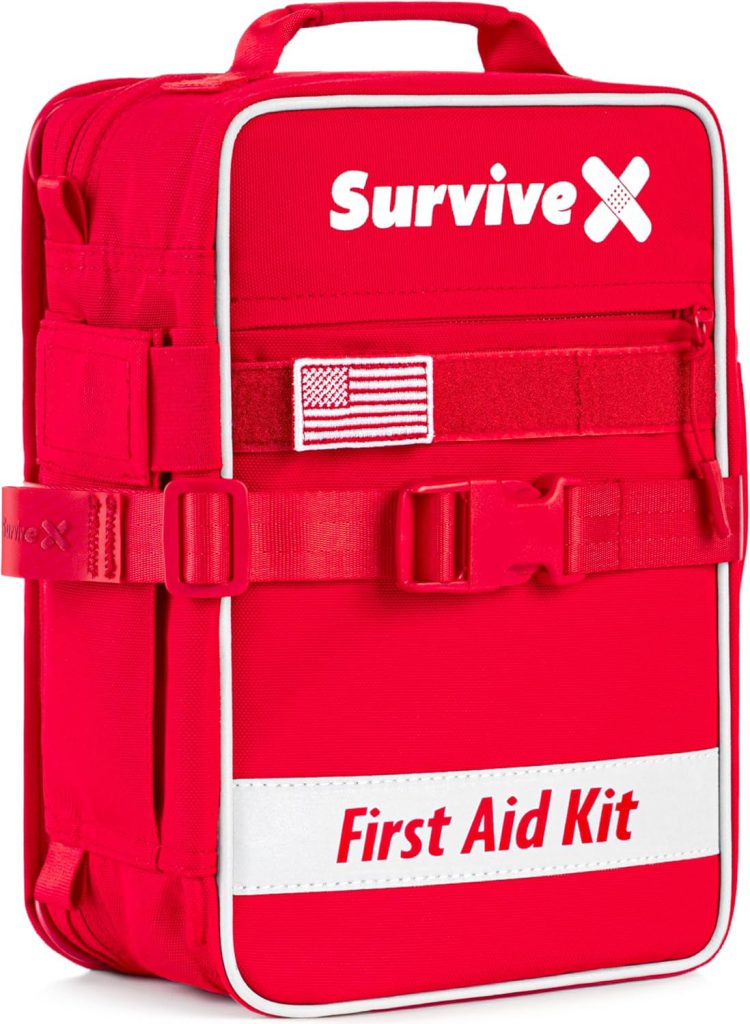
If you’d rather skip the assembly and start with something that’s already done right, the SurviveX Large First Aid Kit is worth the $121. It packs over 240 pieces into a color-coded, labeled bag organized by use case, so you’re not dumping everything on the ground looking for gauze while someone is bleeding. The Zip Stitch wound closures act as a field alternative to stitches, closing cuts fast and reducing scarring without any medical training required. The bag is MOLLE-compatible, FSA and HSA eligible, and built to go in a car, a bug-out bag, or a closet shelf.
A basic first aid course on a Saturday morning costs almost nothing and makes every item in any kit more useful. When professional help is hours away, knowing what you have and how to use it is the only thing that matters.
Water Filtration Systems
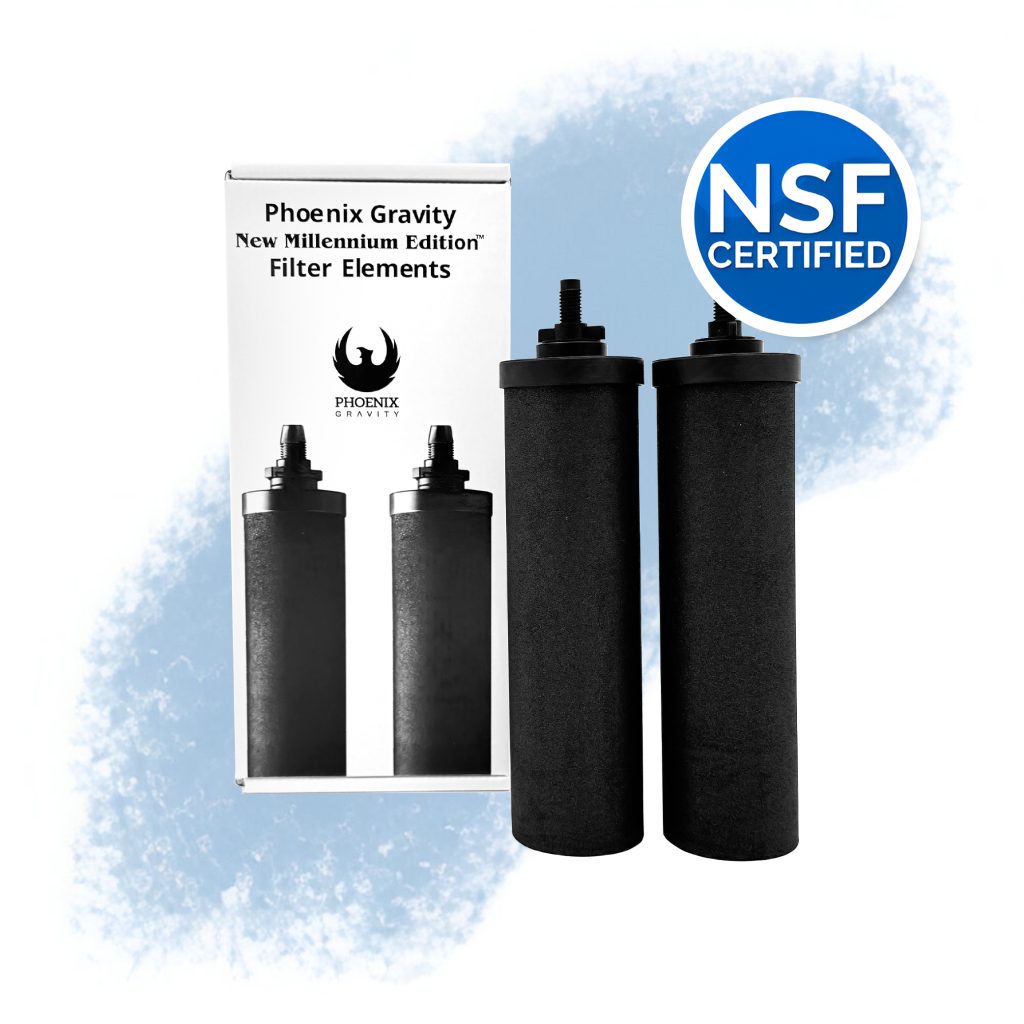
Clean water is the first thing to go and the last thing people plan for.
Three days without water is all it takes for a bad situation to become a deadly one. Filters like the Sawyer Mini and LifeStraw remove parasites and protozoa down to 0.1 microns, which covers most natural water sources. They’re lightweight, cheap, and built for streams and lakes.
Tap water with chemical contamination or heavy metals is a different problem entirely, and if you bring a backcountry filter to that fight, you’ll drink the contaminants anyway and have no idea you’re doing it until your body tells you. For those situations, you need a Berkey gravity filter or a SimPure Reverse Osmosis system. Know your water source before you buy anything.
Water Storage Containers
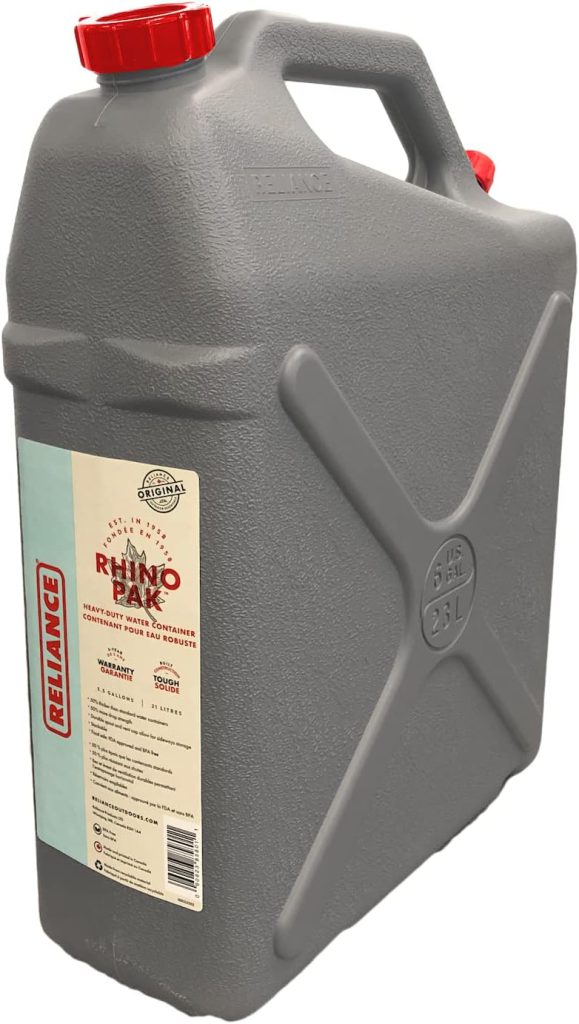
Storing water isn’t complicated, but the container matters more than people think.
A family of three needs roughly 50 gallons to get through a week. Standard juice or iced tea jugs degrade fast and aren’t rated for long-term water storage. The Reliance Rhino Pak is the go-to here: a 5.5-gallon container with thicker walls than the budget Aqua-Tainer, a better screw cap, and a design that’s manageable to carry when full.
This is one of the cheapest, most overlooked parts of any prep setup. Get the containers, fill them, and rotate them every six months. That’s the whole system.
Emergency Power Systems – Batteries
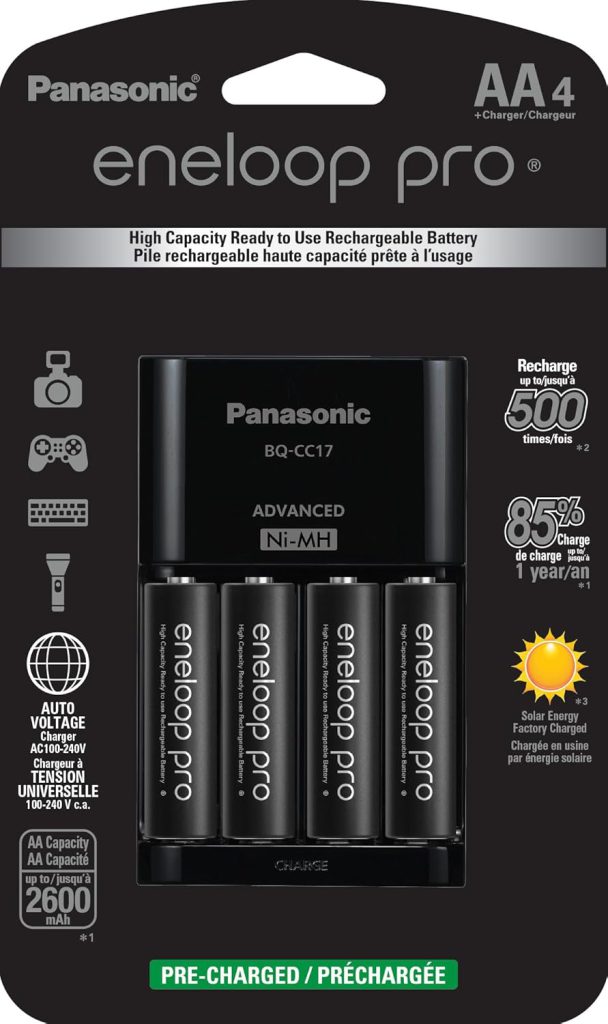
Batteries are boring until the power goes out, and then they’re everything.
AA, AAA, C cell, and 9-volt batteries run the flashlights, radios, and medical devices that don’t care about your power station. For rechargeables, Panasonic Eneloop Pro AAs are the benchmark. They hold 85% of their charge after a year sitting unused, survive down to -4 degrees Fahrenheit, and can be recharged 500 times. Keep disposables in reserve alongside them. The night your weather radio goes dead during a storm warning because you gambled on one type is not the night you want to be learning that lesson.
Power Banks/Portable Chargers
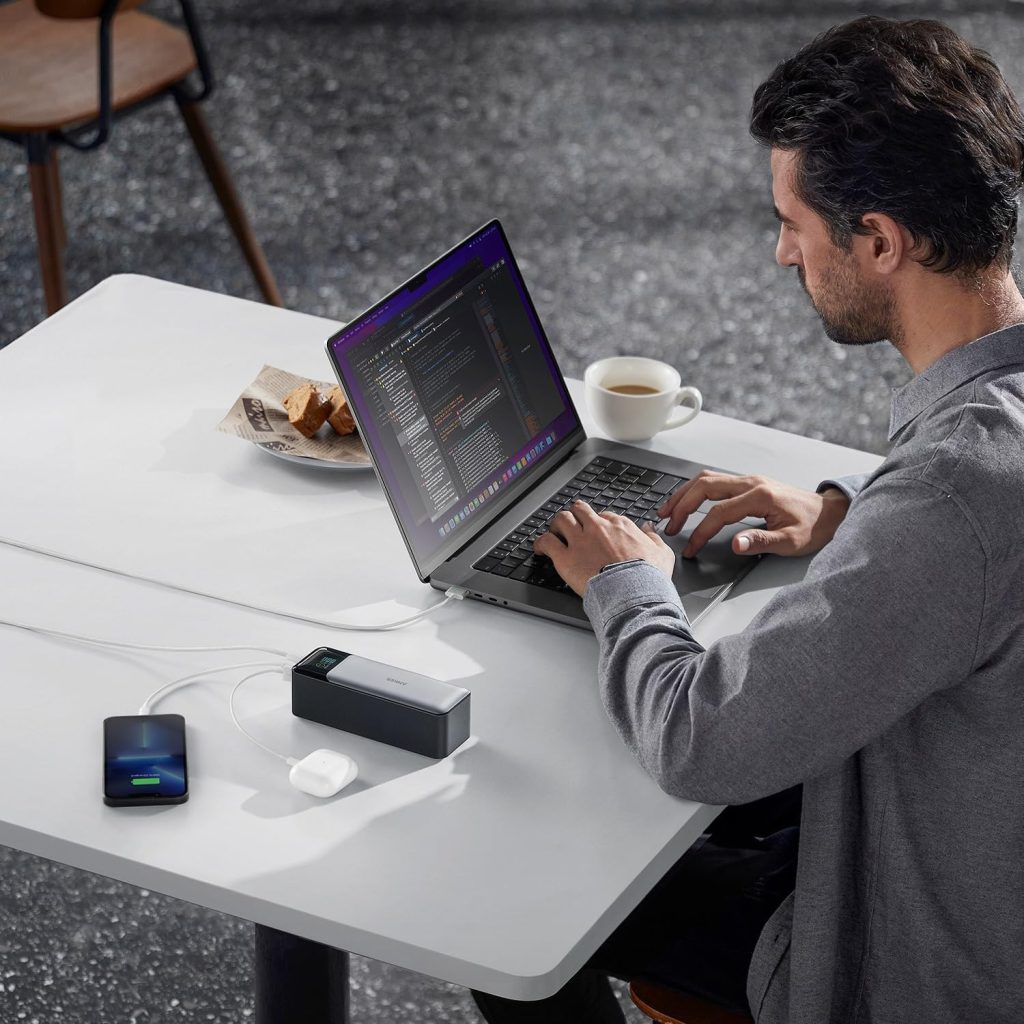
Your phone is only useful if it has a charge.
The Anker 737 sits in the sweet spot: 24,000 milliamp-hours, 140-watt output, and enough capacity to charge most smartphones around seven times. During a grid-down situation, that phone is your connection to emergency broadcasts, your family, and real-time weather updates. It’s not the lightest option, but for home emergency use or a bug-out bag where you need days of communication capability, the capacity justifies itself. There is no reason not to have one.
Power Stations
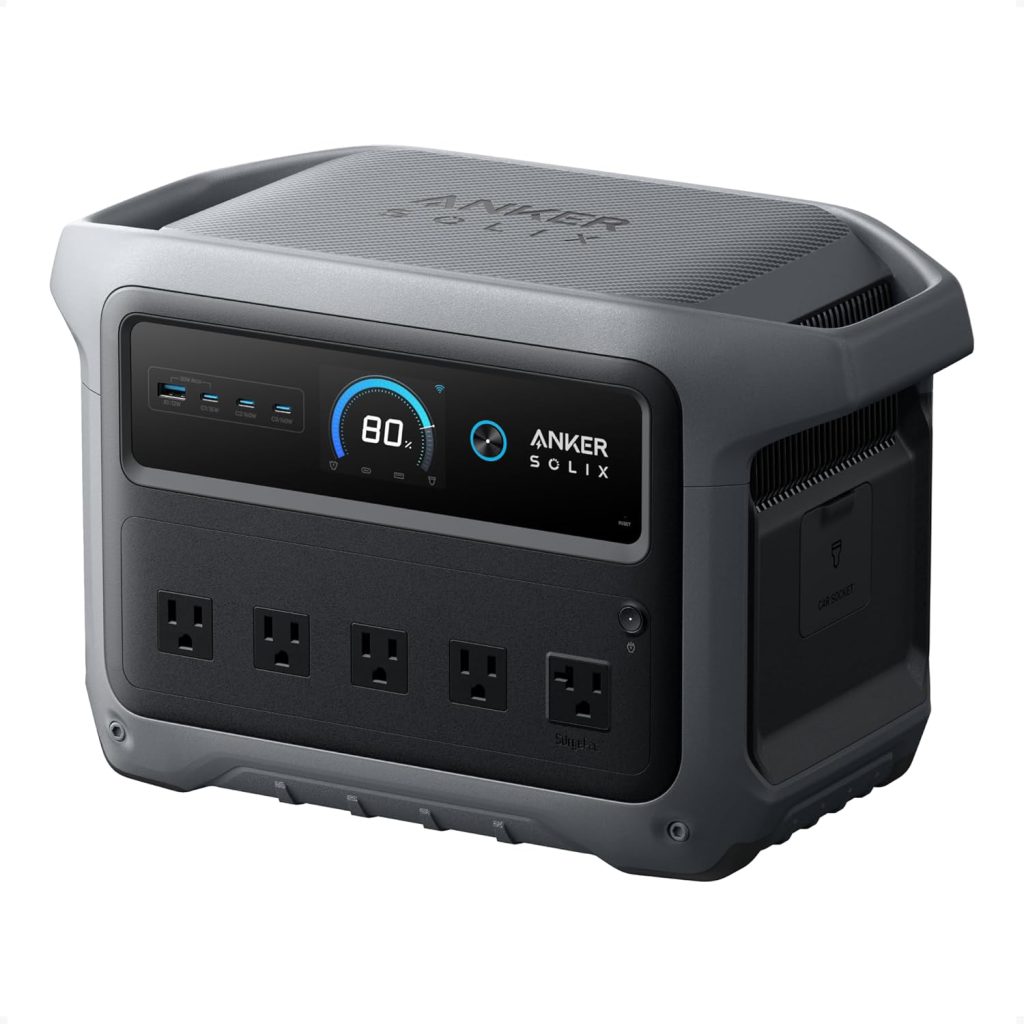
Power stations are for when you need more than a phone charge.
Entry-level units around 250 watt-hours handle phones, tablets, and small lights. Bigger setups in the 3 to 5 kilowatt-hour range can run a refrigerator, a CPAP machine, or a Wi-Fi router. Many models support solar panel input, which becomes critical when an outage stretches past a few days and your stored charge is running low.
The Anker C1000 is the starting point most people should land on: around 1,056 watt-hours, enough to run a fridge for several hours, a CPAP machine, or a Wi-Fi router, with solar input for multi-day outages. It consistently runs under $400 and hits the performance sweet spot without overbuying. If you need more, the EcoFlow Delta Pro is built for serious home backup and can wire directly into your breaker panel.
Before you buy anything, add up the wattage of the appliances you’d actually need running. Buy too small, and you’ll find out the hard way what you have to give up.
Regular Tools
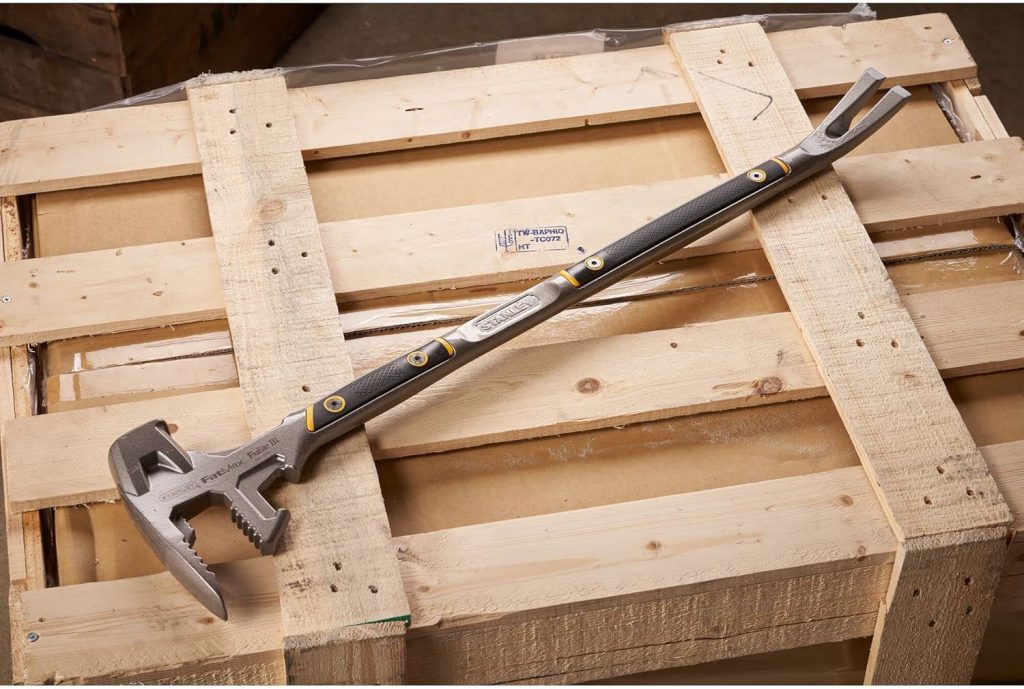
The right tools depend entirely on where you live and what disasters are most likely to hit you.
Shovels, crowbars, hammers, saws, screwdrivers, and axes are all situation-dependent. Earthquake country needs tools for moving debris and breaking through structural material. Hurricane zones need tarps and fastening hardware. A generic checklist won’t tell you what you actually need. Your geography will.
For a workhorse crowbar that covers both debris clearing and forced entry scenarios, the Stanley FatMax 36-inch Fubar has been a go-to in the trades for years. It’s overbuilt in the right ways for a tool you hope never has a real job to do.
Survival Tools
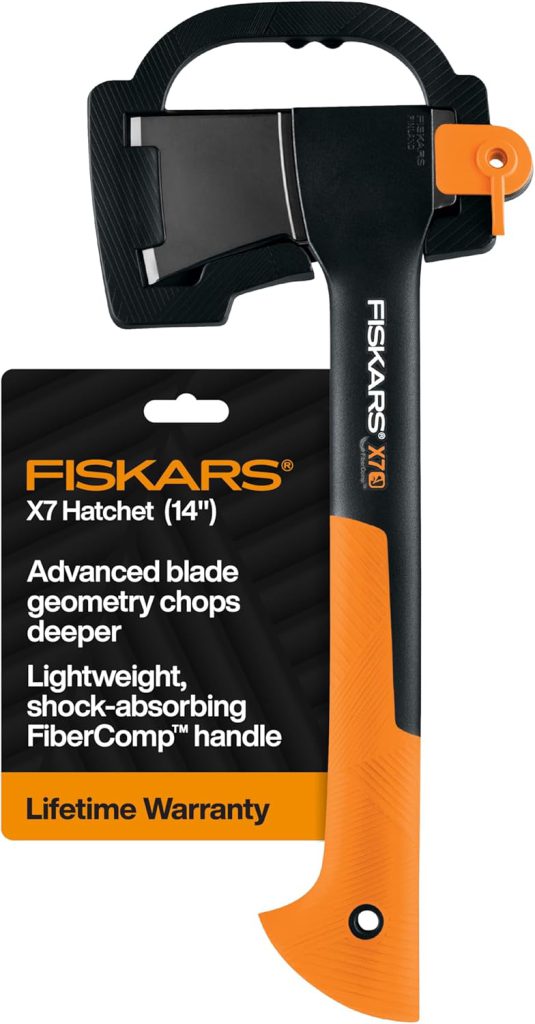
A good knife and a hatchet earn their keep well beyond emergencies.
Fixed-blade knives and quality pocket knives handle food prep, rope cutting, gear repair, and fire starting. A hatchet gives you firewood-splitting capability without the weight and storage footprint of a full axe.
The Fiskars X7 Hatchet is the practical answer for most people: light enough for a bag, sharp enough to split firewood cleanly, and priced under $40. Fixed-blade knives and quality pocket knives handle food prep, rope cutting, gear repair, and fire starting. Both are useful enough in everyday outdoor settings that the investment justifies itself before you ever need them in a real emergency.
Gear that only comes out during crises is gear you’ve forgotten how to use. Tools you reach for regularly stay sharp, stay familiar, and are ready when it counts.
Everyday Carry Items (EDC)
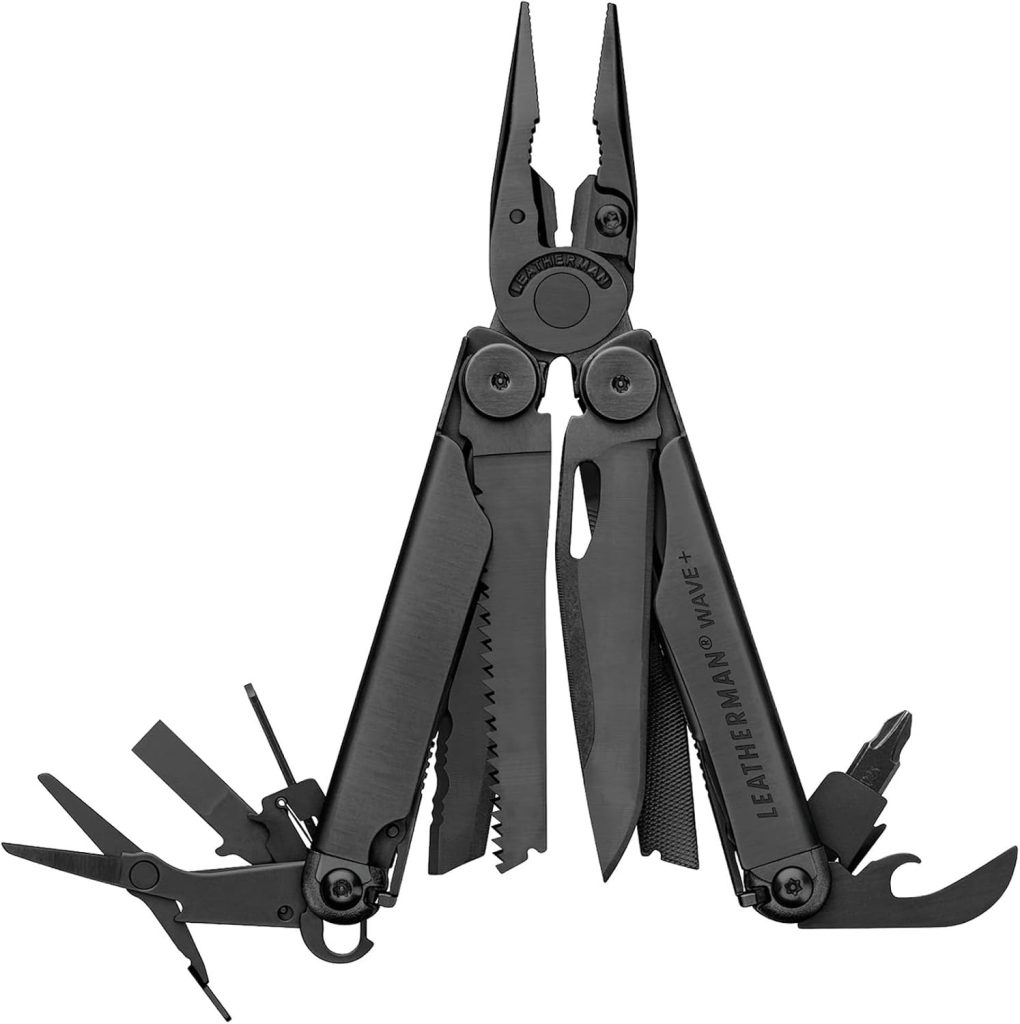
The best emergency gear is whatever’s already on you.
A reliable lighter, a bright flashlight, and a solid multi-tool cover most daily surprises and low-grade emergencies without adding meaningful weight to your day. The regular use is the point. Knowing your tools by feel, knowing where the blade locks and where the light switch sits, matters when you’re working in the dark and your hands are shaking.
The Leatherman Wave+ covers the multi-tool side of EDC as well as anything on the market. Pair it with a Streamlight Microstream and a reliable Zippo or BIC lighter and you have most low-grade emergencies handled from your pocket. The regular use is the point. Knowing your tools by feel matters when you’re working in the dark and your hands are shaking.
Hand Crank/NOAA Radio
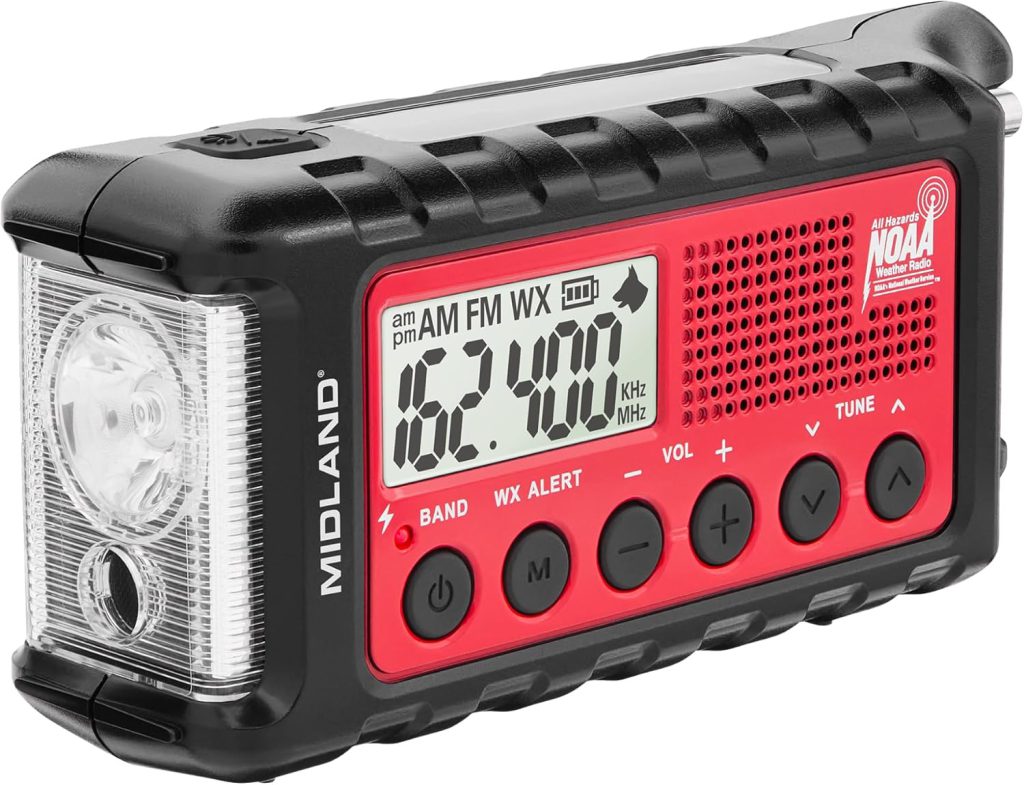
When the power goes out and the cell towers are overwhelmed, you still need information.
Hand-crank and NOAA radios run on manual power, solar, or backup batteries. They pull emergency broadcasts and weather alerts without relying on any infrastructure that might already be down. That makes them one of the most reliable sources of information available during a regional disaster, and the difference between knowing whether it’s safe to leave your house and guessing.
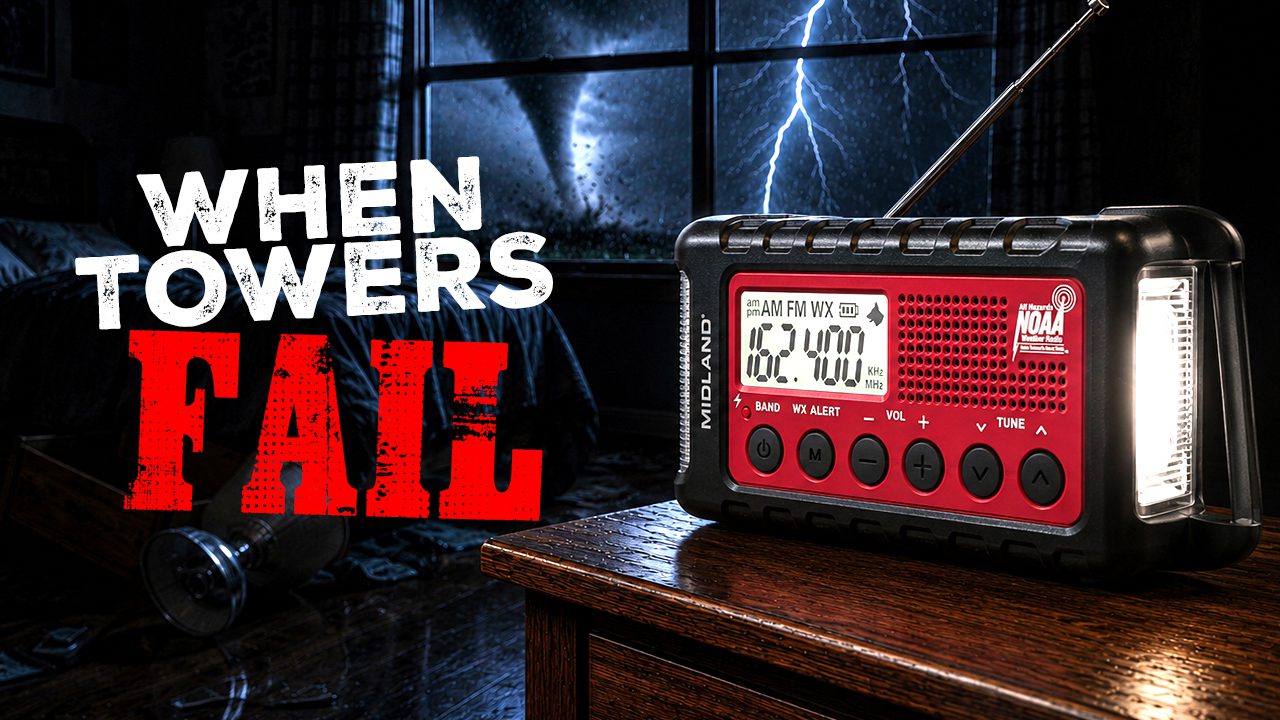
The Midland ER310 is the consistent top pick across every serious review. One minute of hand cranking delivers nine minutes of runtime; it runs four independent power sources, including solar, and it outputs USB charging so you can keep a phone alive from the same device. It delivers SAME county-level weather alerts, meaning it only wakes you up for threats in your area. That distinction matters at 3 a.m. when a tornado warning goes out three counties over, and you need to know if it’s actually coming for you.
Walkie-Talkies/GMRS Radios
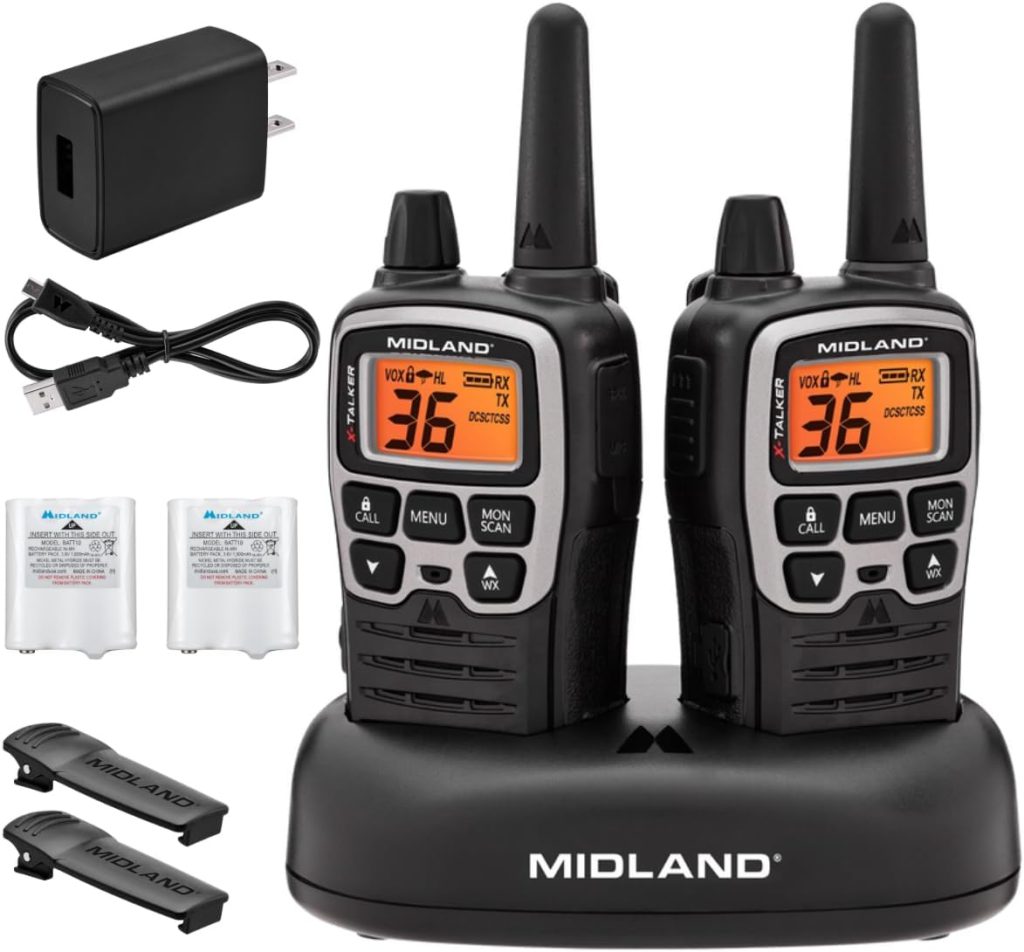
Cell towers fail under load. Radios don’t care about network congestion.
Basic walkie-talkie sets keep family members in contact across a neighborhood or during a coordinated evacuation. GMRS radios extend that range significantly and let you reach other GMRS users in your area. They require an FCC license, which is a simple application and a flat fee with no test required.
The Midland T71 VP3 comes as a three-pack, runs on both FRS and GMRS frequencies at up to 5 watts, and has NOAA weather alerts built in so you’re getting your emergency information and your family communication from the same device. It’s weather-resistant, runs on AA batteries, and lasts eight hours of active use. A $35 GMRS license from the FCC covers your entire household for ten years, no test required.
If everyone in your house is trying to reach each other and the cell network is completely saturated, you’ll be very glad you didn’t skip this one.
Ham Radio Equipment
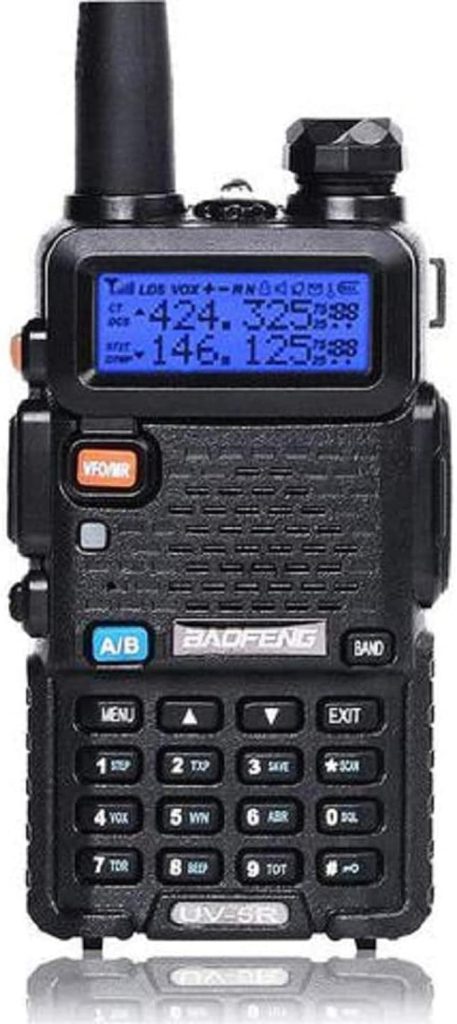
Ham radio is a serious communication infrastructure for serious situations.
The Baofeng UV-5R is where most people start: under $30, dual-band, and capable of reaching far more than any GMRS radio. It’s not plug-and-play, and operating it legally requires a Technician license, which takes a weekend of study and a passing score on a written exam. That’s the real entry cost, not the hardware.
Where walkie-talkies cover a few miles, ham radio can reach across a city, a state, or farther depending on conditions and equipment. It connects directly to emergency services and other operators when everything else has gone dark.
They’re not for everyone, but if you want a last-resort communication option, and you’re willing to put in the work to get there, nothing else comes close.
Home Security Hardening
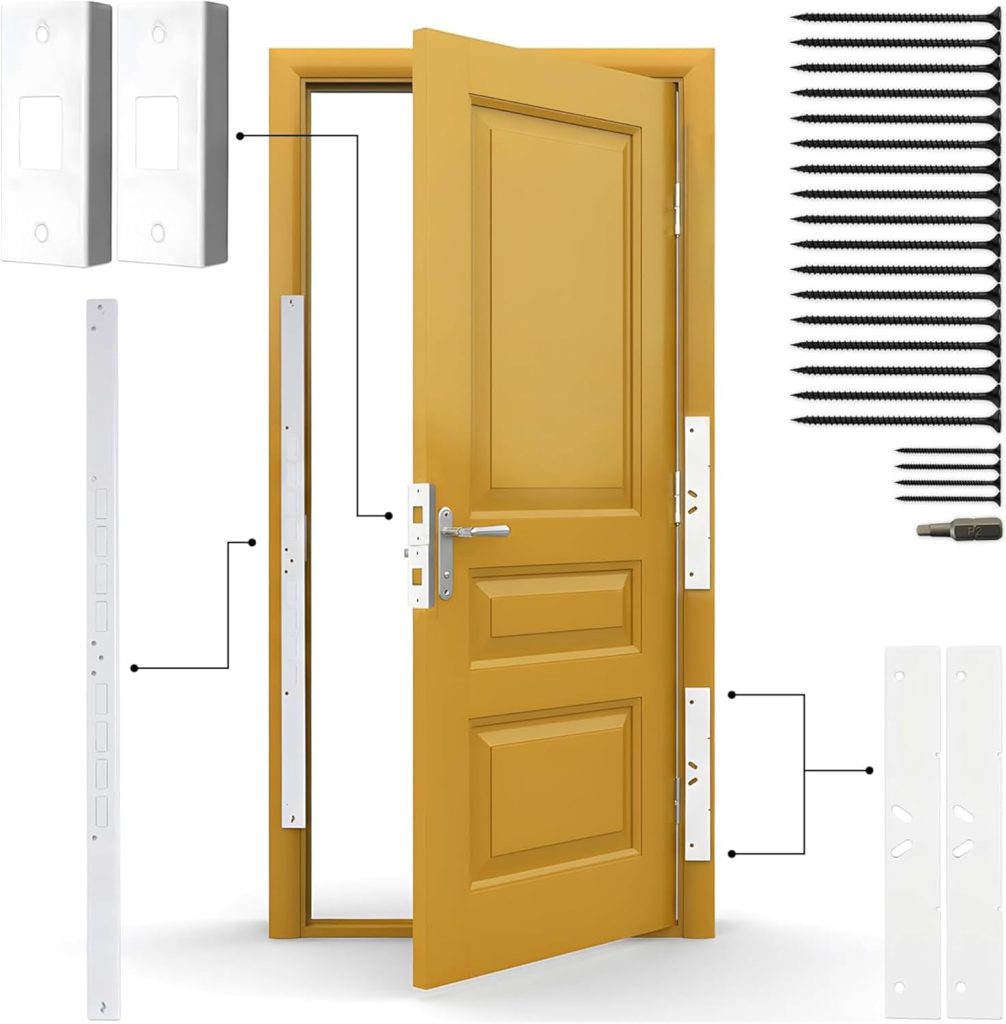
Better physical security doesn’t require a renovation. It requires paying attention to your weak points.
The front door is the most common entry point, and most standard installations fail under minimal force. Replacing standard screws with 3-inch versions in the door frame and strike plate is a 20-minute fix that meaningfully hardens your entry. Door reinforcement kits and upgraded deadbolts take it further.
Start with Door Armor’s MAX reinforcement kit: it reinforces the door frame, strike plate, and hinges in one install, and it’s the kind of upgrade that costs $100 and takes an afternoon. Replacing standard screws with 3-inch versions in the frame adds another layer.
Window alarms and a basic camera setup provide deterrence without incurring high costs. You’re not trying to make your home impenetrable. You’re trying to make it a harder target than the house next door, and simple, visible upgrades can do that with little effort.
Important Documents Protection
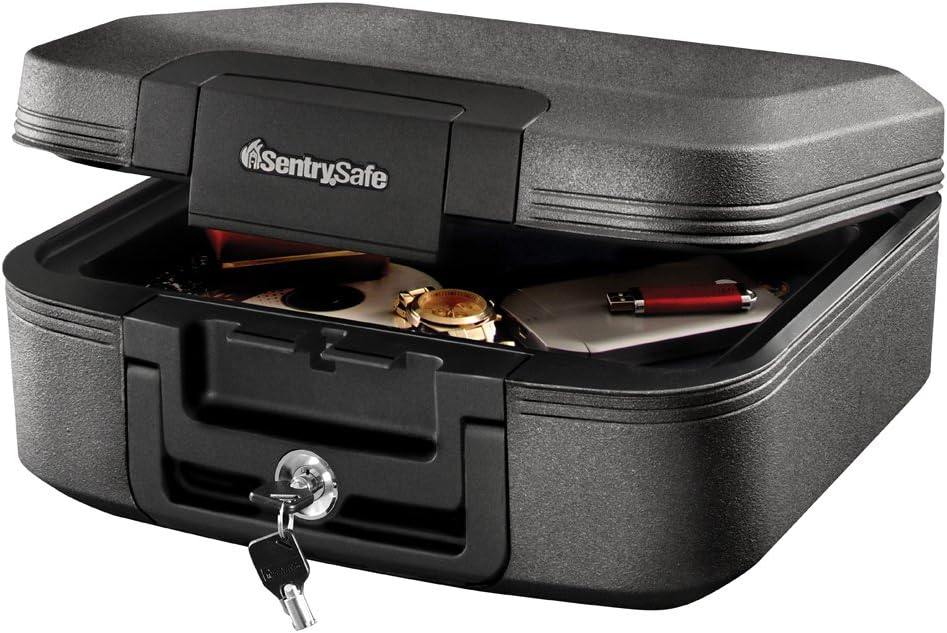
Replacing a passport or birth certificate after a disaster takes months. Protecting them takes about ten minutes.
Fireproof and waterproof storage for critical documents belongs in every home. Birth certificates, passports, insurance policies, medical records, property deeds, and financial statements should all be in one place and protected from fire, flooding, and theft. Steel lockboxes outperform fire-resistant bags on heat resistance, so don’t cut corners on the container.
The SentrySafe CHW20221 is a compact fireproof and waterproof chest that handles documents, hard drives, and anything else you need protected from heat and flooding. Steel construction, ETL verified to 1700 degrees Fahrenheit for 30 minutes. Birth certificates, passports, insurance policies, medical records, property deeds, and financial statements should all live in one place.
Add a printed emergency contact list. When your phone is dead, having a physical backup of the numbers you actually need to call is worth more than it sounds.
Sanitation and Hygiene Supplies
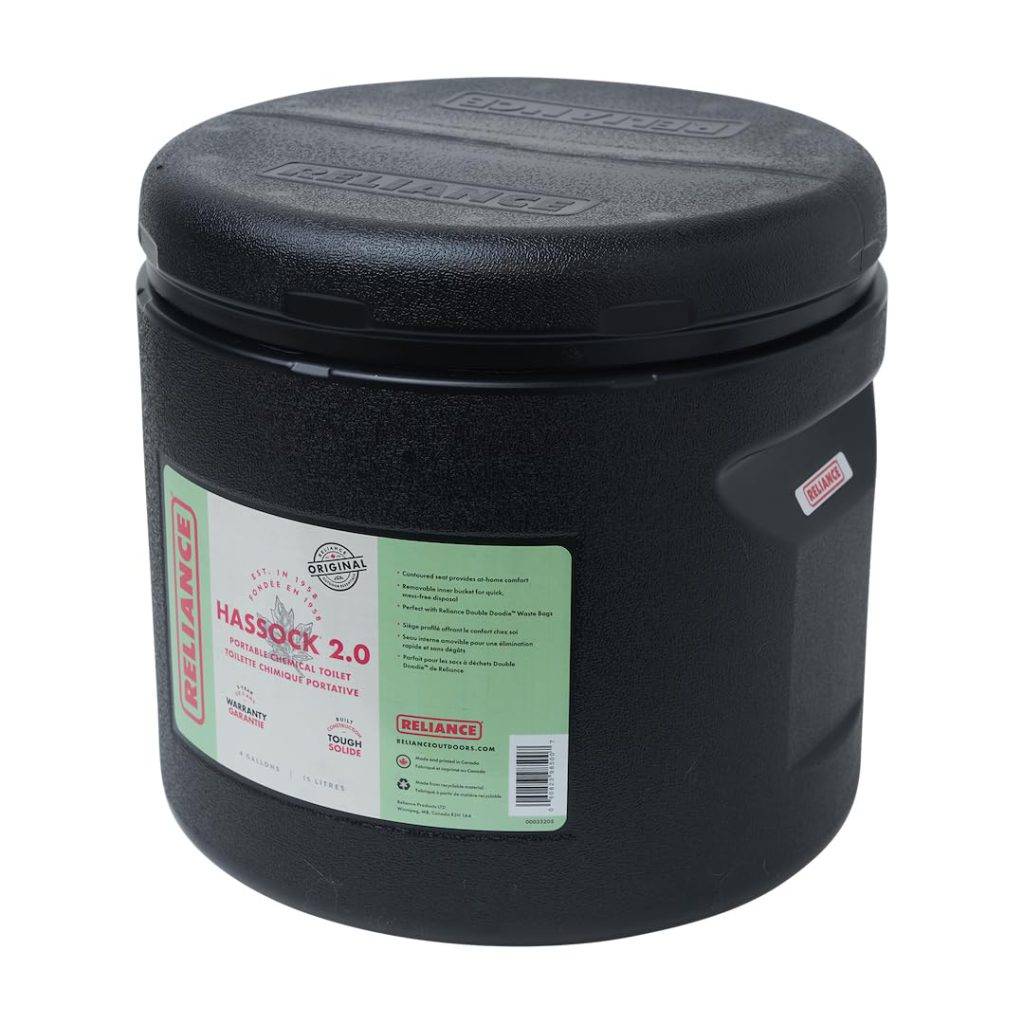
Sanitation failures during emergencies turn manageable situations into health crises, and they do it faster than you’d expect.
Hand soap, sanitizer, disinfectant wipes, and heavy-duty garbage bags aren’t exciting purchases, but neglect them, and you’ll find out quickly what happens when waste accumulates with no power, no running water, and no way to manage it properly. Illness follows, and medical help may not be available. Reliance Products Hassock Portable Toilet is worth adding if you’re planning for multi-day outages: a self-contained unit that handles waste without plumbing and costs around $30.
Stock these before you need them. Managing a sanitation problem after it starts is a completely different, much harder job than preventing it.
Bug-Out Bag/Get-Home Bag
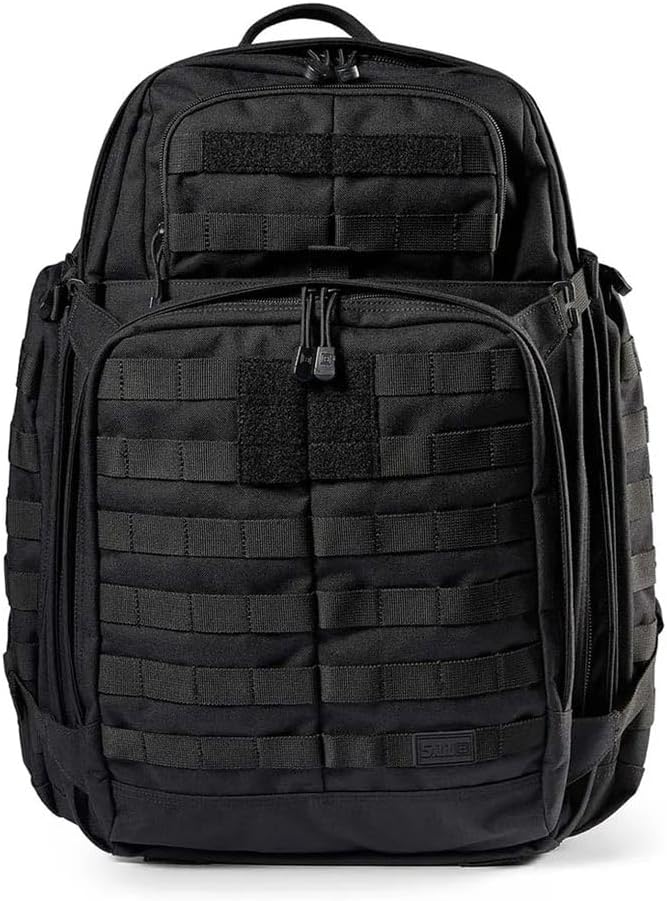
A bug-out bag is 72-hour insurance you can carry out the door in under a minute.
The 5.11 Rush 72 Backpack is the standard recommendation for a reason: 55 liters, MOLLE-compatible for attaching gear externally, a laptop compartment that works equally well for documents, and built well enough to take real abuse. Pack water, food, first aid supplies, documents, a radio, a power bank, and basic tools. Keep it light enough that you can actually move with it when you need to.
Test it once you’ve filled it up. Take it on a long walk and pay attention to what’s uncomfortable, what’s missing, and what’s dead weight. That’s how you find out what your bag is actually worth before the moment you have to rely on it.