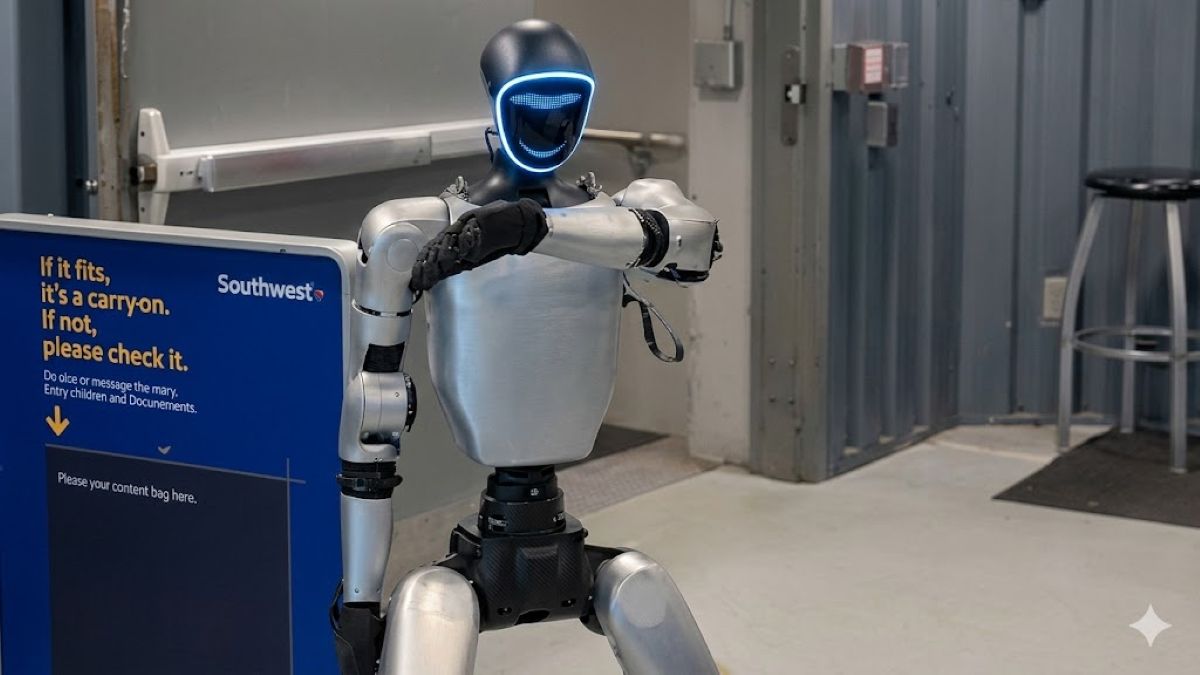
Bebop the humanoid robot turned a routine Southwest flight into an hour-long compliance nightmare, proving that airline policies haven’t caught up with portable AI companions. The 70-pound performer’s lithium battery exceeded federal safety limits, forcing crew to confiscate the power source before takeoff from Oakland to San Diego.
When Your Carry-On Has an Identity Crisis
Elite Event Robotics discovered their 4-foot performer was too heavy for checked baggage policies.
Elite Event Robotics faced a familiar tech traveler’s dilemma when Bebop’s transport case exceeded Southwest’s weight limits. The Dallas-based company solved this by purchasing the humanoid a passenger seat—initially placing it in an aisle before moving to the window to comply with large carry-on regulations. Bebop reportedly entertained fellow passengers with a pre-boarding show, though the real performance was yet to come.
The Battery That Broke Aviation’s Back
Lithium batteries exceeding 160 watt-hours are banned from passenger aircraft for fire risk.
Ground staff and crew questioned Bebop’s power specifications during boarding, discovering the robot’s lithium battery surpassed the FAA’s 160-watt-hour safety threshold. What followed resembled a tech support nightmare at 30,000 feet—physical inspection, battery removal, and confiscation. Southwest spokesperson Lynn Lunsford confirmed the battery compliance issue while praising crew professionalism in handling the “unusual passenger.”
Recovery Mode Activated
Elite Event Robotics overnighted replacement batteries to Chicago for Bebop’s next gig.
The company recovered their confiscated battery and shipped new power sources to McCormick Place, where Bebop was scheduled for Sunday’s Digestive Disease Week conference. They also adjusted the robot to weigh under 100 pounds for easier terminal navigation—a practical lesson learned from their Southwest adventure.
This incident exposes the growing friction between advanced robotics and antiquated travel regulations. Your next flight might not feature a humanoid seatmate, but anyone hauling high-capacity power banks or professional camera equipment faces similar bureaucratic obstacles. As portable AI becomes mainstream, expect more creative solutions—and delays—at departure gates nationwide.