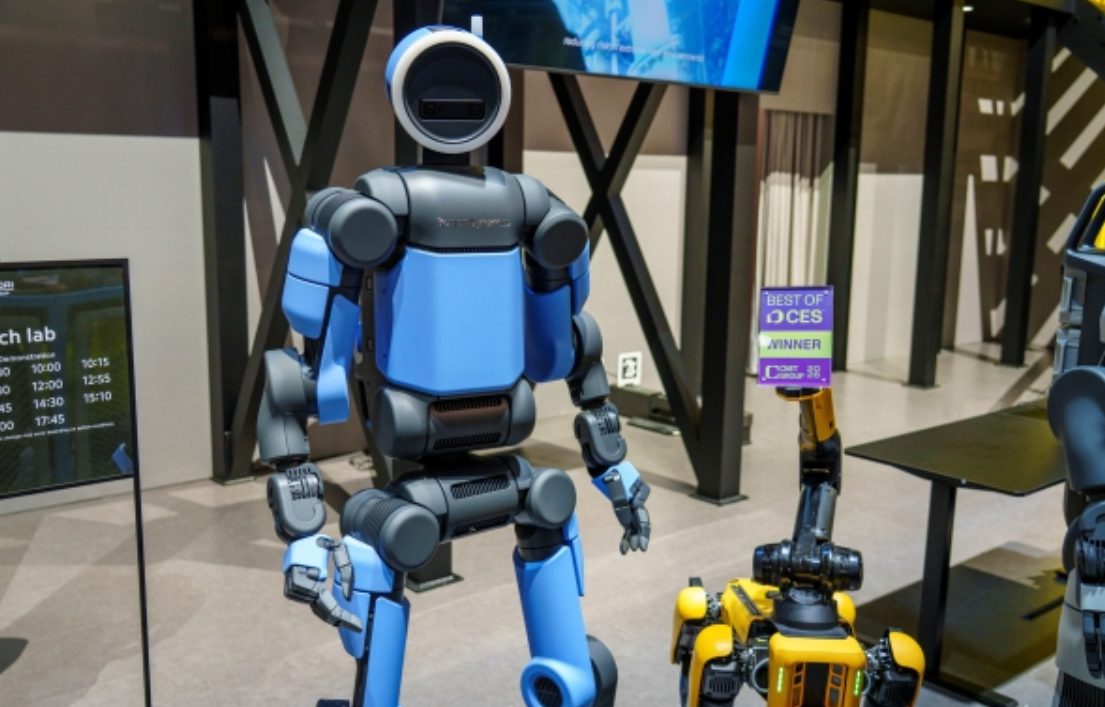
Hyundai just committed to buying tens of thousands of robots from Boston Dynamics—and your next Elantra might roll off an assembly line staffed by Atlas humanoids. This isn’t some distant sci-fi scenario. The Korean automaker is already testing these bipedal workers at its Georgia plant, with plans to scale production to 30,000 Atlas units annually by 2028. That’s more robots than some cities have people.
From Lab Curiosity to Factory Floor Reality
The dancing robot videos were just the warm-up act for mass production.
Since acquiring Boston Dynamics for roughly $1 billion in 2021, Hyundai has transformed the robotics company from a YouTube sensation into a manufacturing supplier. Current production sits at just four Atlas robots per month, but the new factory targets industrial-scale deployment.
These aren’t the backflipping prototypes you’ve seen in viral clips—they’re production-ready workers designed for parts sorting and assembly tasks alongside human colleagues. The shift from research lab stunts to actual factory work represents a fundamental change in how we think about humanoid robotics.
Workers Push Back Against Robot Revolution
South Korean unions demand job protection before the machines arrive.
Not everyone’s thrilled about the robot workforce expansion. Hyundai’s South Korean unions are demanding labor agreements before any large-scale robot deployment, citing legitimate job displacement concerns. The tension reflects broader anxieties about automation that extend far beyond one company’s factory floors.
According to Jaehoon Chang, Hyundai’s Vice Chair, “Boston Dynamics and robotics AI will play a crucial role in achieving the group’s goal”—but workers want guarantees their roles won’t vanish overnight. This standoff between technological progress and job security isn’t unique to Hyundai, but it’s playing out in real time with serious implications for workplace safety.
The $21 Billion Bet on Automated Manufacturing
Hyundai’s massive US investment includes a robotics revolution timeline.
This robot army represents part of Hyundai’s $21 billion US investment spanning 2025-2028, signaling serious commitment to automated manufacturing. Boston Dynamics is also undergoing leadership changes, with CEO Robert Playter’s retirement marking the transition from research lab to mass production supplier.
The company now serves committed customers including Google DeepMind alongside Hyundai’s manufacturing division. Your future car purchase might depend on whether robots can handle complex assembly work better than humans—and whether automakers can navigate the political minefield of replacing workers with machines.